American Sign Museum
Experiential Graphics- Large scale (environments or systems)
Project Narrative
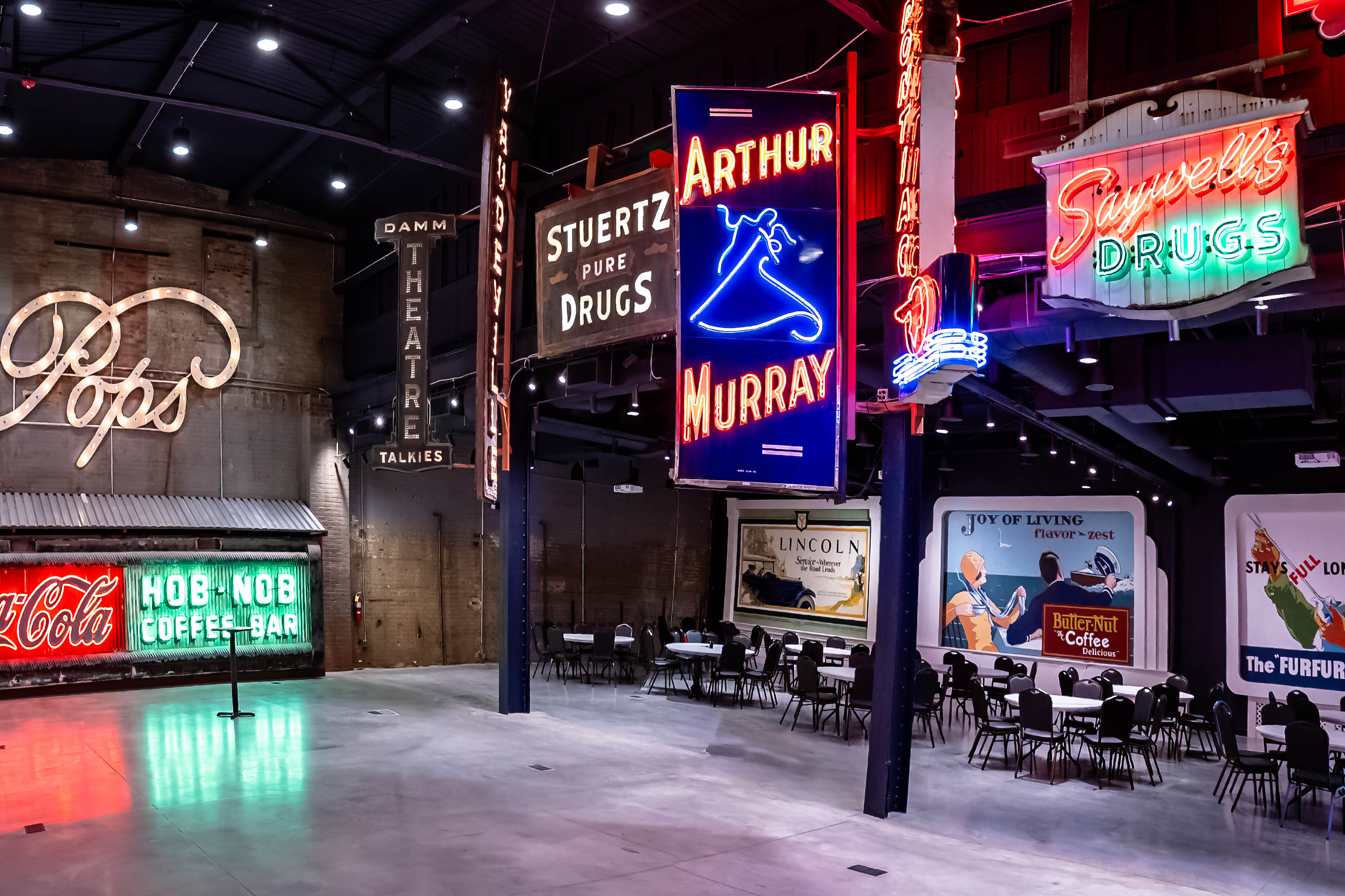
Signs are one of our simplest forms of communication, offering information, direction, and identity to broad audiences. For generations they have adorned and shaped our built environment, layering landscape and architecture with an intricate patchwork of visual art. What began as a self-proclaimed “mid-life crisis project,” the American Sign Museum is the brainchild of owner Tod Swormstedt, whose family has been in the sign-making business for four generations. His mission was simple, to celebrate the rich history of American signage through preservation, exhibition, and education.
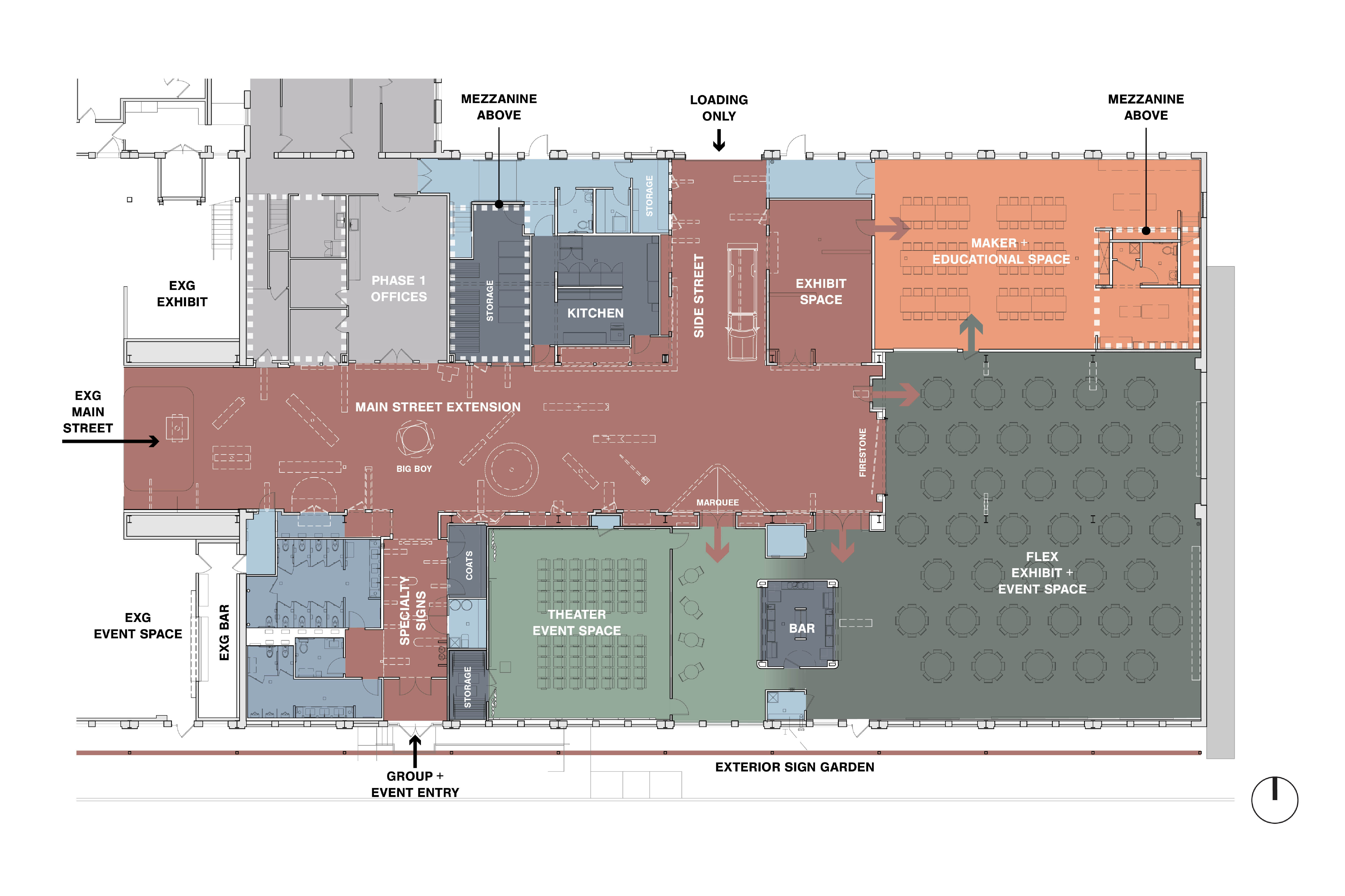
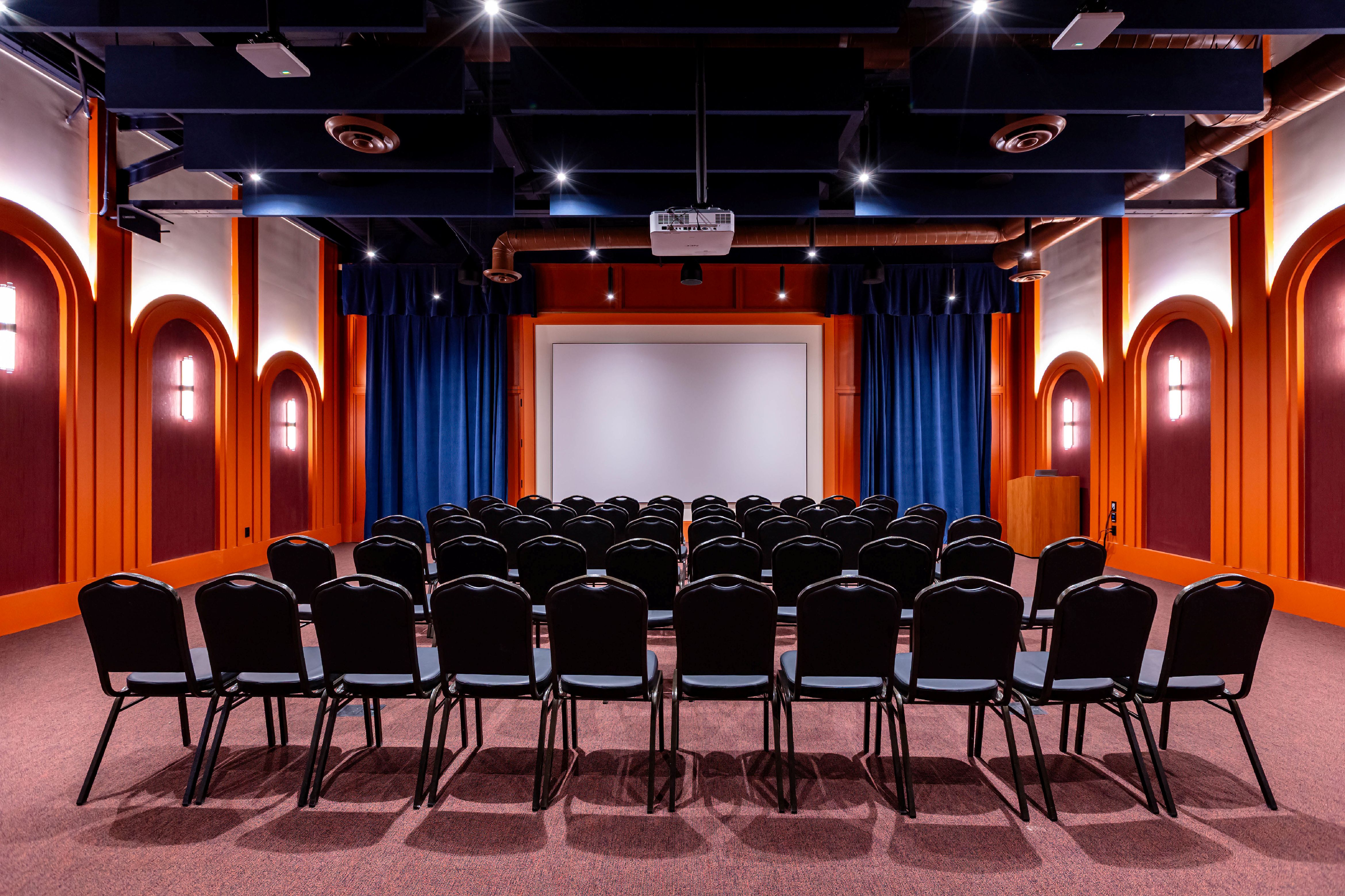
What started as the National Signs of the Times Museum in 1999 became the American Sign Museum in 2005. In 2012 they moved to their permanent home in the historic Oesterlein Machine Company-Fashion Frocks, Inc. Complex in the Camp Washington neighborhood of Cincinnati. Growth in the collection, attendance, and event bookings led to their 2024 expansion. Our design concept was Modern Reinvention, employing modern executions of nostalgic forms, in order to create a space that is referential, not replicating. We worked closely with Tod and his team, designing a renovation that enhanced the experience with an extension of the gallery, additional event and educational space, and supportive infrastructure.
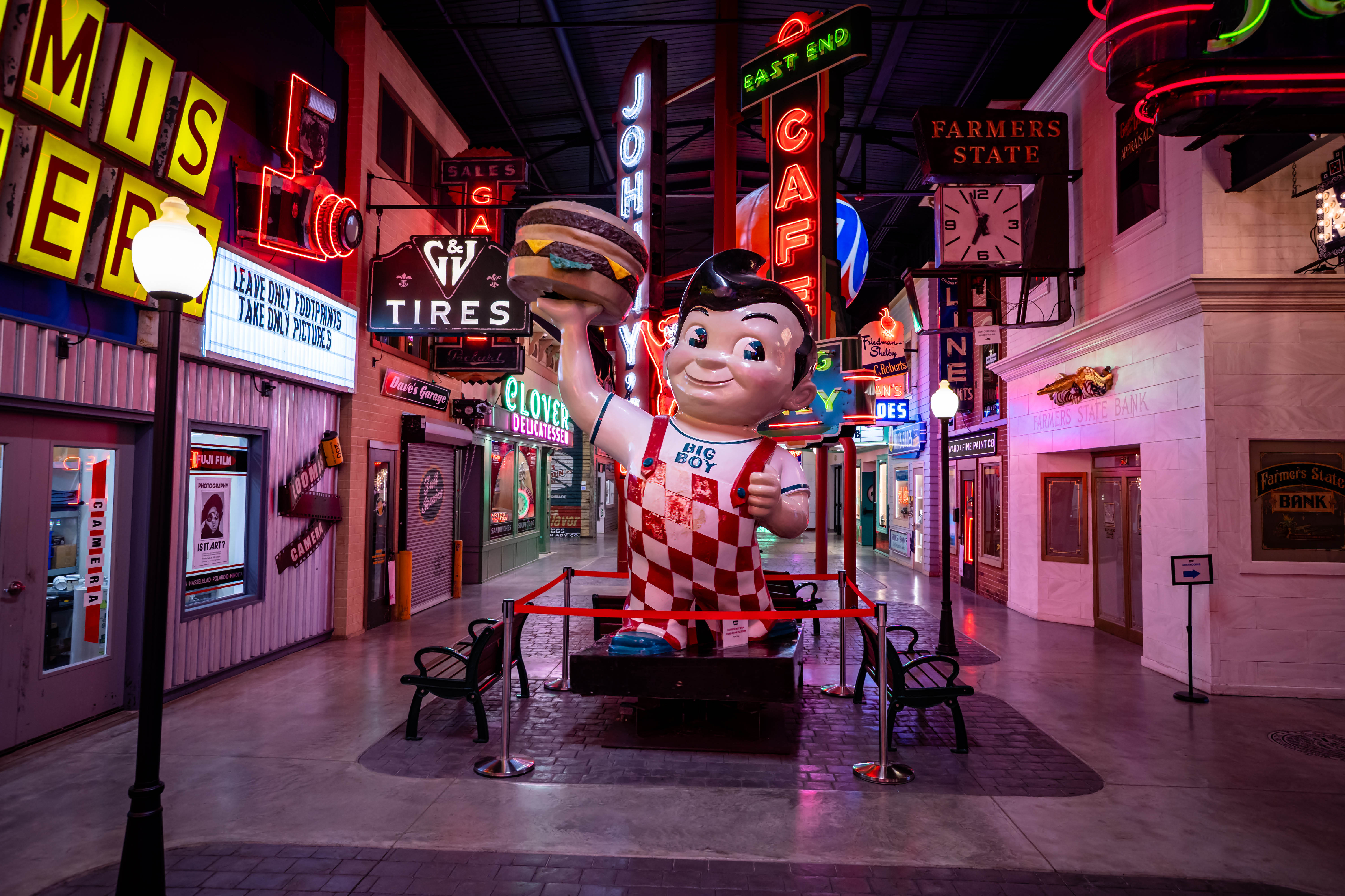
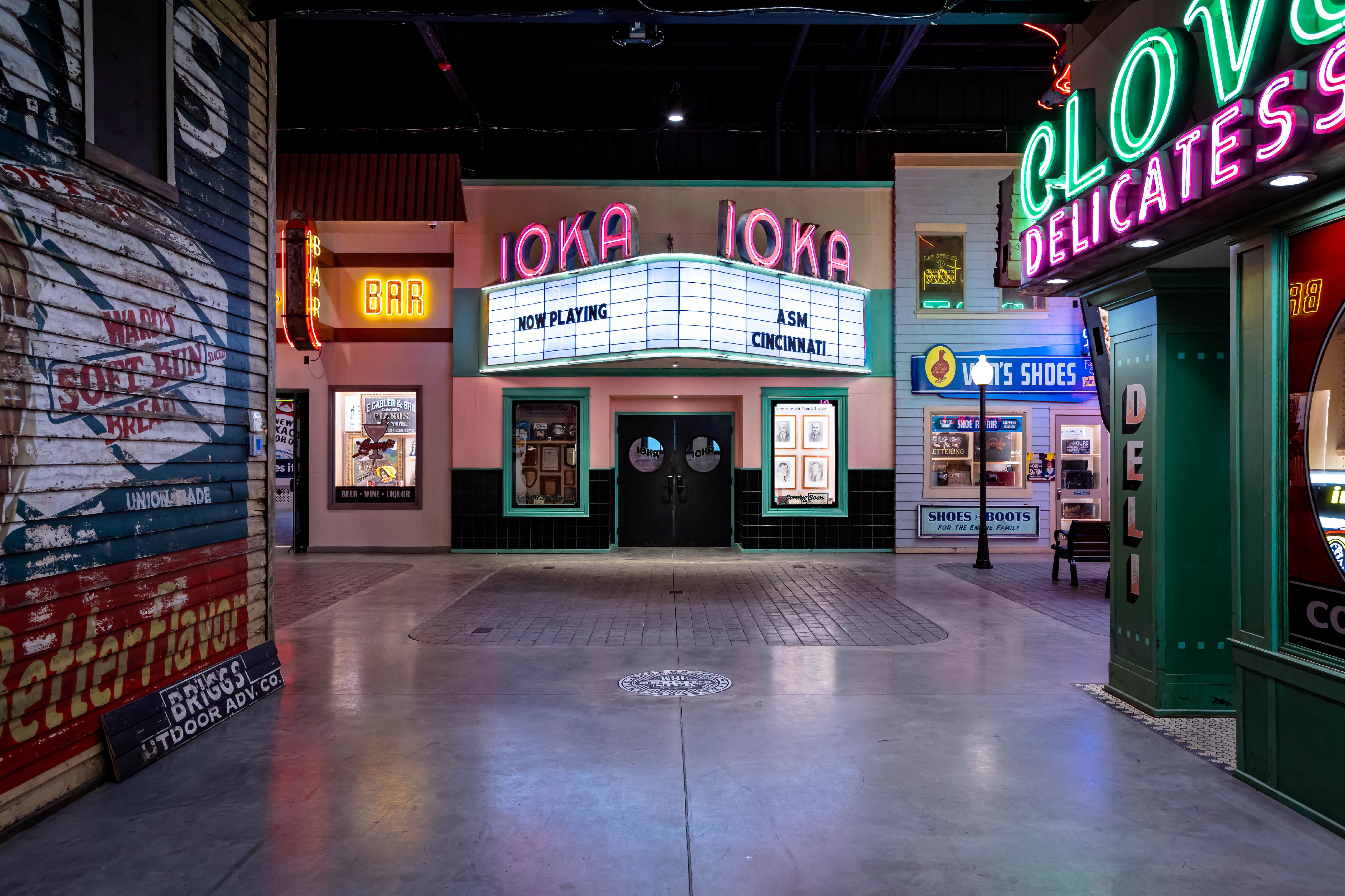
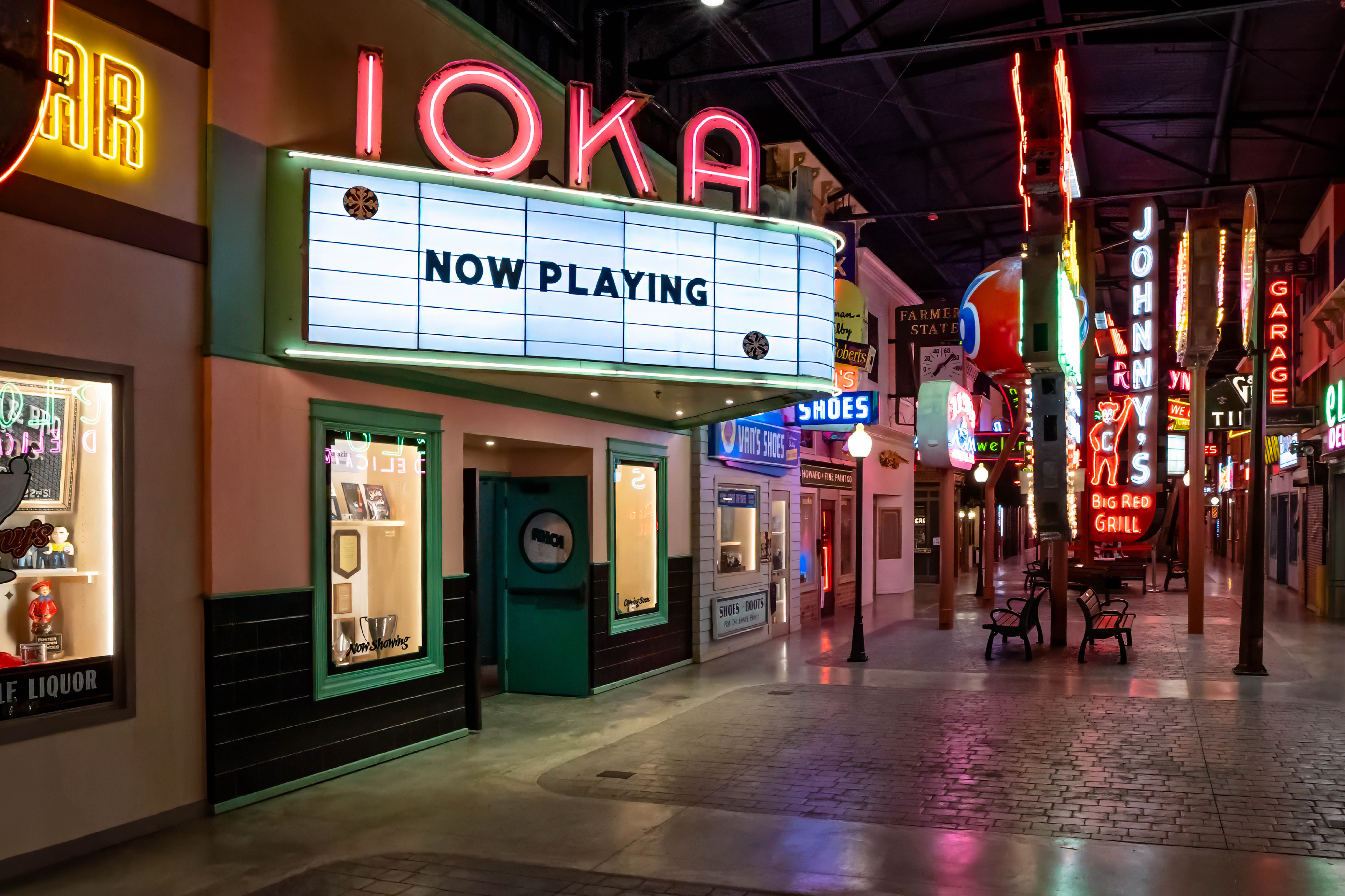
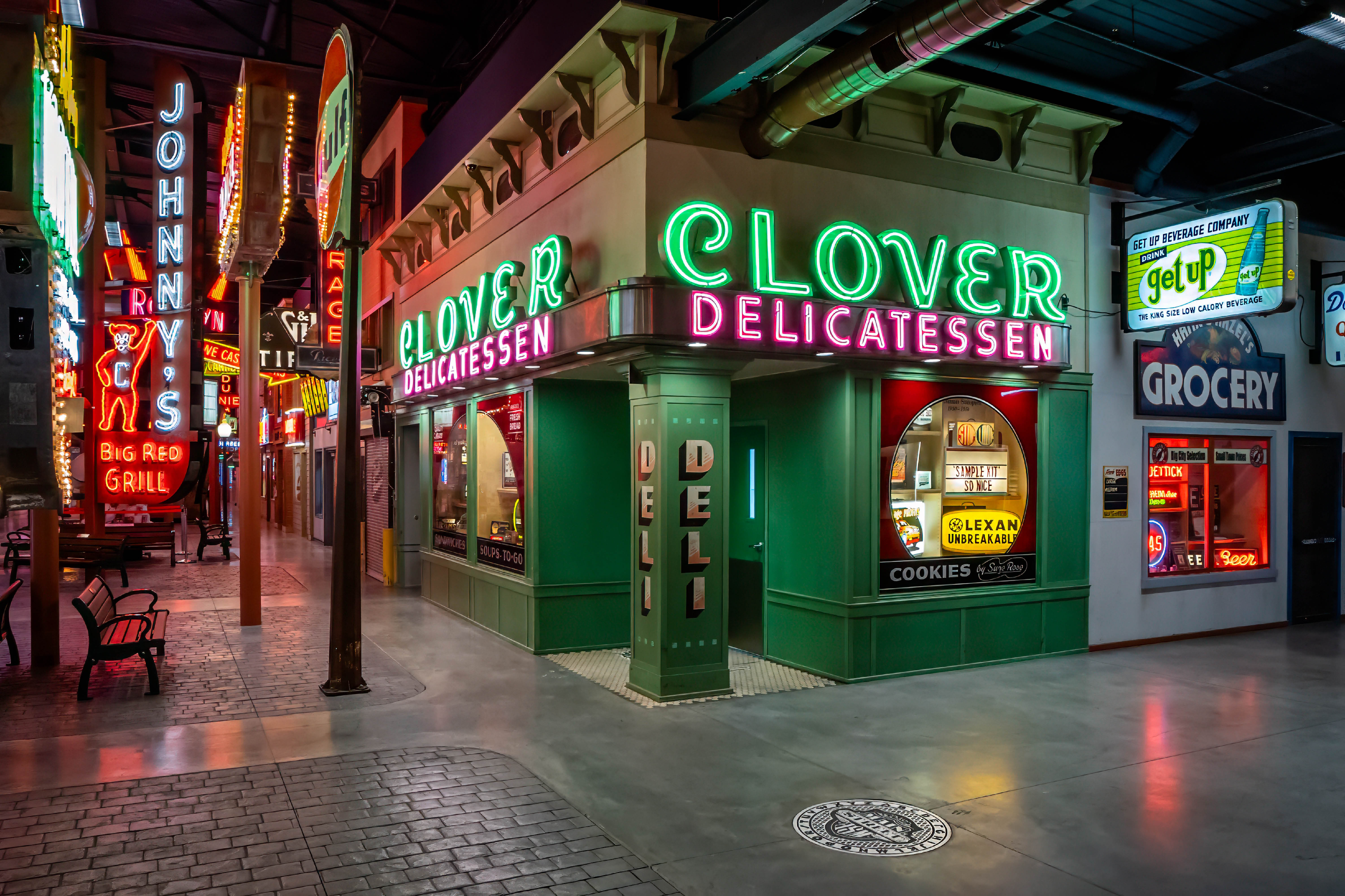
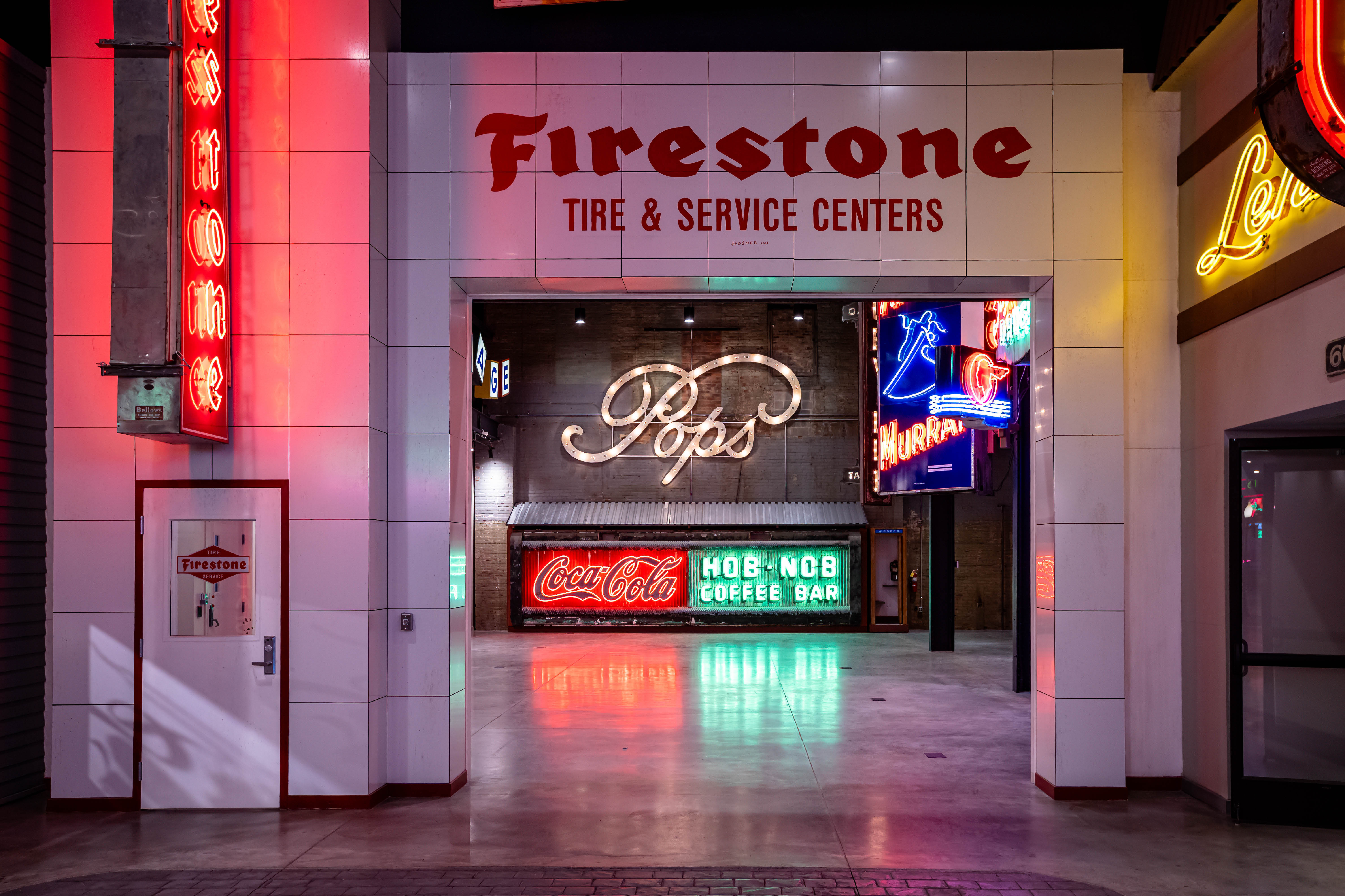
The existing museum contained straight forward gallery space, as well as a “Main Street” context that takes you back in time to the vibrant street life of a slower-paced society. This nostalgia engages older guests, while the immersive experience wows younger visitors. We explored organizational ideas of a random “choose your own adventure” path, versus a “winding trail,” versus the “town square,” and ultimately landed on the “town square” approach with its direct connection to historic city streets. Sign placement helped to reinforce this strategy with the large Firestone sign providing a threshold into the event space, and the Ioka Theater sign operating as a circulation nexus. It was a beautiful effort, watching this passionate community of artists come together to memorialize their craft. Throughout the space, skilled benders from the in-house Neonworks repaired and installed signs salvaged from across the United States. Modern, active sign painters arrived from across the country, reuniting their tight knit community to put the finishing touches on this homage to the history of their craft. In a touching tribute, the two-sided bar that serves both the theater and event space was named after a sign-maker who had passed away. These new spaces were designed and built to do what the collection does best, asking visitors to slow down, appreciate the craft, and observe the world around them differently.
“Signs and sign making are a fascinating reflection of America through the years. If your experience at the American Sign Museum causes you to be more aware of signs in your travels and of their value to businesses & communities, we’ve done our job.” – Tod Swormstedt




Project Details -
Submission Category
Experiential Graphics- Large scale (environments or systems)
Date of Completion
July, 2024
Submitting Firm Name
Platte Architecture + Design
Project Team
Architect
Platte Architecture + Design
Interior Designer
Platte Architecture + Design
Structural Engineer
Advantage Structural Engineers
MEP Engineer
MEP Engineer
Civil Engineer
Bayer Becker
Contractor
Turnbull-Wahlert/CER
Thank You to our 2026 Sponsors!
Critical to the continued success and growth of the awards program is the generosity and support of Business and Industry Patrons like you. We would like to take the opportunity to invite you to consider supporting great design in the built environment. Corporate and Individual donations are welcome at any level, and will be acknowledged in our event based on level of sponsorship commitment. Please consider lending your sponsorship support and joining the celebration of creativity and quality design in our community.
Sponsor CDA TodayAfter-Party Sponsor

Firm Sponsors


Signature Cocktail Sponsors

Column





Foundation


Keystone




Award Materials

Event Photographer
