
Jurors
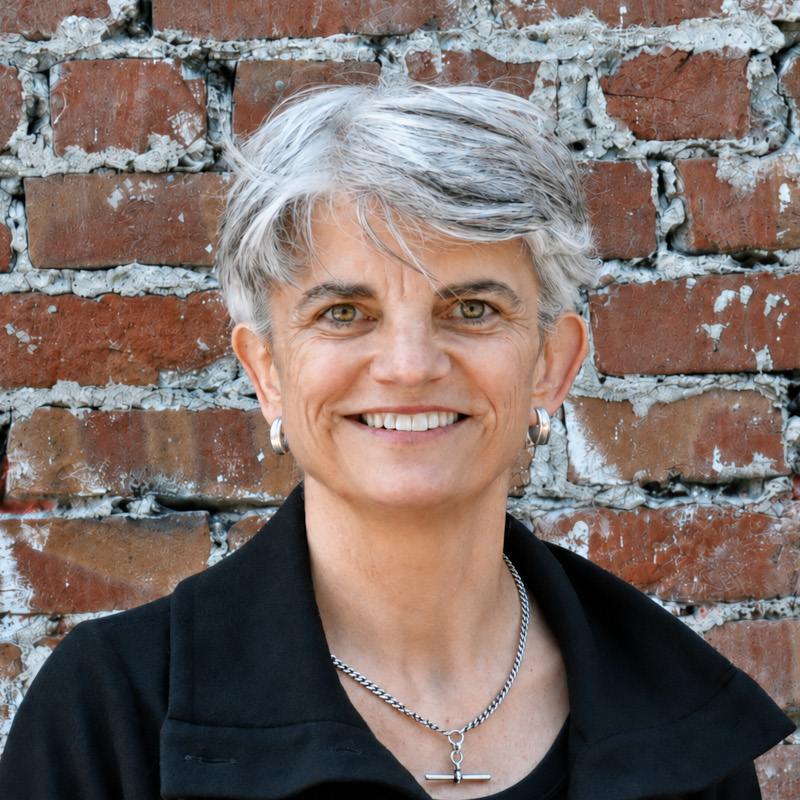
2026 ASLA Juror
Cathy Garrett
Principal at MIG | PGA
Cathy Garrett, FASLA LEED AP, is a landscape architect and principal at the California-based firm MIG | PGA. Before settling in California in 1993, she practiced landscape architecture in New York City, England, and her native Australia.
An award-winning landscape architect with 40 years of experience, Cathy has led a wide range of design projects encompassing educational facilities, high-density housing, urban and civic spaces, and historic preservation. Driven by a deep curiosity about place, she relishes understanding the layers of context—including history, form, human presence, and natural qualities—that give a landscape its character. Her enduring design joy and challenge is to amplify the value and resonance of a place within its community.
Cathy’s work has encompassed places of both national and local cultural significance, from New York’s Central Park and Brooklyn’s Prospect Park to the modernist Schindler House in West Hollywood, California’s State Capitol, the Presidio of San Francisco, and the University of California, Berkeley’s historic campus, where she served as consulting campus landscape architect.
Cathy is a past president of the California Preservation Foundation, founding chair of the Northern California chapter of the Historic American Landscapes Survey, and a former board member of the National Association for Olmsted Parks. She was also appointed by the CA State Assembly to serve on the Historic State Capitol Commission in Sacramento.

2026 IIDA Juror
Bill Bouchey
Design Director | Gensler
A visionary leader in human-centered design, Bill Bouchey works in industries ranging from technology to life sciences driven by the belief that design empowers people and transforms organizations. With over 30 years of award-winning experience, he specializes in commercial interiors, from lifestyle and legal to creative media and branded environments. Published in The New York Times, Interior Design, Contract, Metropolis, and FRAME, he received Interior Design magazine’s Lifetime of HIPness Award in 2021.

2026 SEGD Juror
Michael Bierut
Partner | Pentagram
Michael Bierut is a graphic designer, teacher and writer. After graduating from the University of Cincinnati’s College of Design, Architecture, Art & Planning in 1980, he worked for Massimo Vignelli in New York City before joining the international design consultancy Pentagram as partner in 1990. Over the next 35 years, his clients ranged from Mastercard, Slack, and Benetton to the Brooklyn Academy of Music, the Poetry Foundation, and MIT Media Lab. Michael was elected to the Alliance Graphique Internationale in 1989, installed in the Art Directors Club Hall of Fame in 2003, and awarded the profession’s highest honor, the AIGA Medal, in 2006. In 2008, he was named winner in the Design Mind category of the Cooper-Hewitt National Design Awards. Among other academic appointments, he has been lecturer at the Yale School of Management and senior critic in graphic design at the Yale School of Art. His books, which include 79 Short Essays on Design(2007), How to use graphic design to sell things, explain things, make things look better, make people laugh, make people cry and (every once in a while) change the world (2015 and 2021) and Now You See It and Other Essays on Design (2018), have been translated into German, French, Korean, Chinese, Polish and Russian.

2026 AIA Juror
Thomas Robinson
Founding Principal | Lever Architecture
Thomas Robinson is the Founder of LEVER Architecture, a research-based design practice in Portland, Oregon and Los Angeles, widely recognized for material innovation and pioneering work with Mass Timber.
The work encompasses multiple scales and typologies, ranging from affordable housing to academic, corporate, and the arts. In parallel with its built projects, the firm develops and tests next generation building assemblies and sustainable tools—a research effort supported by more than $3M in grant funding. For this commitment to groundbreaking design, LEVER was recognized by Fast Company as one of the world’s most innovative companies; and in 2017, was named to Architectural Record’s Design Vanguard and the Architectural League of New York’s Emerging Voices. Thomas has lectured nationally and internationally in Europe, Australia, New Zealand, and South America and has served as a design critic at Harvard, Columbia, Yale, USC, UCLA, and the University of Oregon. In 2026 Thomas was the Friedman Visiting Professor at UC Berkeley.
Selected current projects include Maine’s Portland Museum of Art, Portland State University’s Schnitzer School of Art + Art History + Design, two libraries for Multnomah County, a multi-building campus project for NBCUniversal, and 843 N Spring Street, a creative development and one of LA’s largest Cross-Laminated Timber (CLT) and steel hybrid structures.
A monograph on LEVER’s work–Forest to Frame: Regenerative Timber Architecture–is forthcoming in late 2026 from Park Books.

2026 Local Juror
Emily Palmer Wolff
Co-Owner and Artistic Director | Otto’s Restaurant Group
Emily Palmer Wolff is the co-owner and artistic director of Otto’s Restaurant Group, where she shapes the interiors, aesthetic identity, and creative marketing of Mama’s, Otto’s, Larry’s, Frida, and The Standard. Her deeply personal dining rooms are known for their warmth, layered character, and strong sense of place.
Working within historic buildings and neighborhoods, Emily approaches design as both preservation and storytelling. She combines art, found objects, color, texture, lighting, and installation to reveal the histories of the spaces her restaurants inhabit. Her work honors the past while creating welcoming, memorable environments that invite new generations to experience these buildings and neighborhoods.
Emily’s artistic practice began in childhood and is informed by studies in fine art at the University of Kentucky, Ringling School of Art, and abroad. Her multidisciplinary background includes painting, fiber, sculpture, and photography, along with a lifelong study of color and composition. This broad artistic vocabulary is evident throughout her work, where materials and objects are thoughtfully woven together to tell subtle, often subliminal stories.
Among her notable public projects is the transformation of Covington’s Sixth Street railroad underpass, where vibrant geometric color patterns wrap the sidewalk, walls, and ceiling and are juxtaposed with six vintage chandeliers. The installation turned an intimidating pedestrian passage into one of Covington’s most recognizable and photographed public spaces. Emily is currently exhibiting Interiors Non Nudes, a 5-by-50-foot installation at The Summit Hotel in Cincinnati.
Emily serves on the boards of meetNKY, 1001 Colors, and Cincinnati Preservation. Across these roles, she champions the arts as a catalyst for community enrichment, supports paid youth arts programs and large-scale public art installations, and advocates for the thoughtful preservation and adaptive reuse of the region’s most storied buildings. Through her art, hospitality, and civic work, she has helped shape the creative energy fueling Covington’s nationally recognized renaissance.
Thank You to our 2026 Sponsors!
Critical to the continued success and growth of the awards program is the generosity and support of Business and Industry Patrons like you. We would like to take the opportunity to invite you to consider supporting great design in the built environment. Corporate and Individual donations are welcome at any level, and will be acknowledged in our event based on level of sponsorship commitment. Please consider lending your sponsorship support and joining the celebration of creativity and quality design in our community.
Sponsor CDA TodayAfter-Party Sponsor

Firm Sponsors




Signature Cocktail Sponsors


Column



Foundation



Keystone








Event Photographer
