
Cincinnati Children’s Hospital Medical Center, William K. Schubert M.D. Mental Health Center
Building Architecture- Large Scale (>10,000 sf)

Project Narrative
Cincinnati Children’s William K. Schubert M.D. Mental Health Center in Cincinnati Ohio, establishes the largest pediatric inpatient behavioral hospital in the United States. The project nearly doubles capacity to meet rising demand in the region, serving both inpatient and outpatient populations.
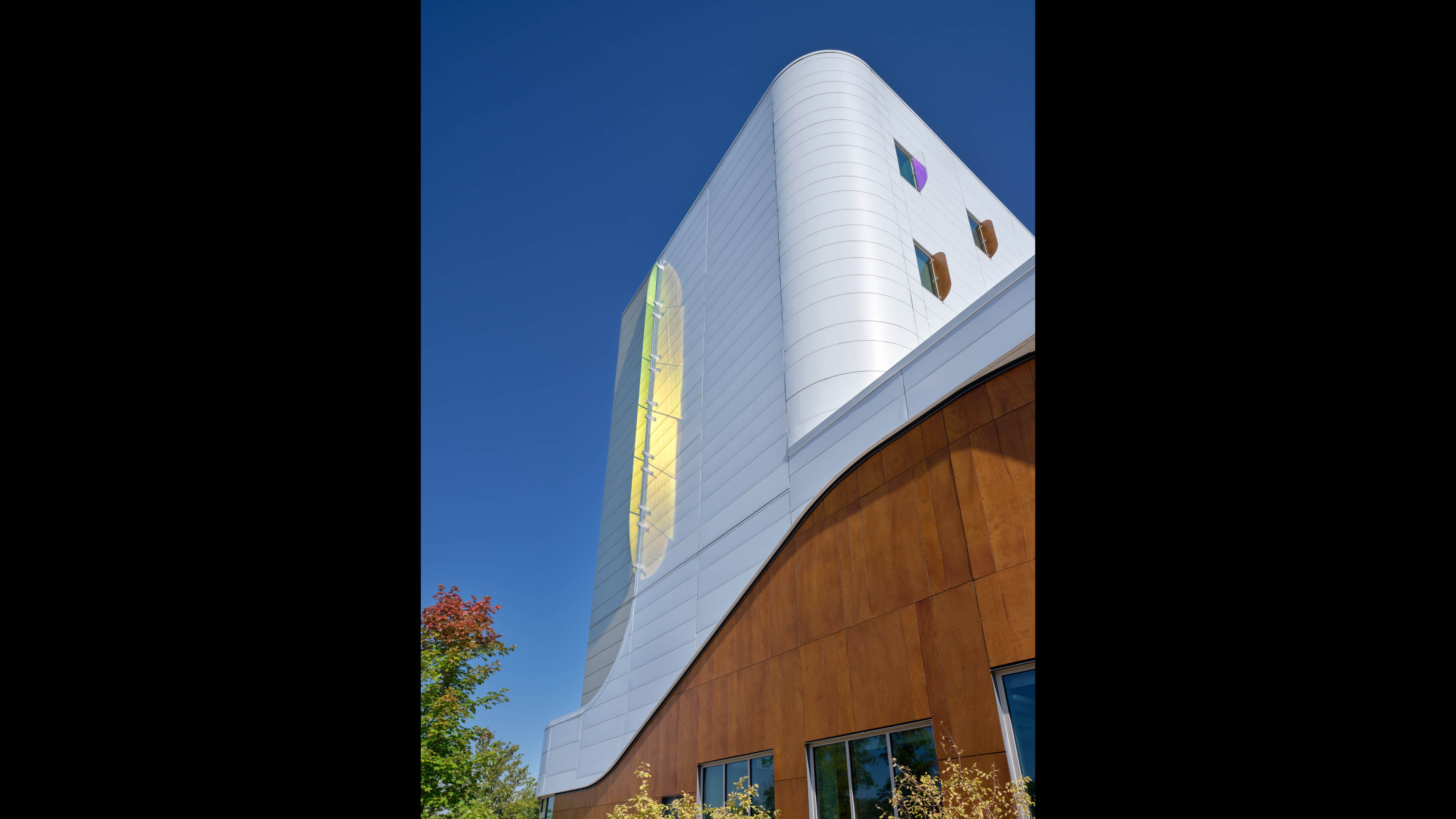
The design draws inspiration from the childhood act of building a blanket fort—an intuitive gesture of creating shelter, imagination, and control. This metaphor became architectural through the building’s sense of security, shelter, and softness. This is expressed through gentle curves, layered transparency, and organic shapes. Natural wood, textured surfaces, and color-shifting dichroic glass fins evoke a sense of playfulness and discovery, helping the building feel both new and familiar.
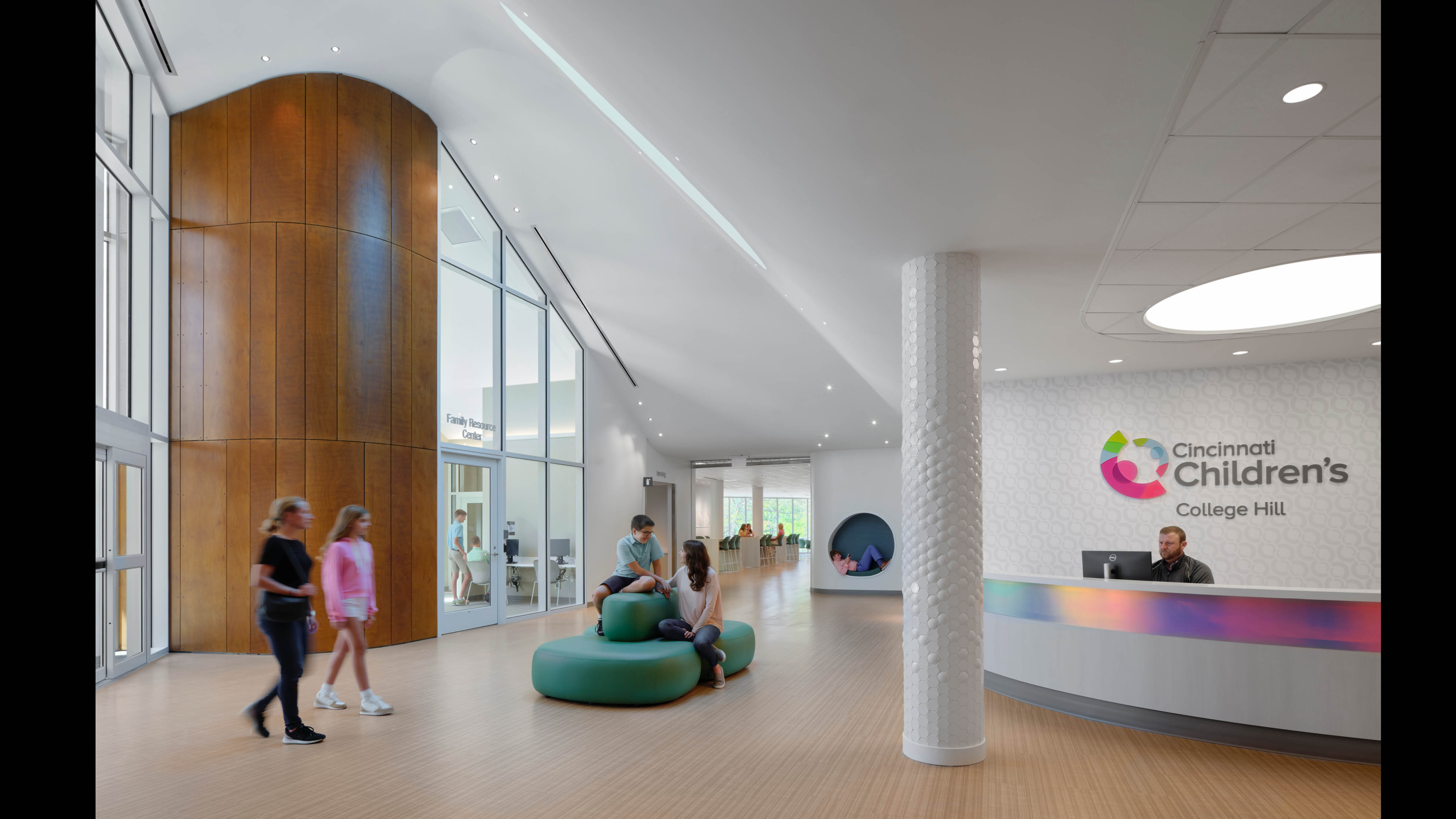
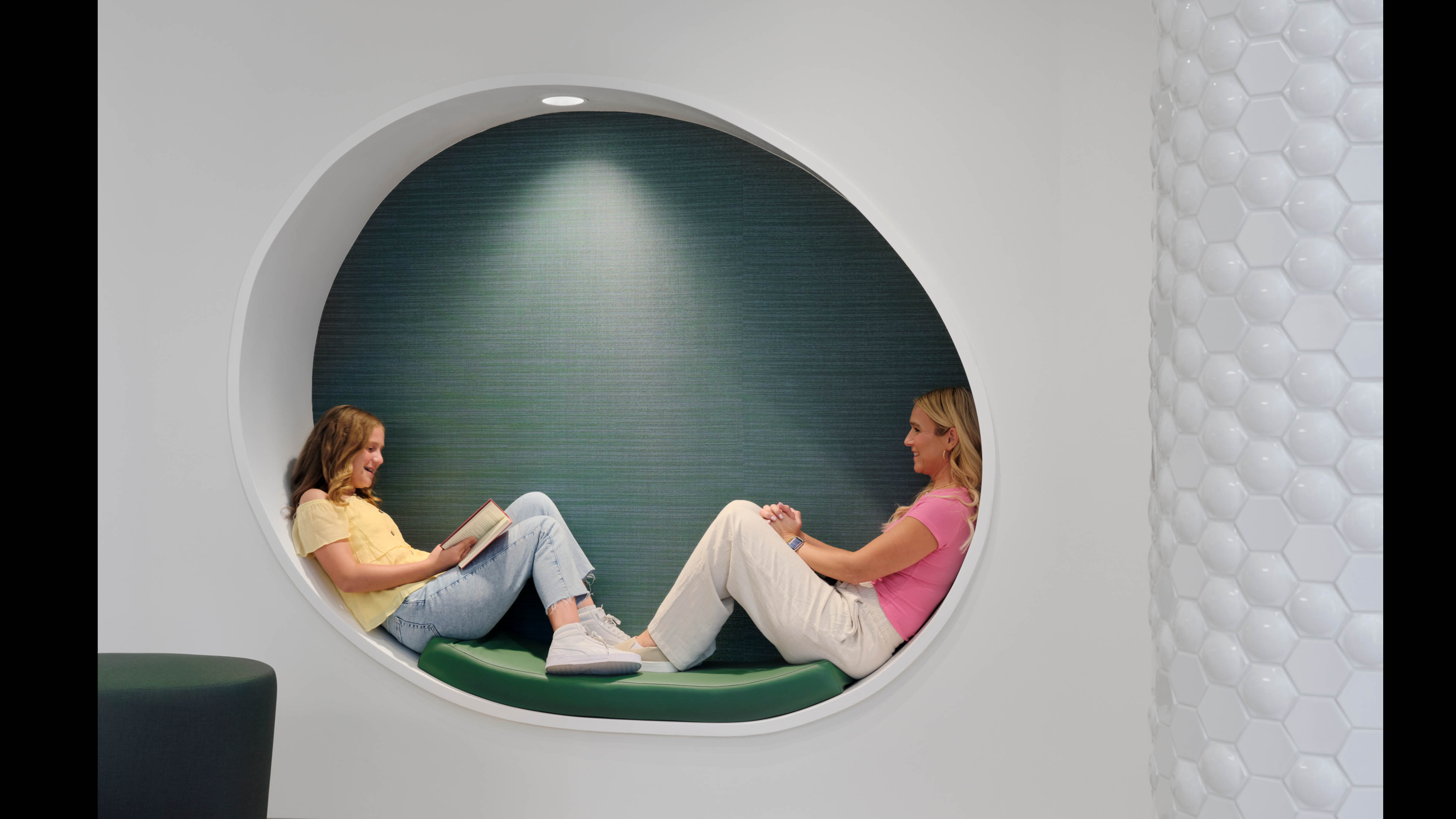
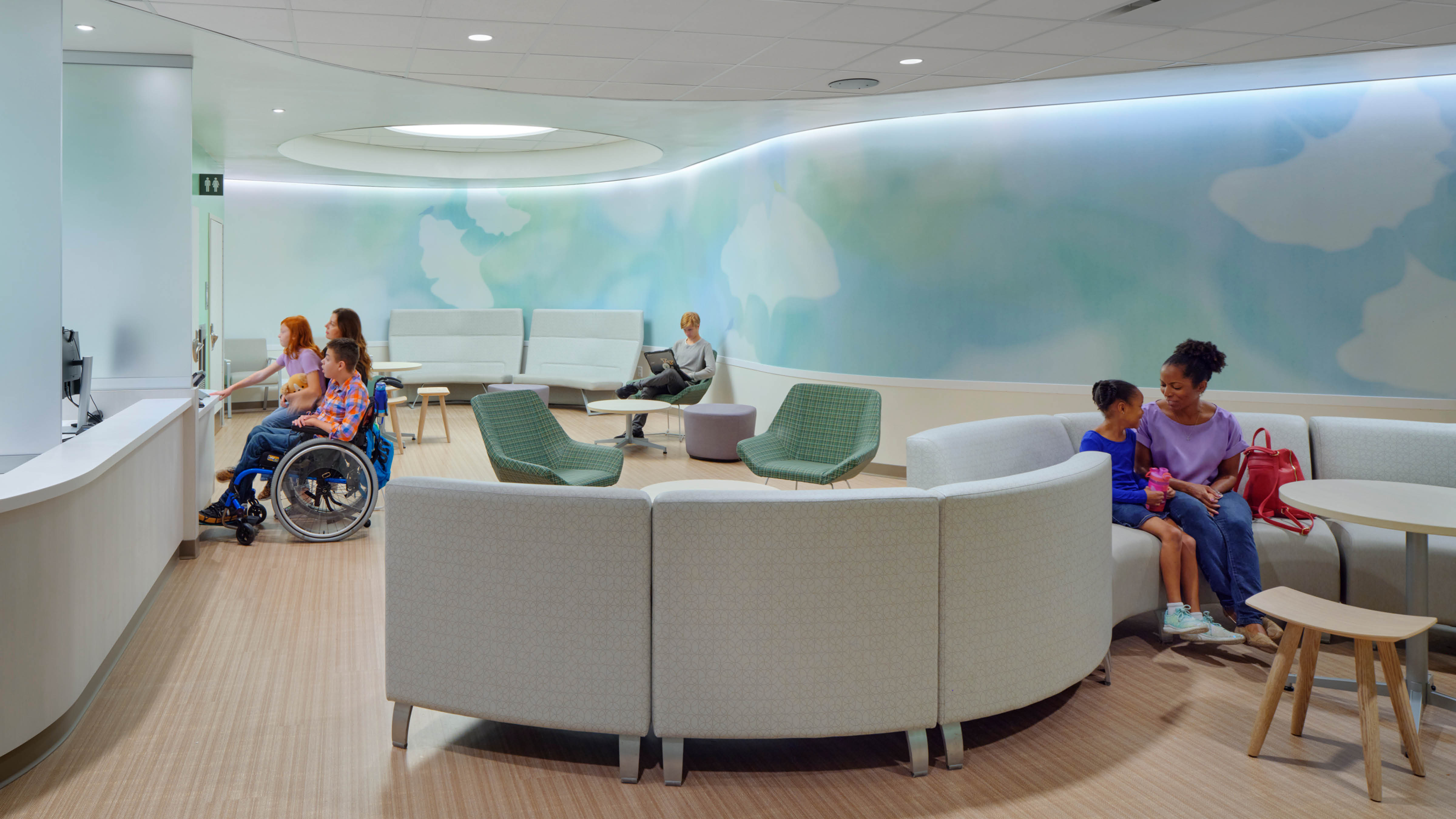
The building’s softness extends beyond its front door to its interior spaces. A light-filled, uplifted lobby with an oculus conveys a sense of hope; cozy nooks built into the walls offer prospect and refuge—a place to survey activity from a spot that feels safe; interior columns invite touch; clear views to the Family Resource Center and the café from the lobby help visitors quickly understand the space which can help bring a sense of calm. At night, the building’s warm glow from within is lantern-like, a beacon of hope in the landscape—like the glow of a flashlight peeking through a blanket fort. Post-occupancy, the project has demonstrated a 97% reduction in restraint/seclusion hours.
The growing adolescent mental health care crisis in America means a greater need for pediatric mental and behavioral health spaces that destigmatize and demystify treatment. This project fills a critical gap by expanding access to care through a building that—by expressing security, shelter, and softness— sends a potent message: Help, hope, and health are within reach.







Project Details -
Submission Category
Building Architecture- Large Scale (>10,000 sf)
Date of Completion
January, 2025
Thank You to our 2025 Sponsors!
Critical to the continued success and growth of the awards program is the generosity and support of Business and Industry Patrons like you. We would like to take the opportunity to invite you to consider supporting great design in the built environment. Corporate and Individual donations are welcome at any level, and will be acknowledged in our event based on level of sponsorship commitment. Please consider lending your sponsorship support and joining the celebration of creativity and quality design in our community.
Sponsor CDA TodaySpire


Column




Foundation










Keystone