
Cleveland’s Front Porch: A Threshold for Connection (Master of Architecture Thesis)
Landscape Architecture & Community Planning – Implementation
Project Narrative
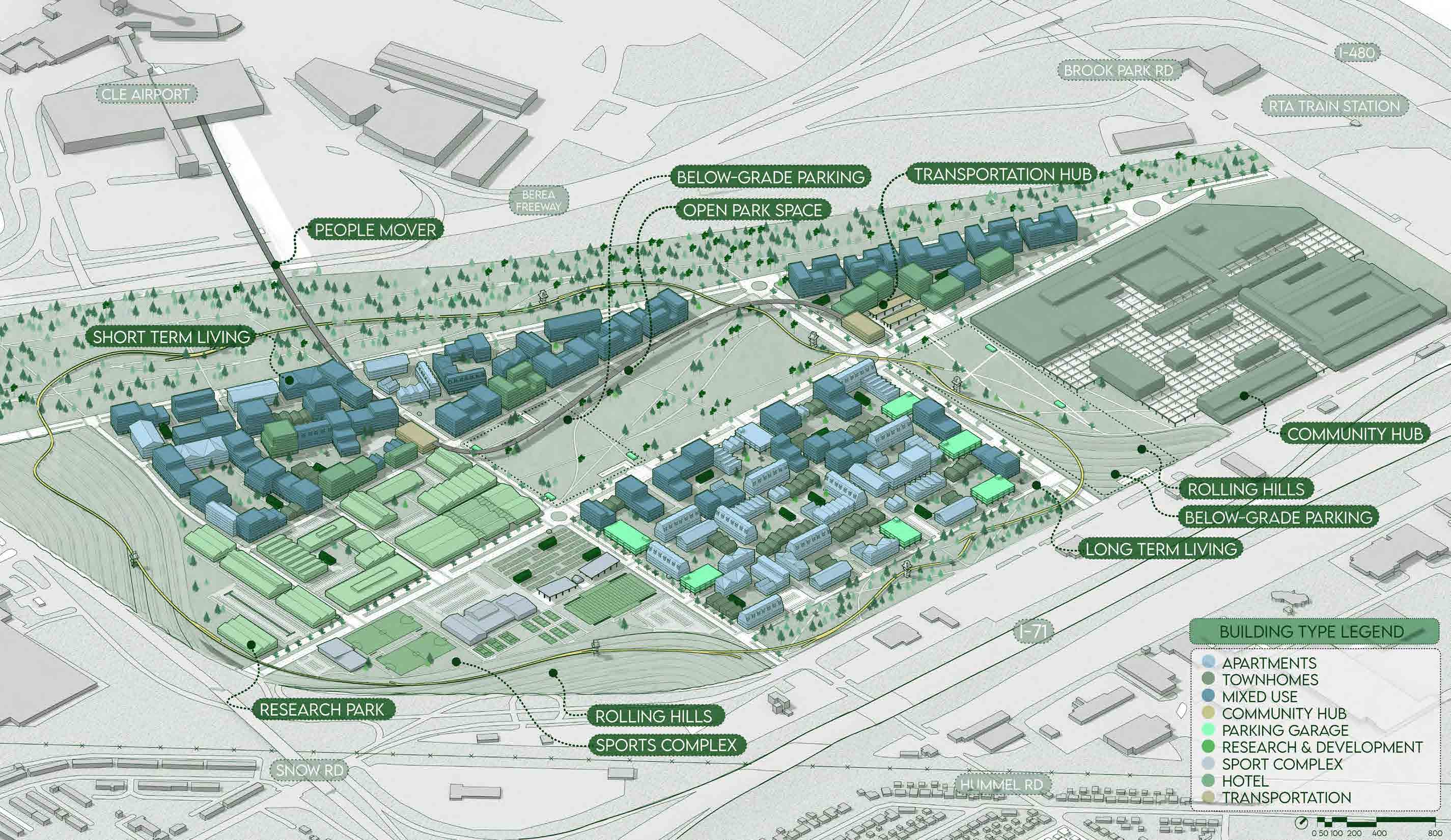
This project explores how human-scaled, dense, and community-centered spaces can exist outside traditional city centers, especially in overlooked “in-between” zones. These areas often feel disconnected and purposeless, yet they hold real potential to become places of belonging and connection. On the edges of our cities, public spaces that invite community are rare. Could brownfield sites be transformed into a new kind of urban zone?
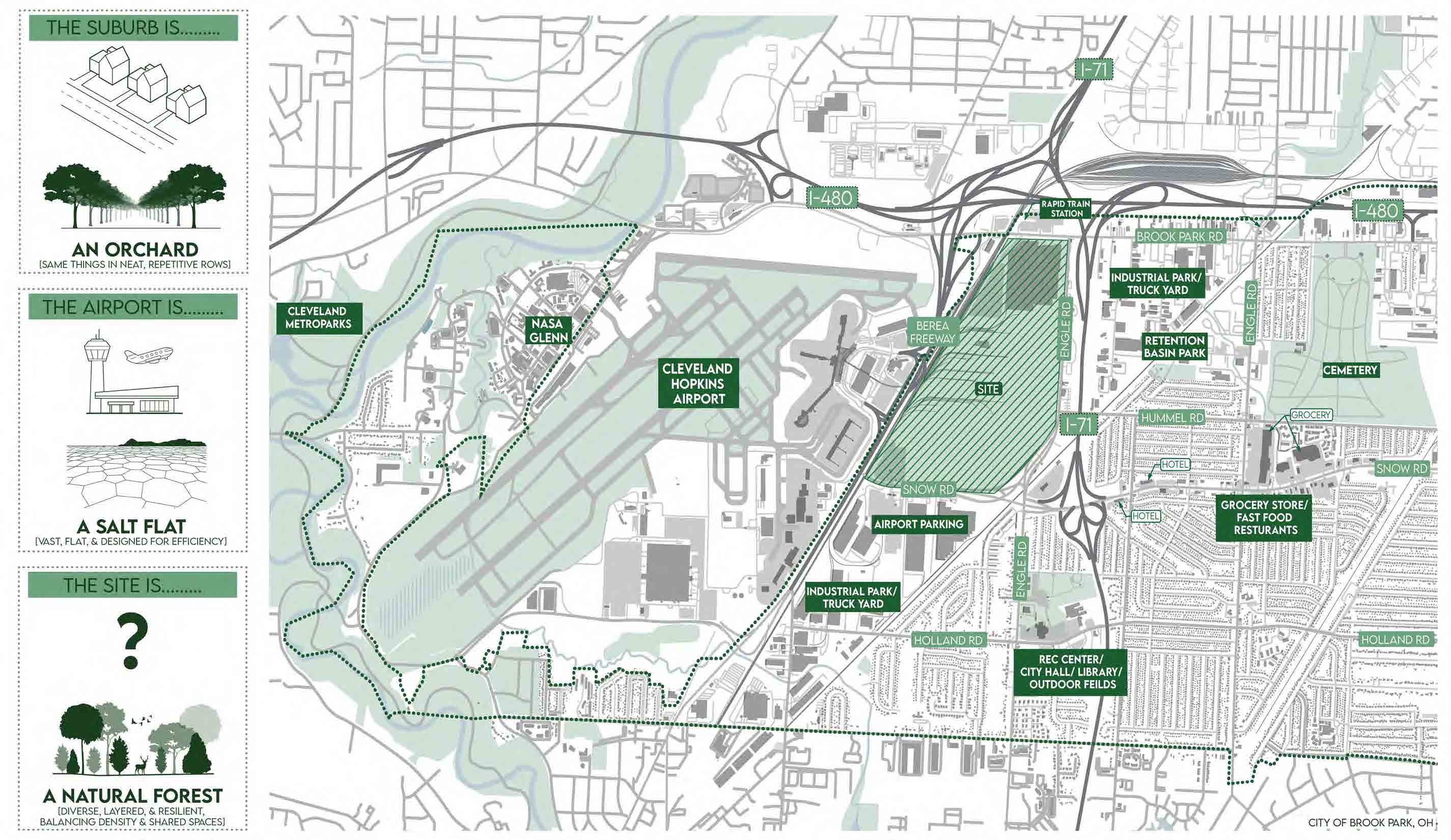
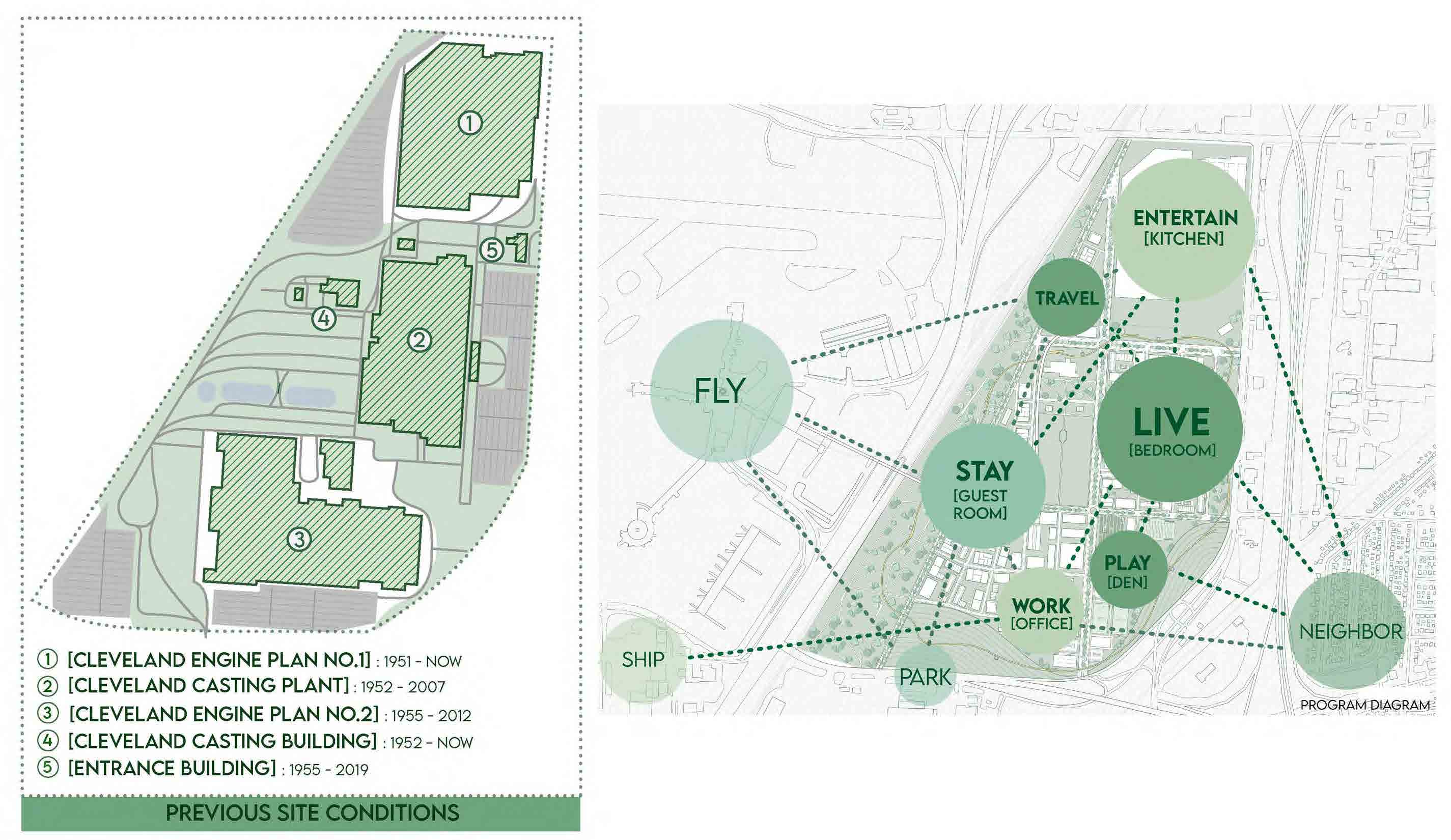
Focusing on a 315-acre former Ford Plant in Brook Park, Ohio, right next to Cleveland Hopkins International Airport, this site was once a powerful industrial hub that shaped the surrounding community. Now it sits largely vacant, cut off from the people it once supported. The site doesn’t have to be a relic of Cleveland’s manufacturing past, it can become the foundation for a new kind of neighborhood, one that shows people what Cleveland is from the moment they land.
The site sits between two isolating systems: an airport, designed for efficiency rather than human experience, and a suburb shaped by single-use zoning, often lacking true gathering spaces. In many ways, suburbs function like orchards, spread out, disconnected, and missing the communal spaces that bring neighbors together. This project asks: what if this space between these zones could have its own “front porch”?
By that, it is a space that feels both like a threshold and a welcome mat, extending the idea of home and neighborhood outward, where people can meet, rest, and share life. For residents, it becomes a hub of connection and daily rhythms. For travelers, it offers a first impression of Cleveland that feels warm, human, and rooted in community the moment they step off the plane.
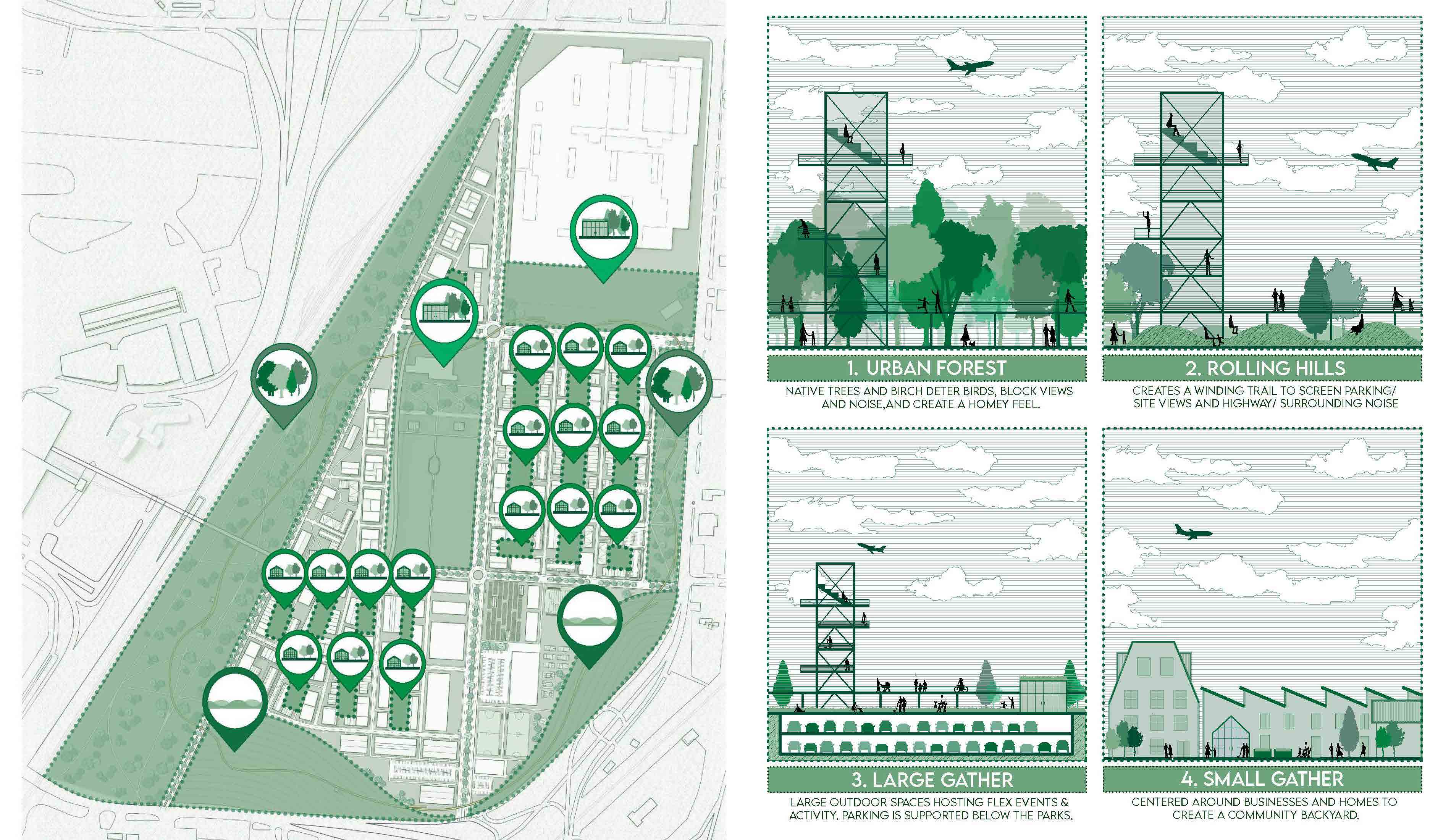
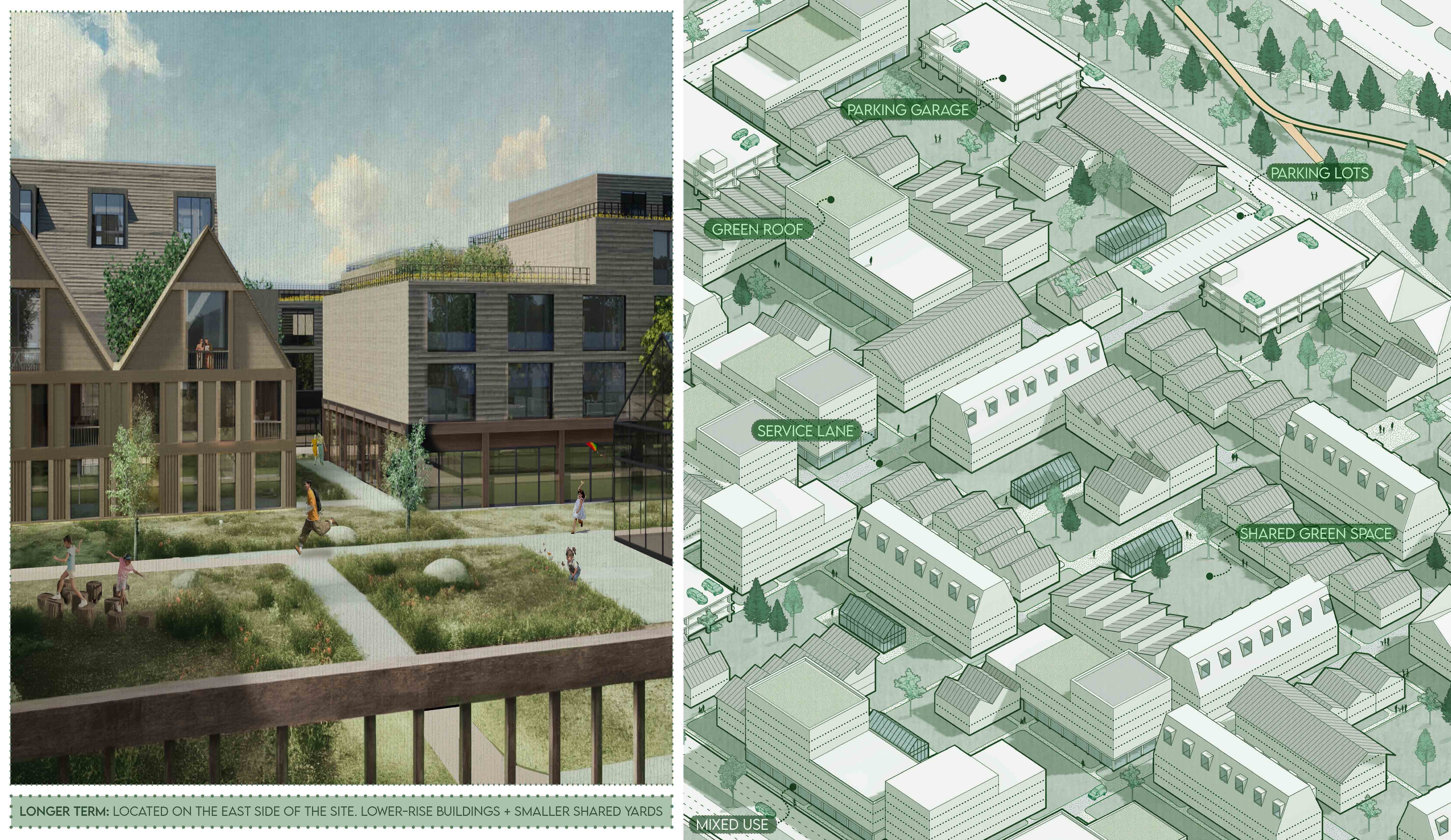
The master plan builds on this idea, transforming the site into a walkable, medium-density urban village. Townhomes, apartments, and adaptive reuse of the Ford factory are layered with landscape and pedestrian-first infrastructure. Landscape doesn’t just fill space, it becomes structure, buffer, and connective tissue, linking places to live, work, gather, and visit.
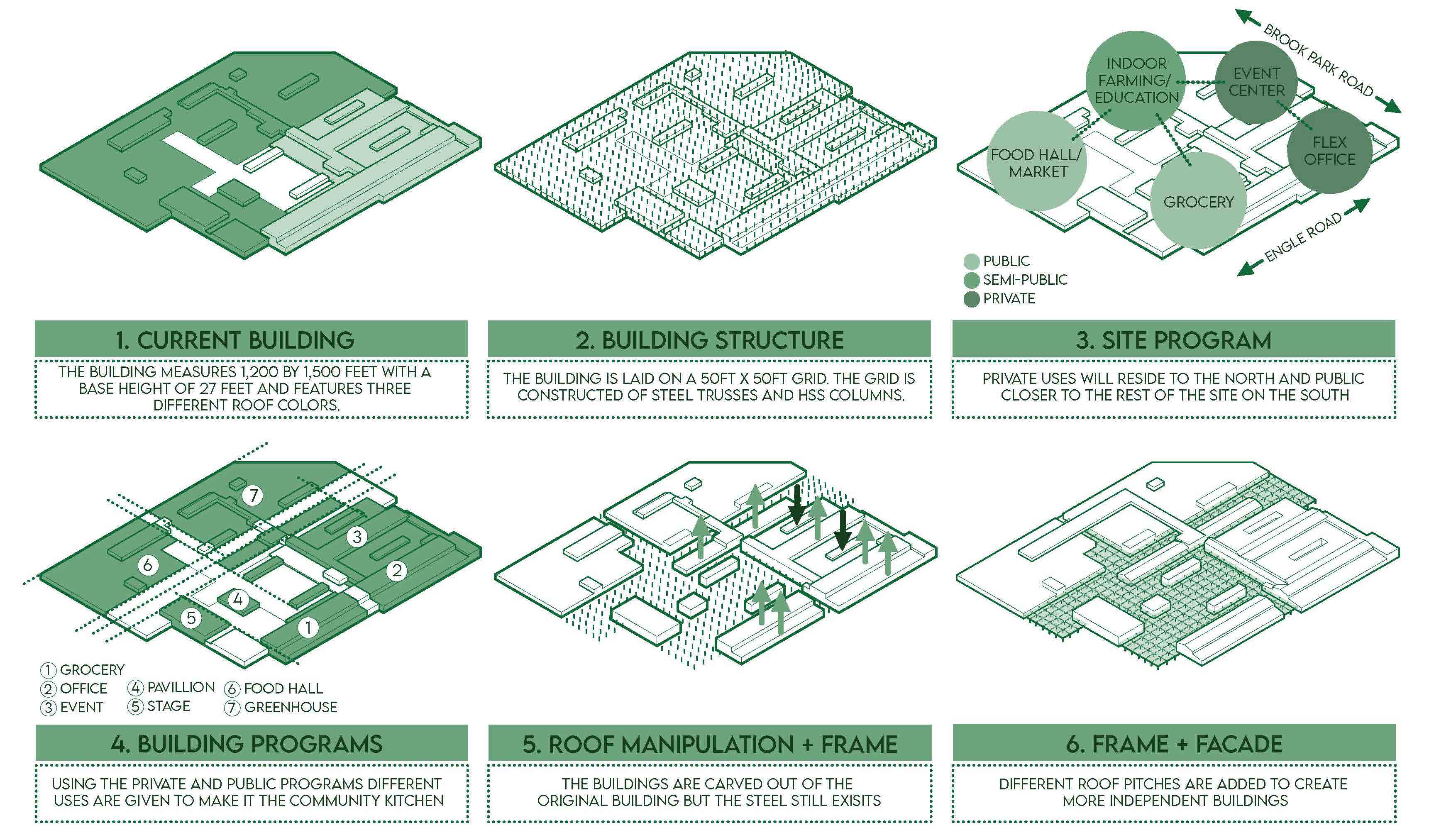
At the heart of it is the Ford factory itself. Rather than letting it sit empty, the building becomes a hub of everyday life, housing a food hall, grocery store, event spaces, and indoor gardens. Surrounding it, clusters of housing and mixed-use spaces serve three groups: travelers seeking comfort during layovers, airline staff looking for alternatives to crowded crash pads, and local residents who want community-centered, urban-style living outside the single-family home.
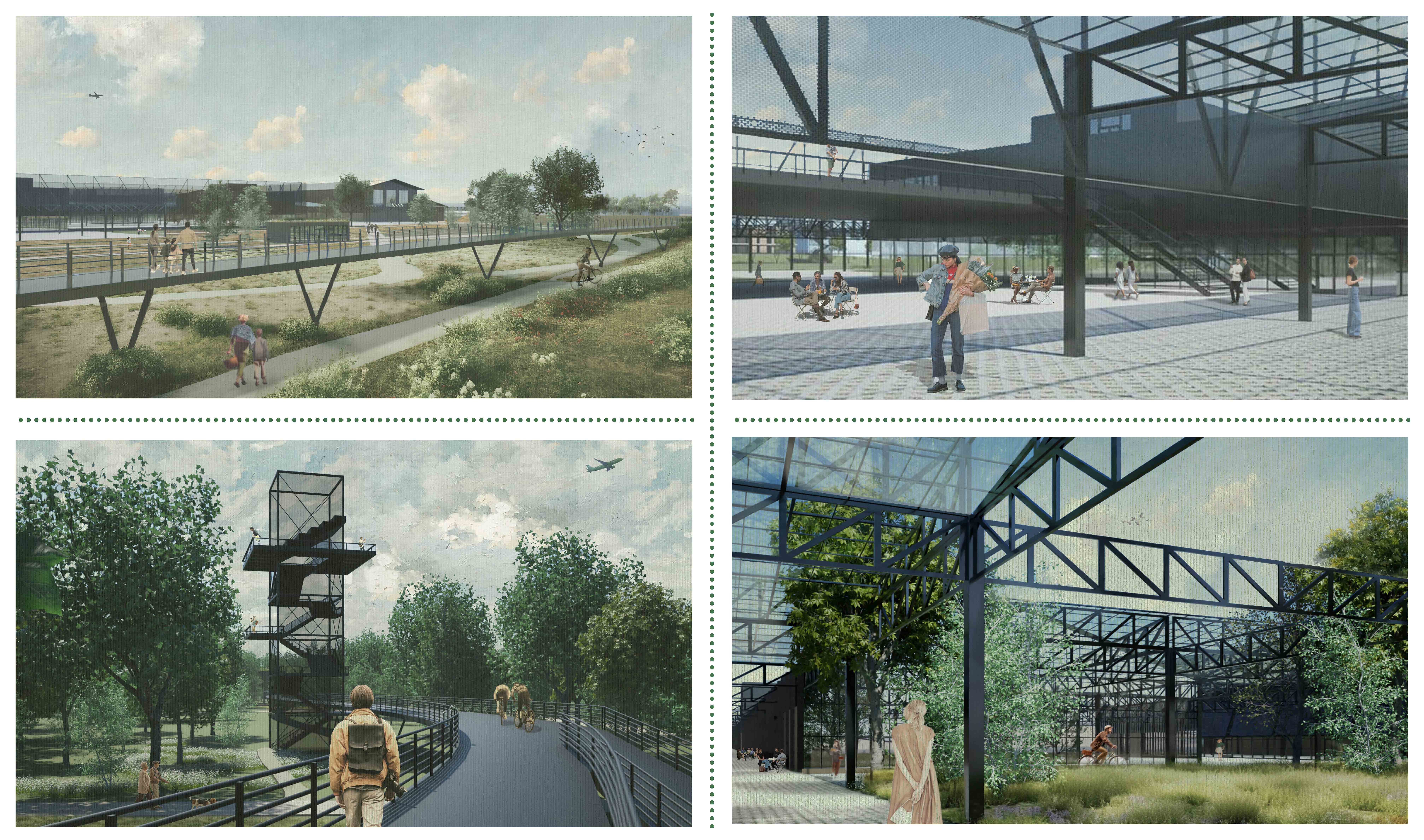
Connecting the airport and community are a people mover and elevated green paths linking the site’s districts. Together, they transform what was once a barrier into a welcoming experience, reintroducing Cleveland’s landscape and hospitality to all who arrive.







Project Details -
Submission Category
Landscape Architecture & Community Planning – Implementation
Date of Completion
January, 2025
Project Team
Student Team Members
Gabriella Dashiell
Thank You to our 2026 Sponsors!
Critical to the continued success and growth of the awards program is the generosity and support of Business and Industry Patrons like you. We would like to take the opportunity to invite you to consider supporting great design in the built environment. Corporate and Individual donations are welcome at any level, and will be acknowledged in our event based on level of sponsorship commitment. Please consider lending your sponsorship support and joining the celebration of creativity and quality design in our community.
Sponsor CDA TodayAfter-Party Sponsor

Firm Sponsors




Signature Cocktail Sponsors


Column



Foundation



Keystone







Event Photographer
