Co-Boost Mixed-Use Building for Generation Z and Young Professionals
Interior Architecture- Large Scale (>5,000 sf)
Project Narrative
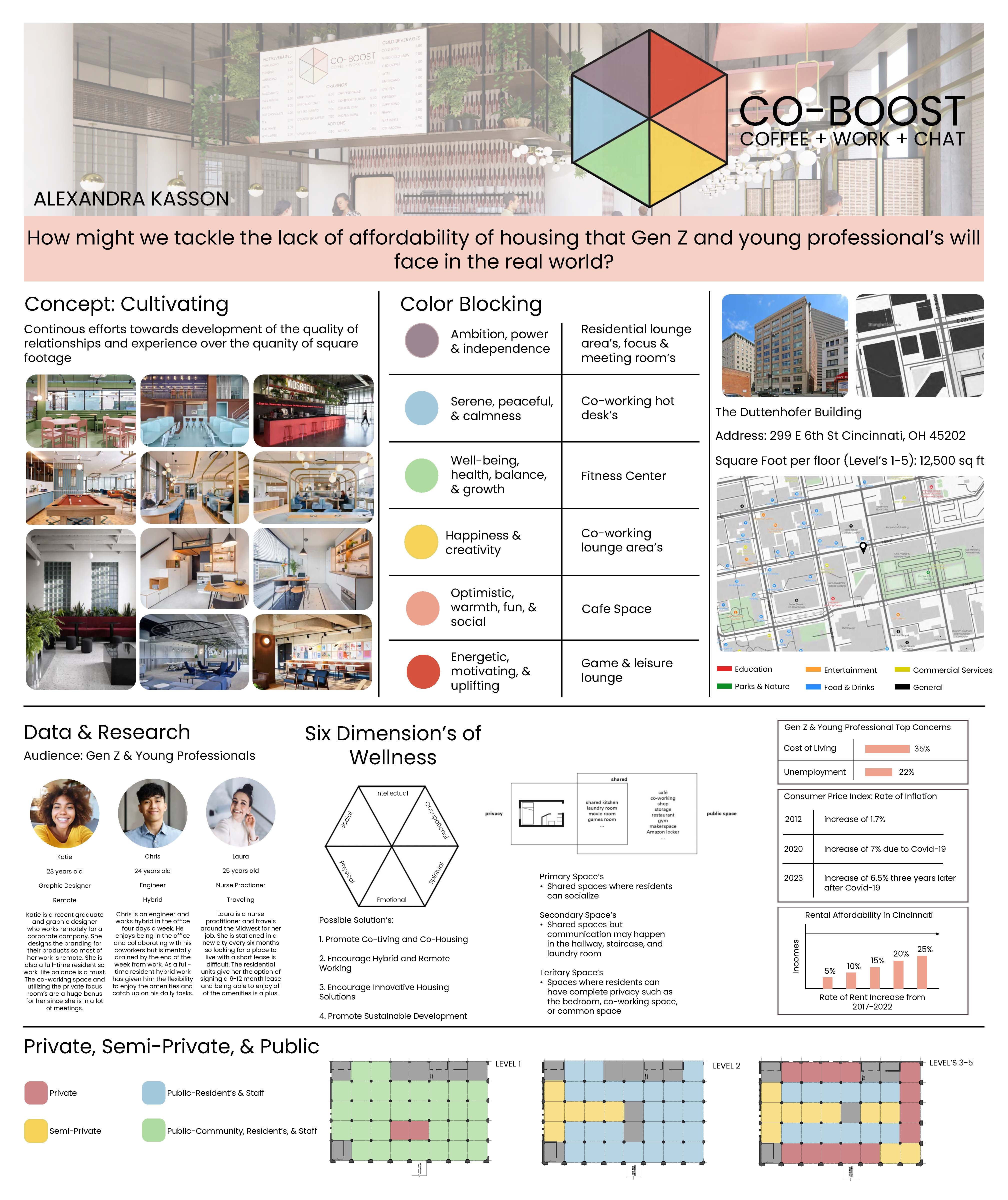
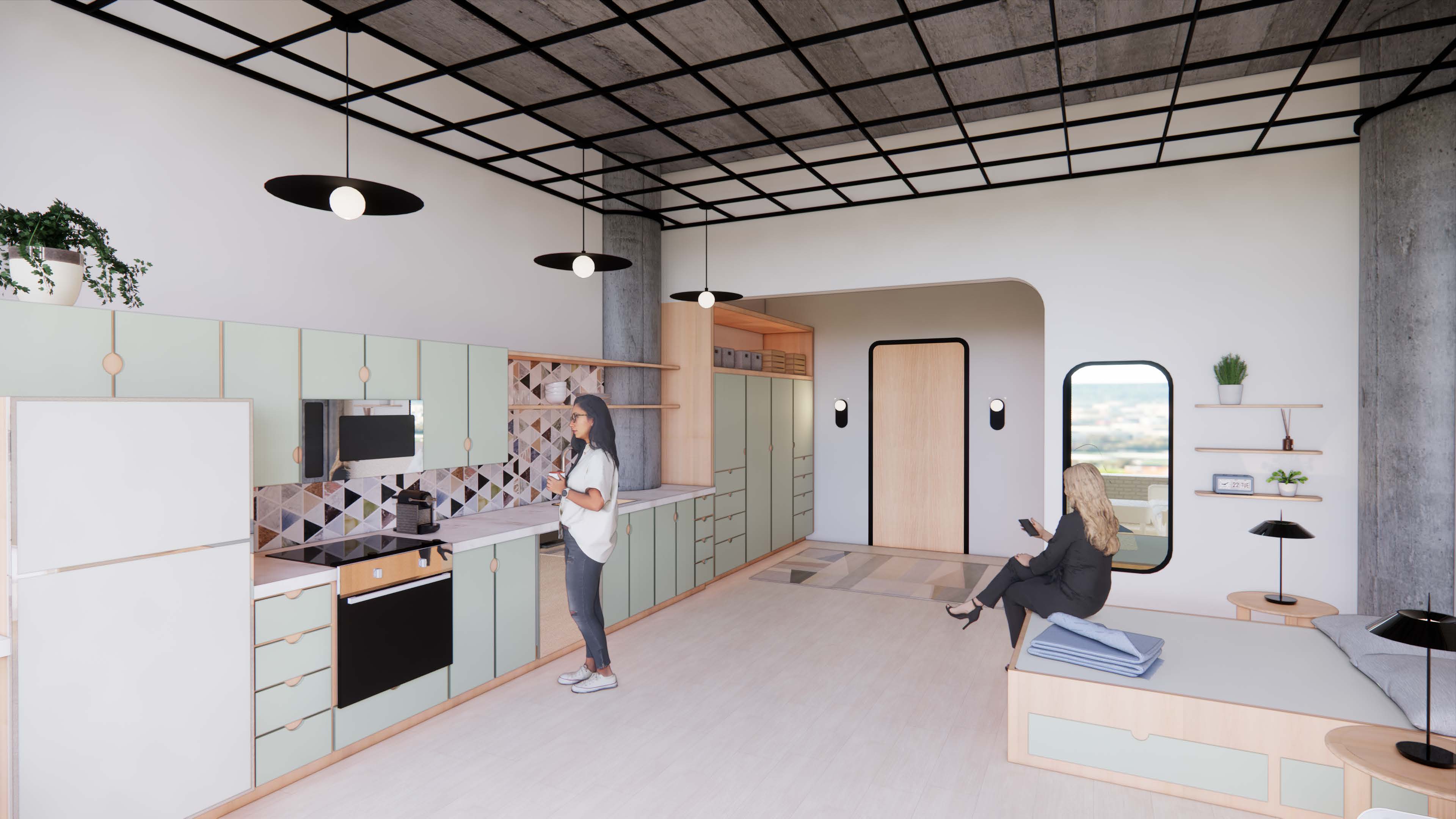
When I first began research for my senior capstone, I knew I wanted to design a mixed-use building focusing on hospitality design catering to the lifestyle and diverse needs of Generation Z and young professionals. With these two things in mind, I wanted to design an atmosphere that would tackle the lack of housing affordability that Generation Z and young professionals will face in the real world. Housing affordability isn't the only challenge that young professionals will encounter, whether it's finding housing, paying rent, or looking for a job. This led me to my project question: How might we tackle the lack of affordability of housing that Generation Z and young professionals will face in the real world?
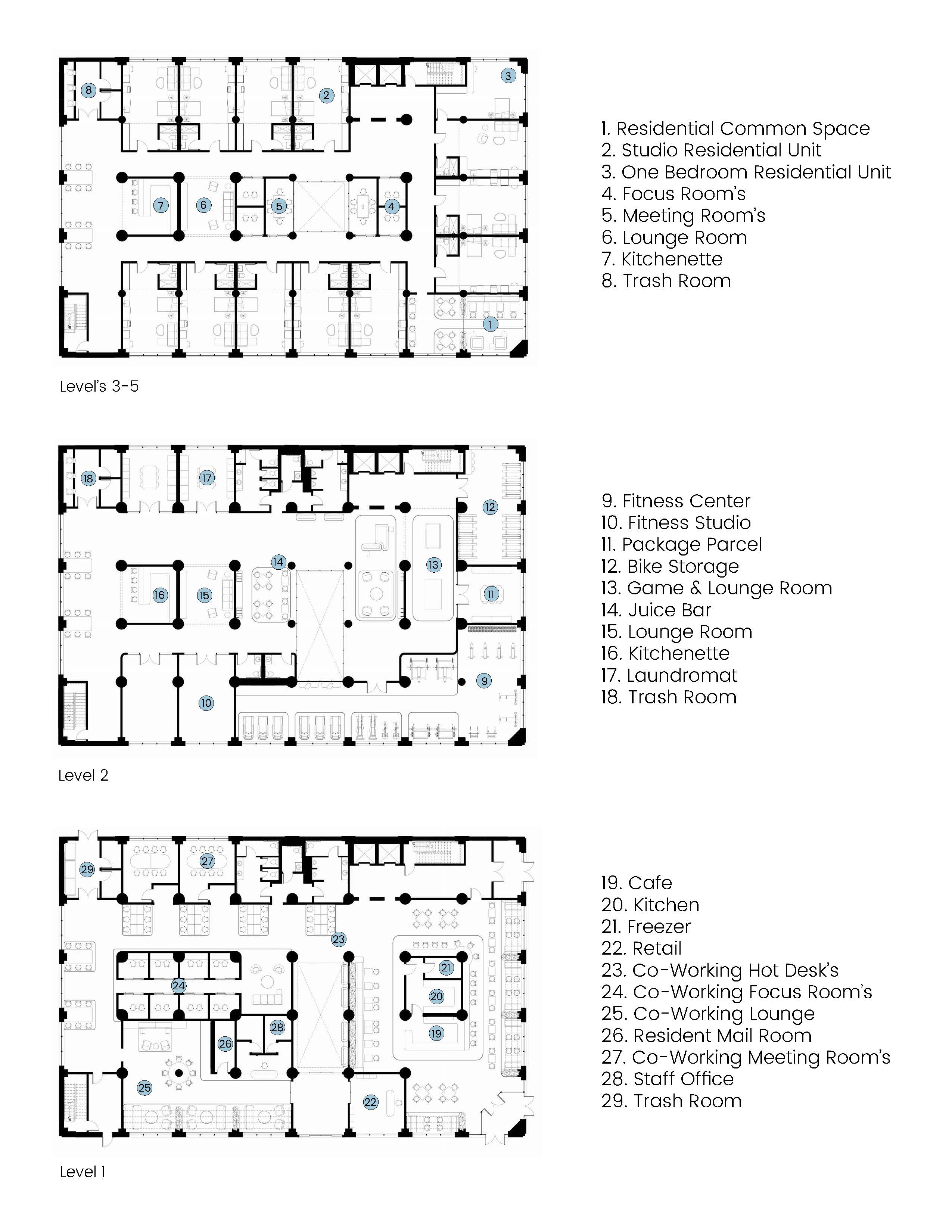
Mixed-use housing goes beyond just serving the function as a residential unit but requires both a cultural issue and a design strategy based on the needs of the desired location. With inflation comes the rising cost of housing affordability, and having fully equipped residential units with all amenities in one building gives a new kind of convenience that people can enjoy. The functions in the mixed-use building include recreation, residential, hospitality, and co-working spaces.
My site location is the Duttenhofer Building in Cincinnati, OH. Cincinnati has seen a population increase of over 1,500 people per year since 2010, and the Cincinnati Metropolitan Area’s population is expected to continue to grow in the future. With population growth comes the demand for more housing and rent, which has risen in the last couple of years due to inflation, while incomes haven't fluctuated, making it harder to pay rent every month. New rental units now enter the market at high prices that are difficult for new renters to afford, so a lack of affordable housing puts new renters at risk for obstacles such as rent, food, and other necessities. With this concern in mind, that’s why I chose to design spaces that offer possible solutions such as:
-Promoting co-living and co-housing
-Encouraging hybrid and remote working
-Encouraging innovative housing solutions
-Promoting sustainable development
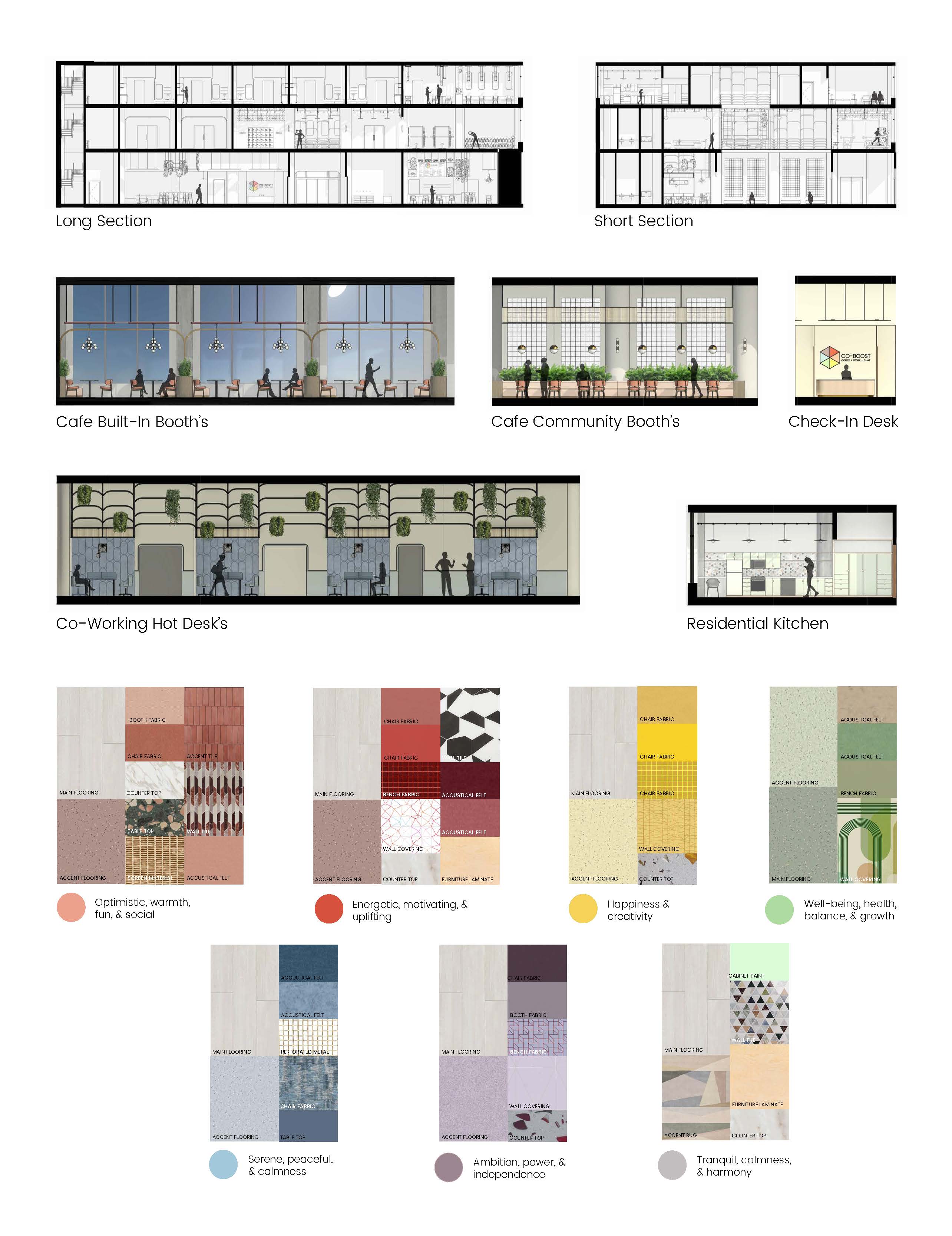
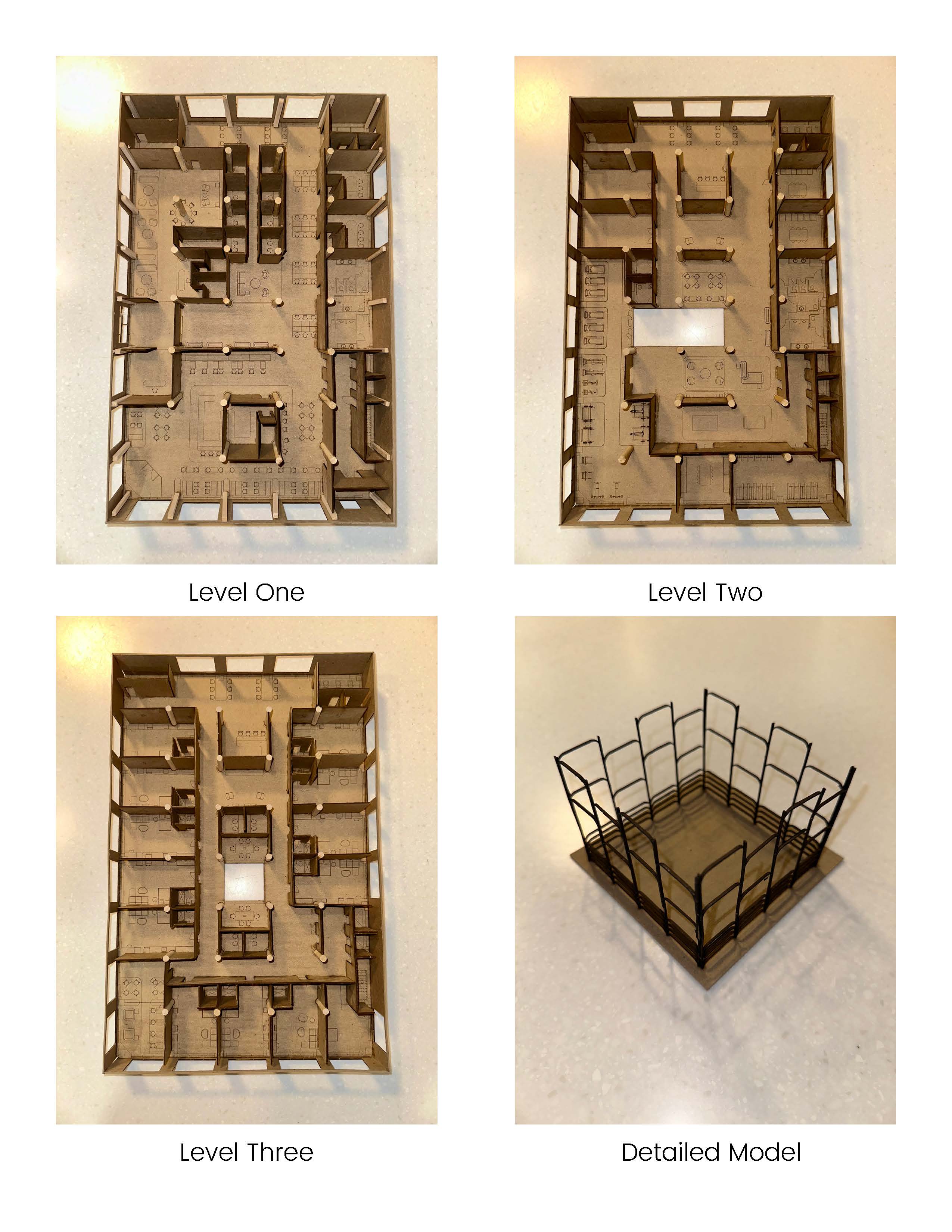
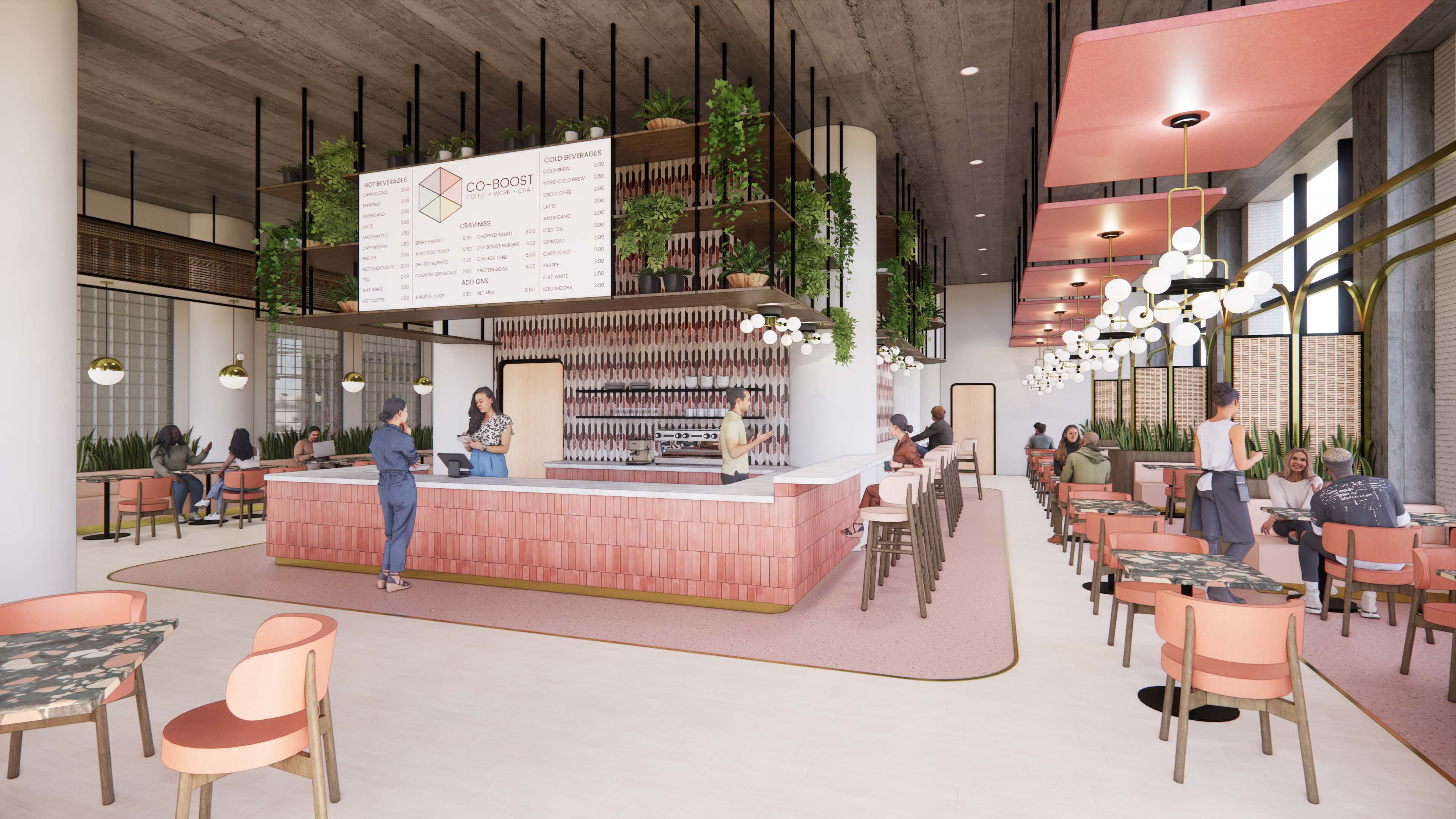
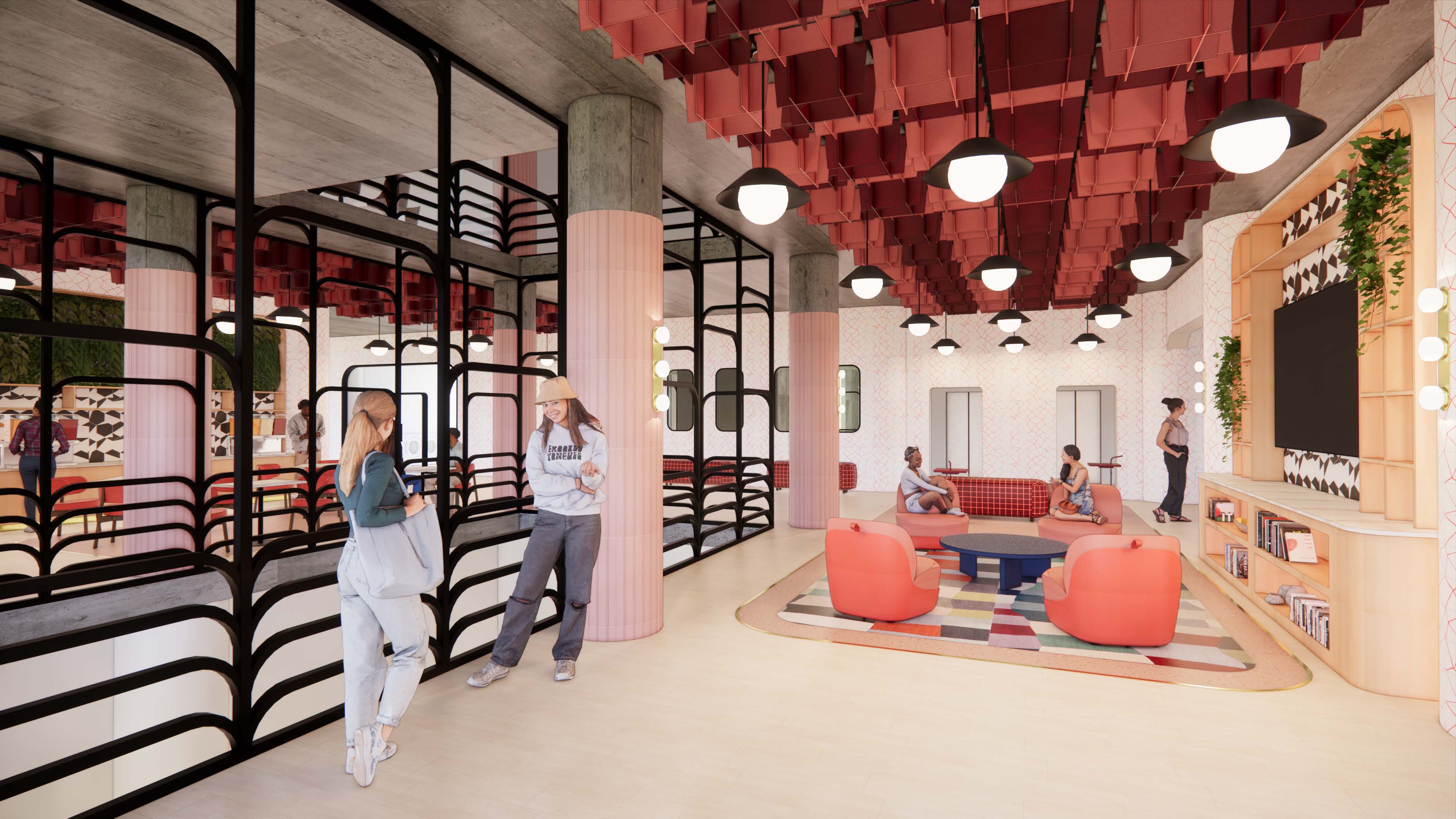
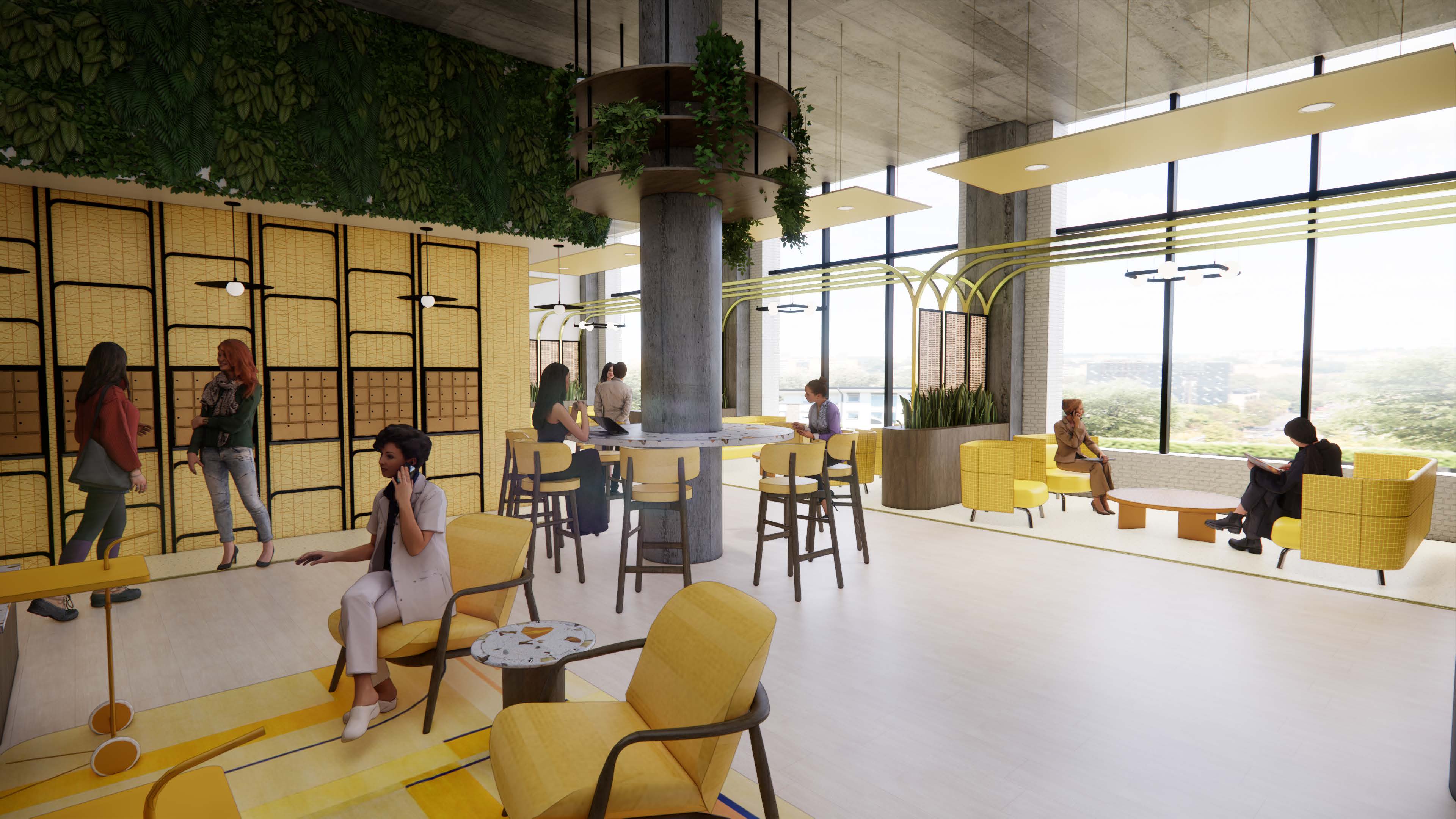
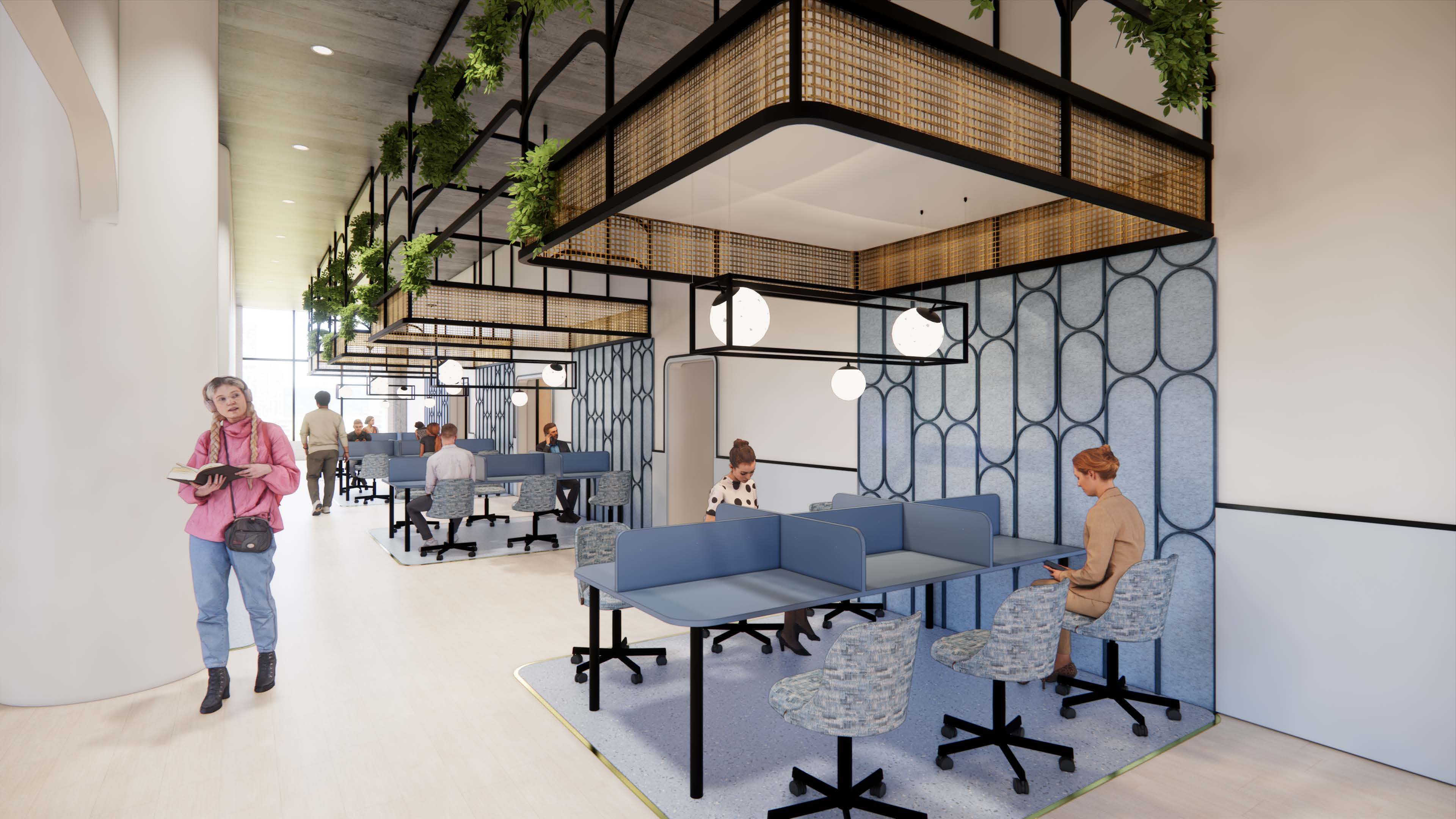
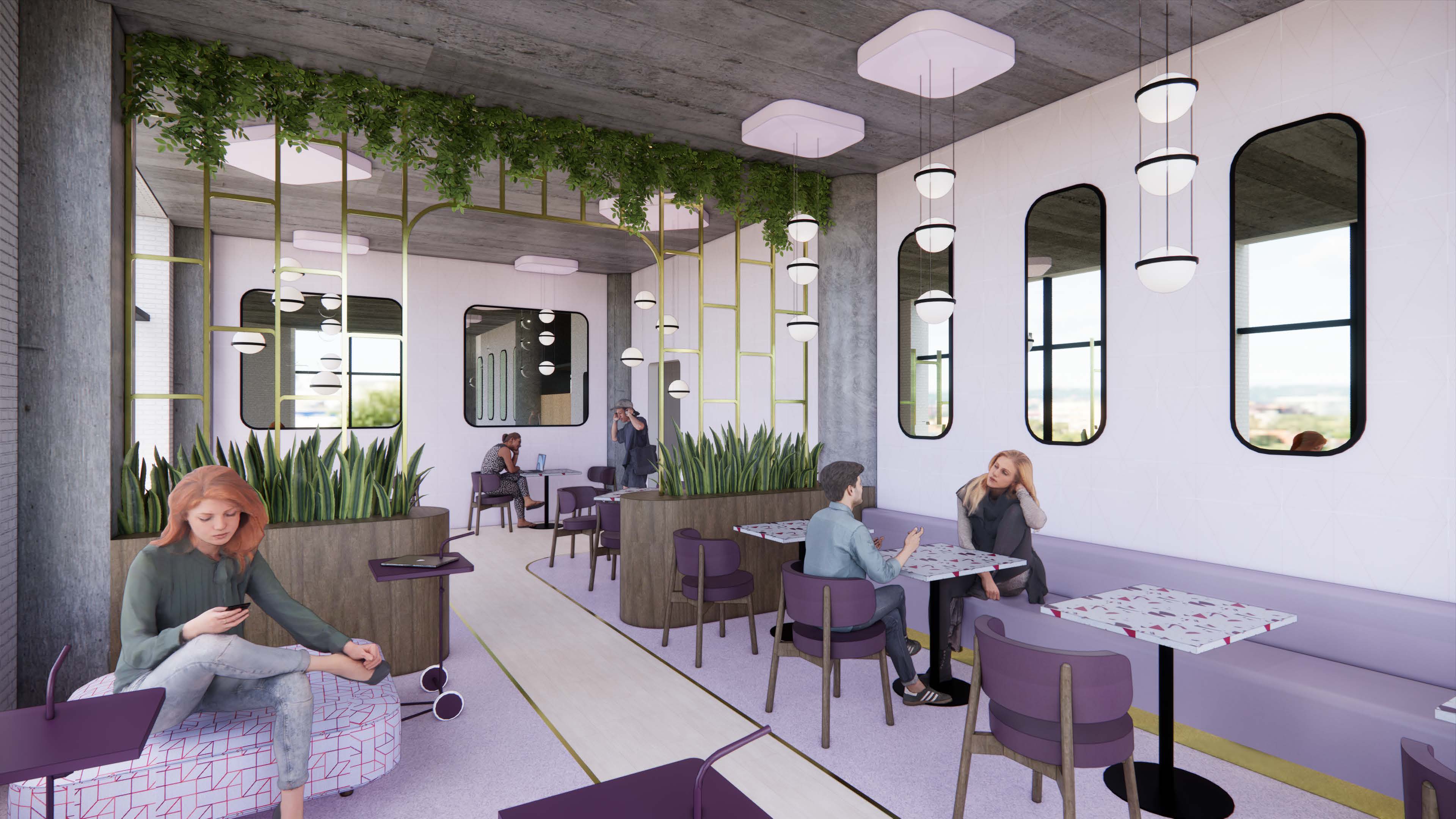
With these possible solutions in mind, Co-Boost puts continuous efforts towards the development of the quality of relationships and experience over the quantity of square footage. The mixed-use building has primary, secondary, and tertiary spaces throughout the building. Primary spaces are shared spaces where residents can socialize. Secondary spaces are shared spaces, but communication may happen in the hallway, staircase, and laundry room. Tertiary spaces are spaces where residents can have complete privacy, such as the bedroom, co-working space, or common space. Throughout the spaces, I used color blocking, a type of wayfinding where each space has its own assigned color based on the psychological meaning behind the color.


Project Details -
Submission Category
Interior Architecture- Large Scale (>5,000 sf)
Date of Completion
May, 2024
Project Team
Student Team Members
Alexandra Kasson
Photoraphers
Alexandra Kasson
Thank You to our 2025 Sponsors!
Critical to the continued success and growth of the awards program is the generosity and support of Business and Industry Patrons like you. We would like to take the opportunity to invite you to consider supporting great design in the built environment. Corporate and Individual donations are welcome at any level, and will be acknowledged in our event based on level of sponsorship commitment. Please consider lending your sponsorship support and joining the celebration of creativity and quality design in our community.
Sponsor CDA TodaySpire


Column




Foundation





Keystone