
Collective Espresso
Interior Architecture- Small Scale (<5,000 sf)
Project Narrative
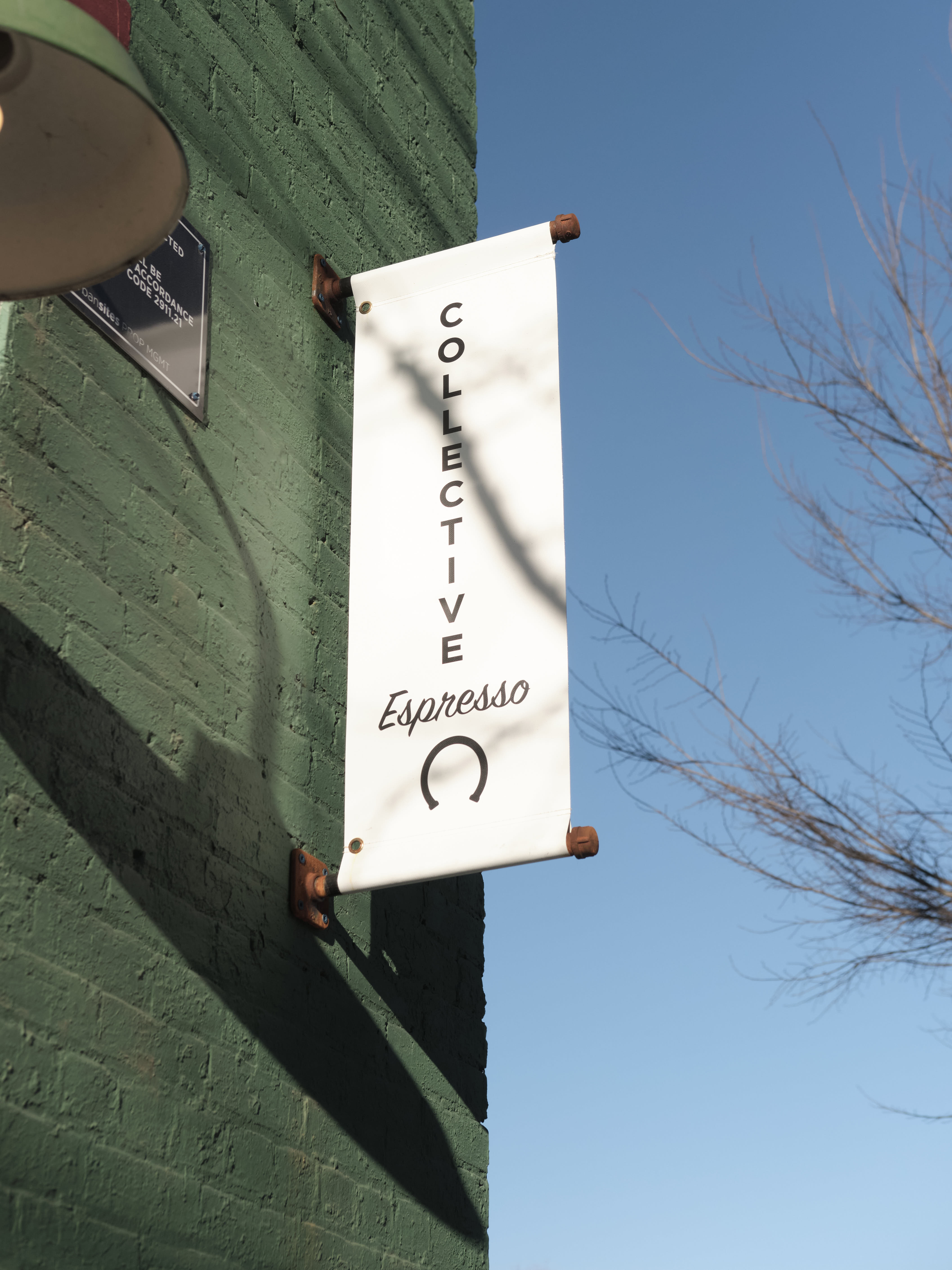
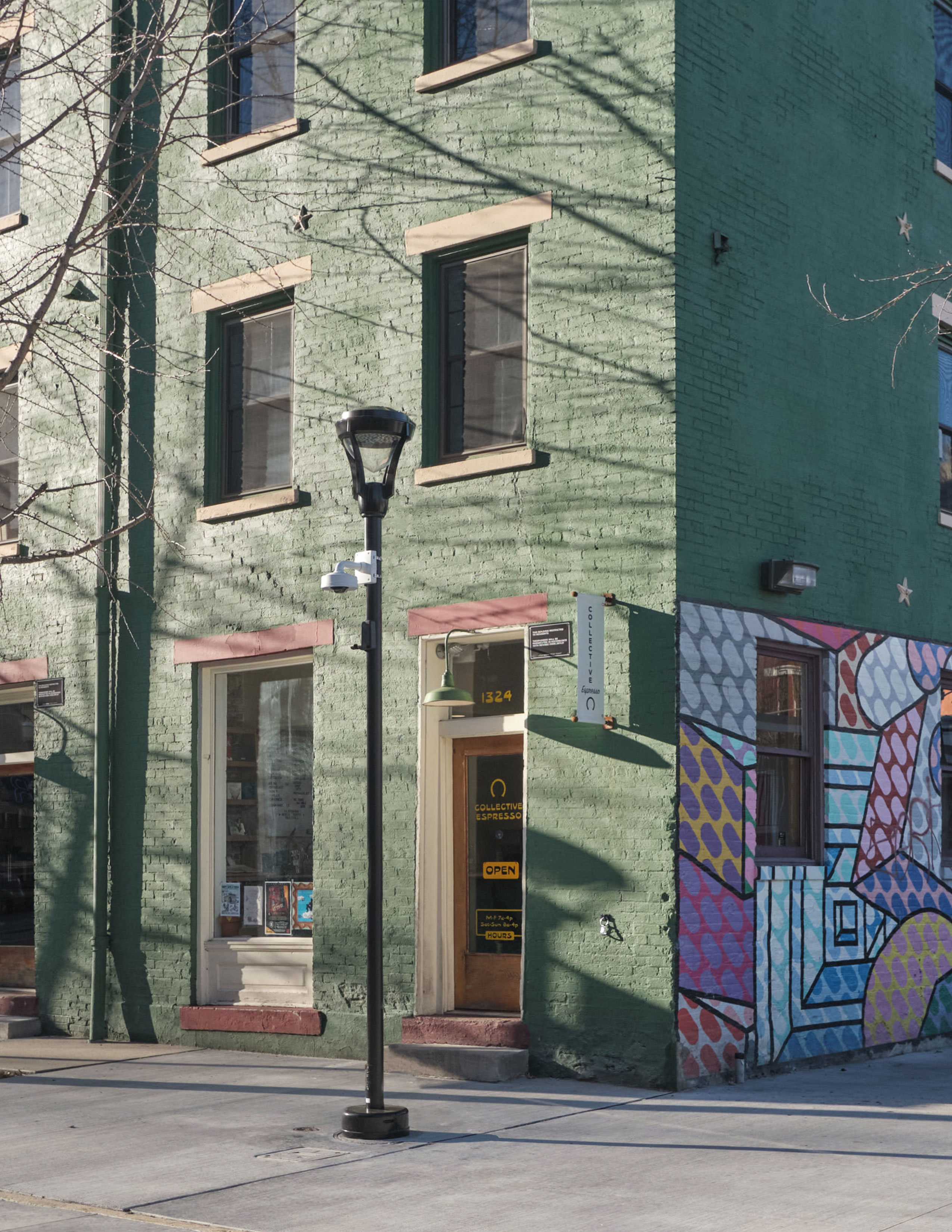
Located within the historic Over-the-Rhine district just north of downtown Cincinnati, Collective Espresso occupies a modest rear room within a century-old rowhouse building, tucked away on a pedestrian corridor just off Main Street.
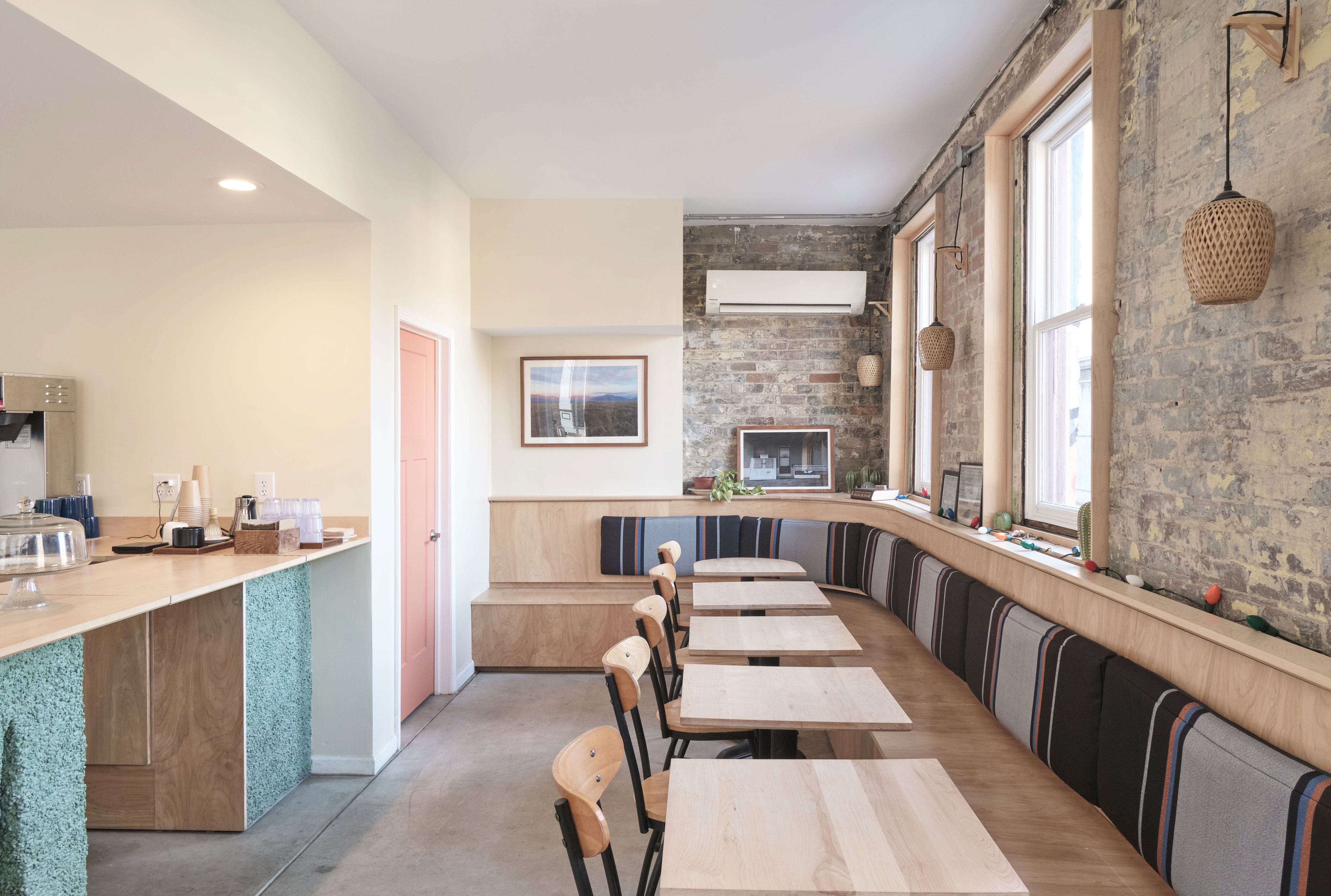
The room, less than 400 square feet, is defined by paint-peeled brick walls, intentionally left exposed, and a concrete slab, weathered from former uses and occupants. This existing envelope provides a textured, time-worn backdrop for a new set of clean-lined, economical, and precisely detailed built-ins that neither overpower nor retreat from their surroundings.
The design articulates Collective's playful "neue-tumbleweed" aesthetic identity through its use of materials, spatial clarity, and thoughtful detailing. The bar, a focal point of the interior, features a pebbledash aggregate surface finished with a cactus-green dyed resin. The finish allows the natural variation in the gravel to emerge subtly, introducing tactile depth and color that shifts with the light. This material along with sandy-toned walls and upcycled textiles draws inspiration from desert landscapes and American road trips, giving the space a unique identity that transcends its urban setting.
The compact program includes a barista counter, customer seating, merchandise display, and a single restroom. These elements are efficiently organized allowing the space to remain open and visually porous. A continuous horizontal datum established by the height of the counter wraps the room, unifying architectural elements and creating a visual horizon. This datum determines the height of banquette backrests and display shelving, providing both coherence and a sense of scale in the small volume.
Custom millwork forms a family of related elements. Plywood banquettes double as storage units, while their angled backrests conceal power access for lighting and device charging. The banquettes transition into angled wainscoting at the entry, completing the room’s datum line and anchoring the space with a single design move. Opposite, open-backed merchandise shelves align with the same logic, revealing the original brick behind and reinforcing the relationship between new interventions and the existing shell.
Upcycled cushions, made from deadstock fabric originally produced for '90's Ford Broncos, reinforce the project’s commitment to reuse. The layered palette of exposed brick, faded surfaces, plywood, and earthy accents, cultivates a warm, communal environment that invites gathering without pretense.
Despite its small footprint, Collective Espresso delivers a spatially rich and conceptually rigorous experience. It demonstrates how careful calibration and detail can transform a humble interior into a memorable architectural moment.



Project Details -
Submission Category
Interior Architecture- Small Scale (<5,000 sf)
Date of Completion
November, 2023
Submitting Firm Name
Team B Architecture & Design
Project Team
Architect
Team B
Interior Designer
Team B
Other Project Team Members
Upholstery: Taylor Stewart; Millwork / Bar: Team C
Structural Engineer
Structural Engineer
MEP Engineer
MEP Engineer
Civil Engineer
Civil Engineer
Contractor
Sean Mullaney
Thank You to our 2025 Sponsors!
Critical to the continued success and growth of the awards program is the generosity and support of Business and Industry Patrons like you. We would like to take the opportunity to invite you to consider supporting great design in the built environment. Corporate and Individual donations are welcome at any level, and will be acknowledged in our event based on level of sponsorship commitment. Please consider lending your sponsorship support and joining the celebration of creativity and quality design in our community.
Sponsor CDA TodaySpire


Column




Foundation










Keystone