If Cities Could Dance: A Place for the Urban Skater
Landscape Architecture & Community Planning - Planning & Analysis Projects
Project Narrative
“Raising awareness and support for downtown Cincinnati’s public skating facilities and social wellness programs that contribute to the health, community, culture, and vibrancy of the urban core.” —Mission Statement of Skate Cincinnati
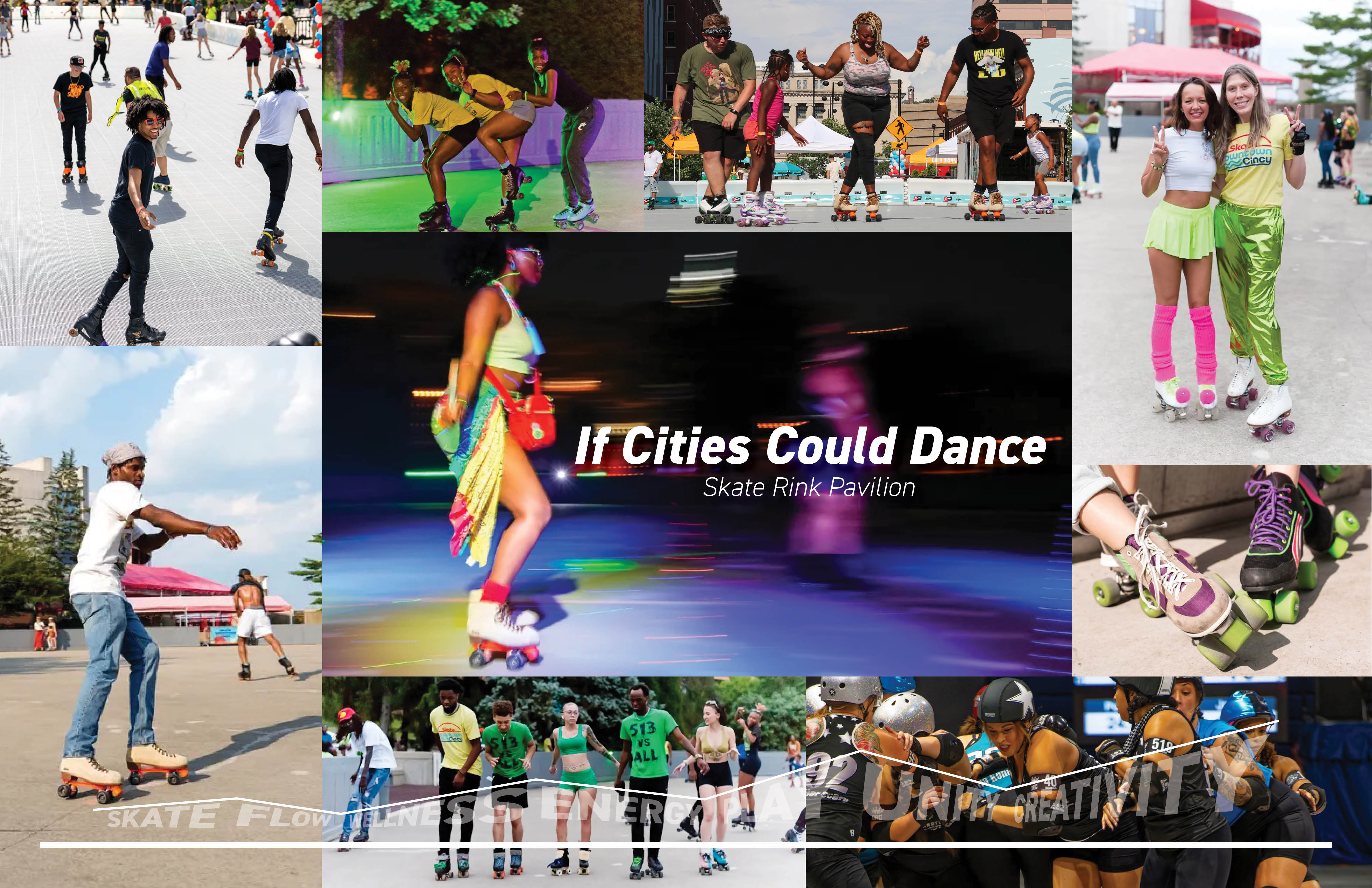
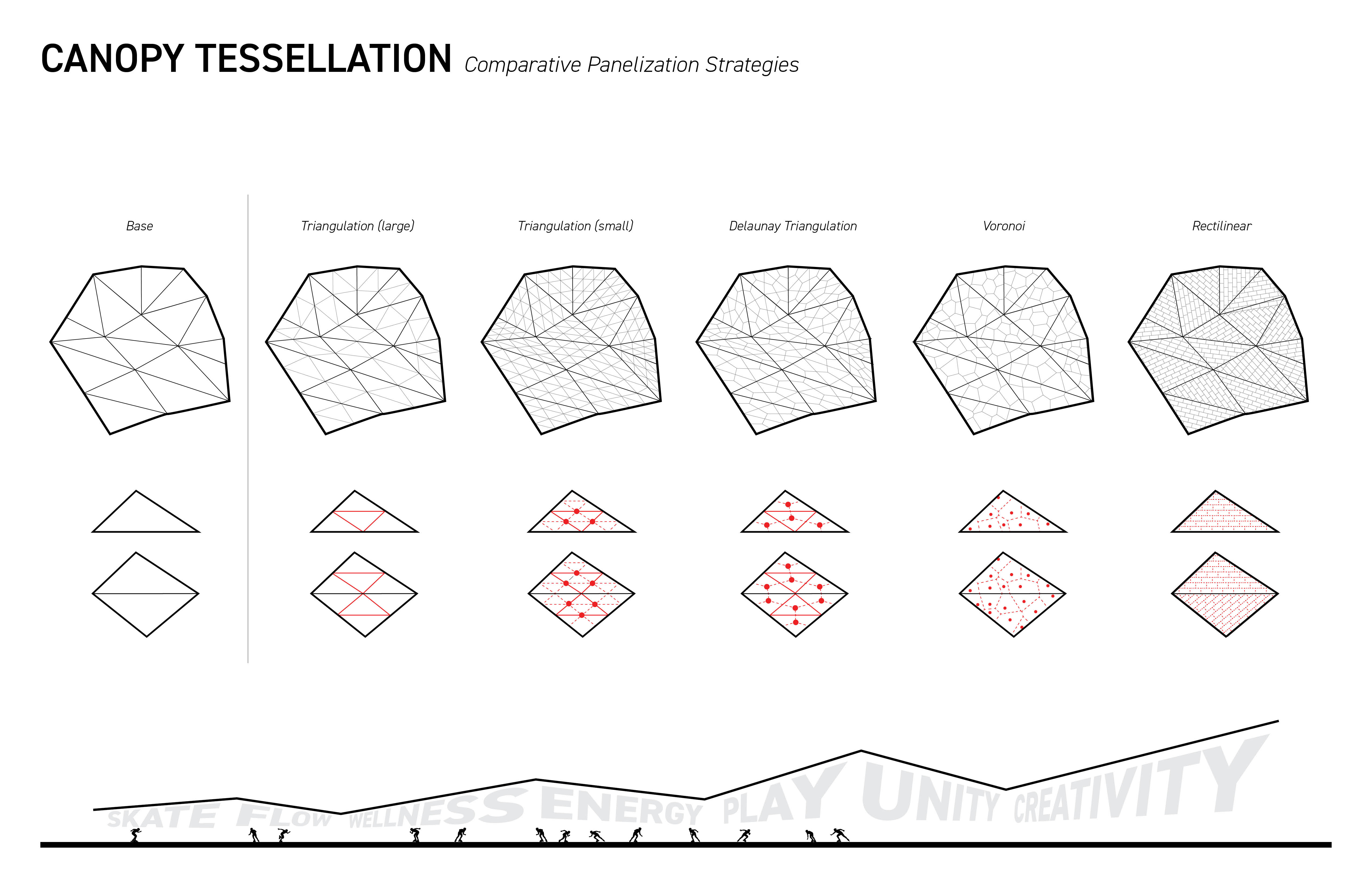
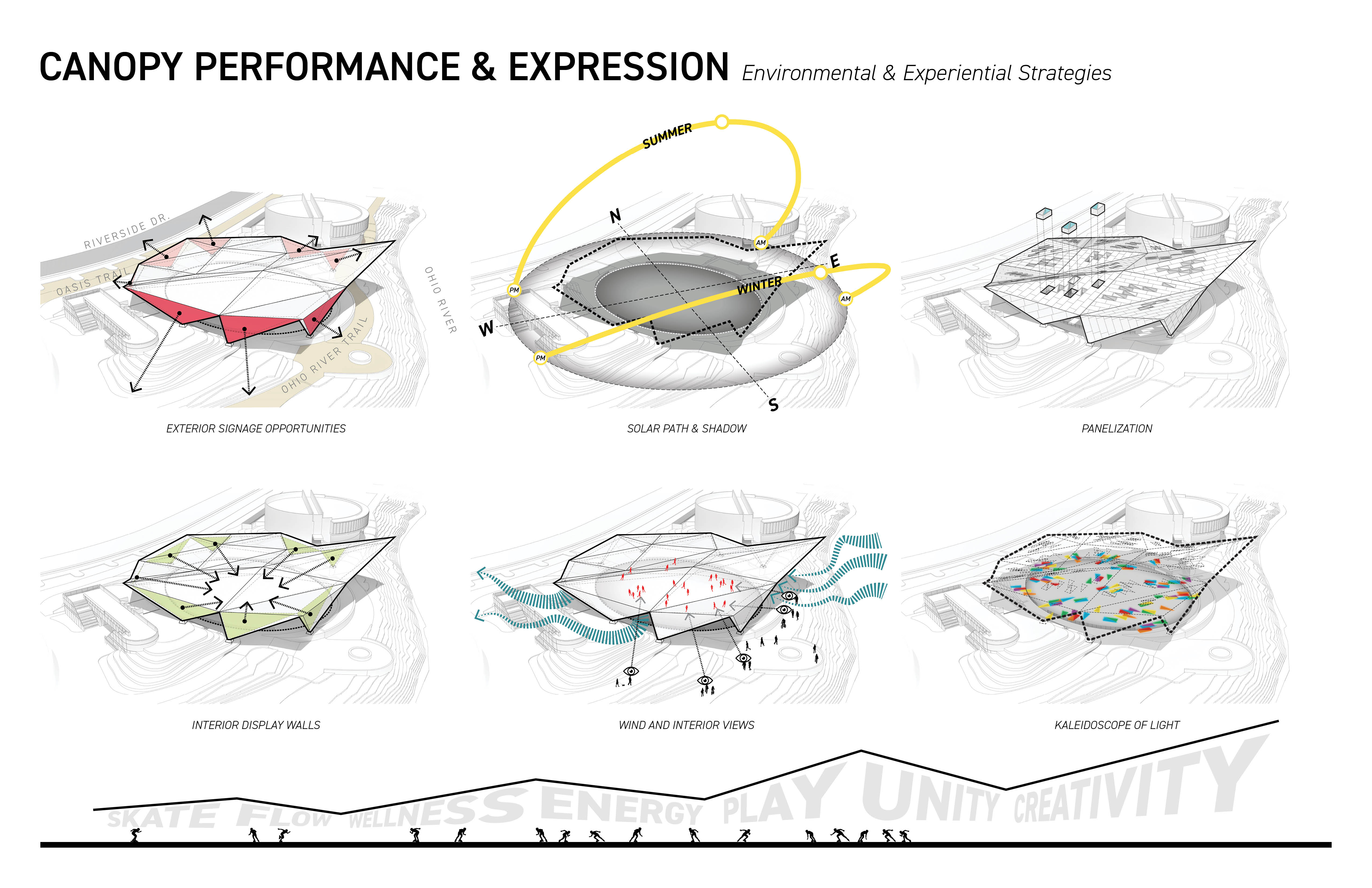
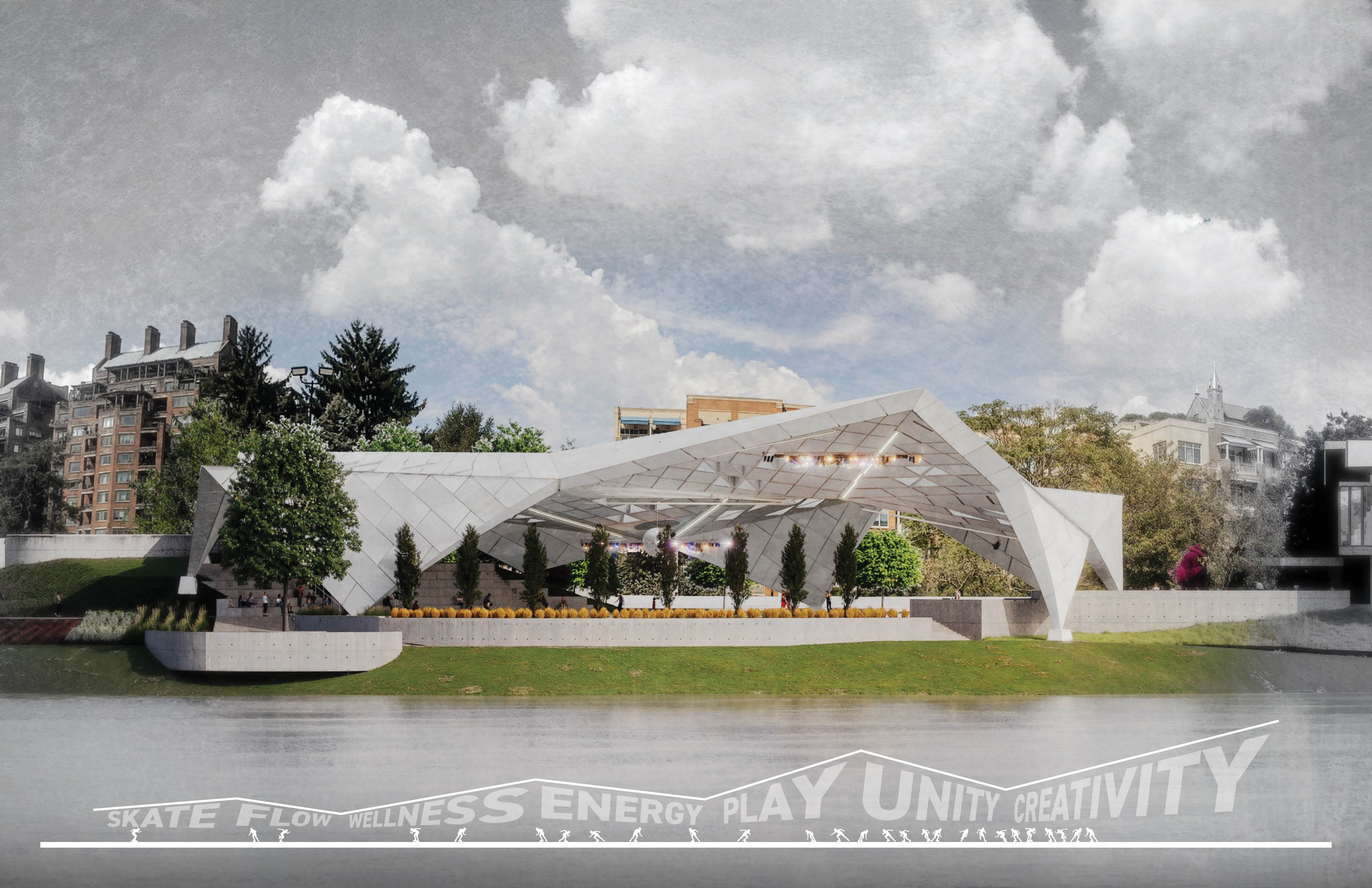
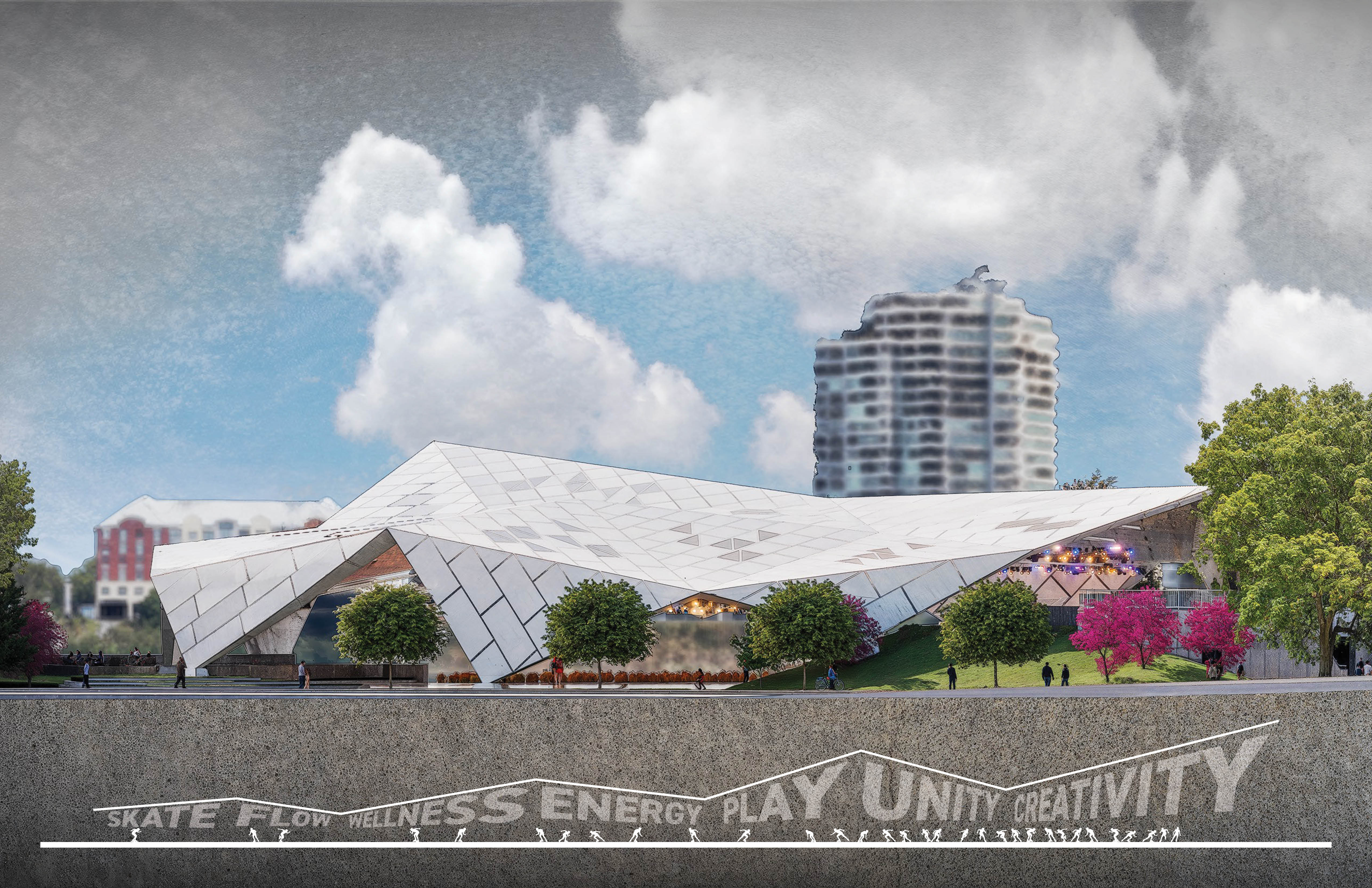
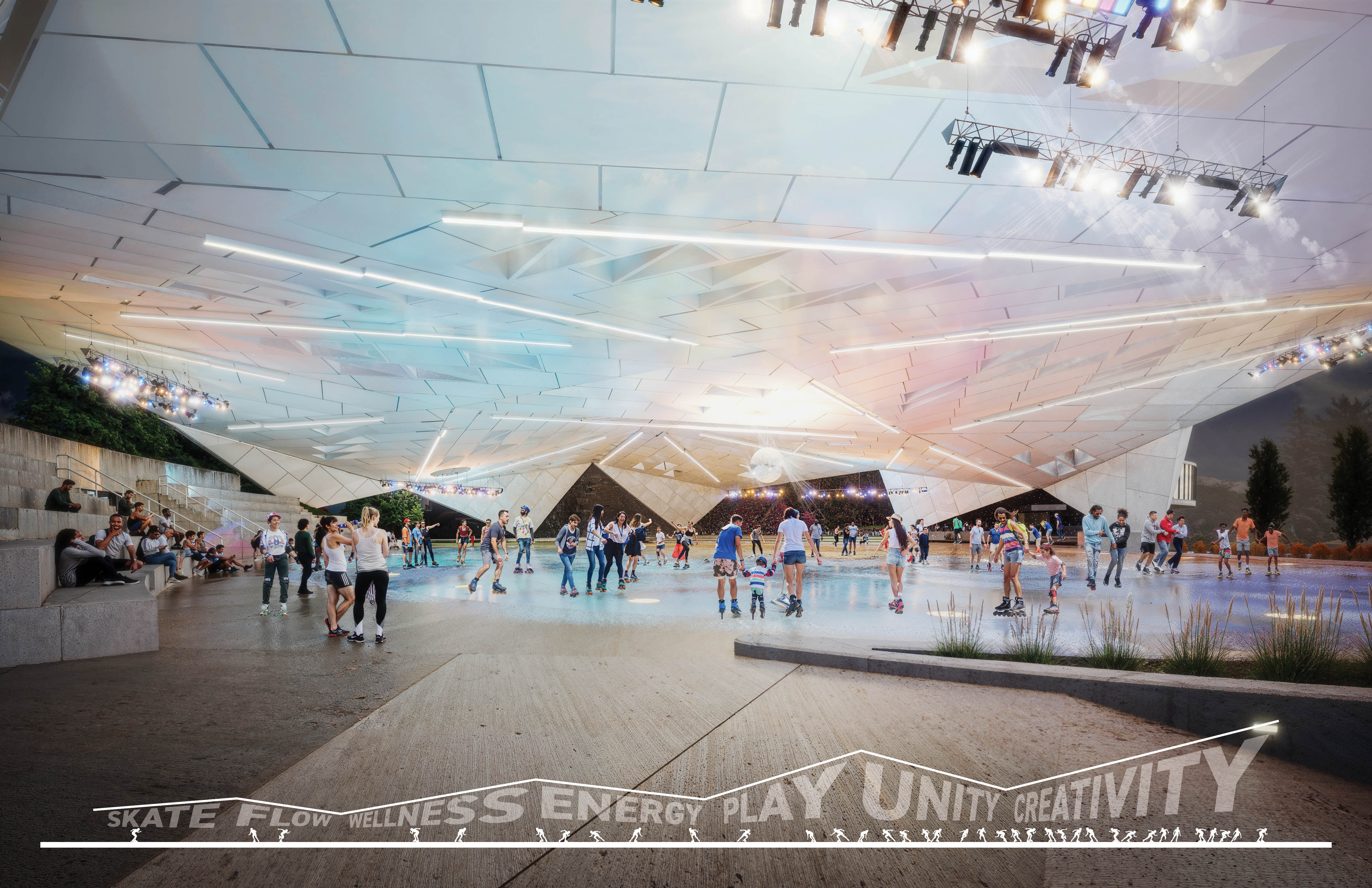
In 1988, the Sawyer Point Roller Rink opened as part of the transformation of Sawyer Point Riverfront Park. Since that time, the roller rink saw only sporadic use until a dramatic resurgence with the creation of Skate Cincinnati, whose purpose is to bring the culture of roller skating back to the urban environment. The current rink is one of the largest waterfront rinks in the United States, measuring four times the size of a standard roller rink. However, the ability to use the facility during unpredictable weather has become a significant challenge, as Skate Cincinnati’s planned events have no guarantee of suitable conditions. The dream of Skate Cincinnati is to create an open-air, covered rink that responds to environmental challenges while enhancing the riverfront as an iconic landmark that highlights roller skating as a meaningful community and cultural statement. Historically, roller rinks—and the skaters who frequented them—were deeply embedded in the African American community during the Civil Rights Movement. These spaces served as hubs for artistic expression, social connection, and personal freedom. The design challenge was to span the existing rink with a form that mirrors the energy of roller skating, while also unifying the walls and roof into one cohesive structure. The proposed design uses a series of linear structural beams supporting similar prefabricated panels, collectively forming a dome-like structure. This minimizes the number of vertical foundations required in the riverfront’s inconsistent soils. As the roof curves downward to form the walls, the structural members create triangular trusses, reinforcing the strength of the entire structure. Most prefabricated panels would be identical in size, but they could vary in transparency—ranging from solid to translucent or colored glass. Toward the river, the roof aperture opens to allow views of the water, while smaller openings at lower levels would channel prevailing winds to provide a natural breeze within the rink. Lightweight, angular metal panels would reflect sunlight, constantly shifting in appearance as the sun moves across the sky. It is Skate Cincinnati’s goal to fund this project in the future. Until then, it remains an aspiration for Cincinnati’s urban skating culture.




Project Details -
Submission Category
Landscape Architecture & Community Planning - Planning & Analysis Projects
Date of Completion
December, 2024
Submitting Firm Name
MSA Design
Project Team
Structural Engineer
Structural Engineer
MEP Engineer
MEP Engineer
Civil Engineer
Civil Engineer
Contractor
Contractor
Thank You to our 2025 Sponsors!
Critical to the continued success and growth of the awards program is the generosity and support of Business and Industry Patrons like you. We would like to take the opportunity to invite you to consider supporting great design in the built environment. Corporate and Individual donations are welcome at any level, and will be acknowledged in our event based on level of sponsorship commitment. Please consider lending your sponsorship support and joining the celebration of creativity and quality design in our community.
Sponsor CDA TodaySpire


Column



Foundation





Keystone