
Shaker Trace Nursery
Building Architecture- Large Scale (>10,000 sf)
© Ryan Kurtz Photography
Project Narrative
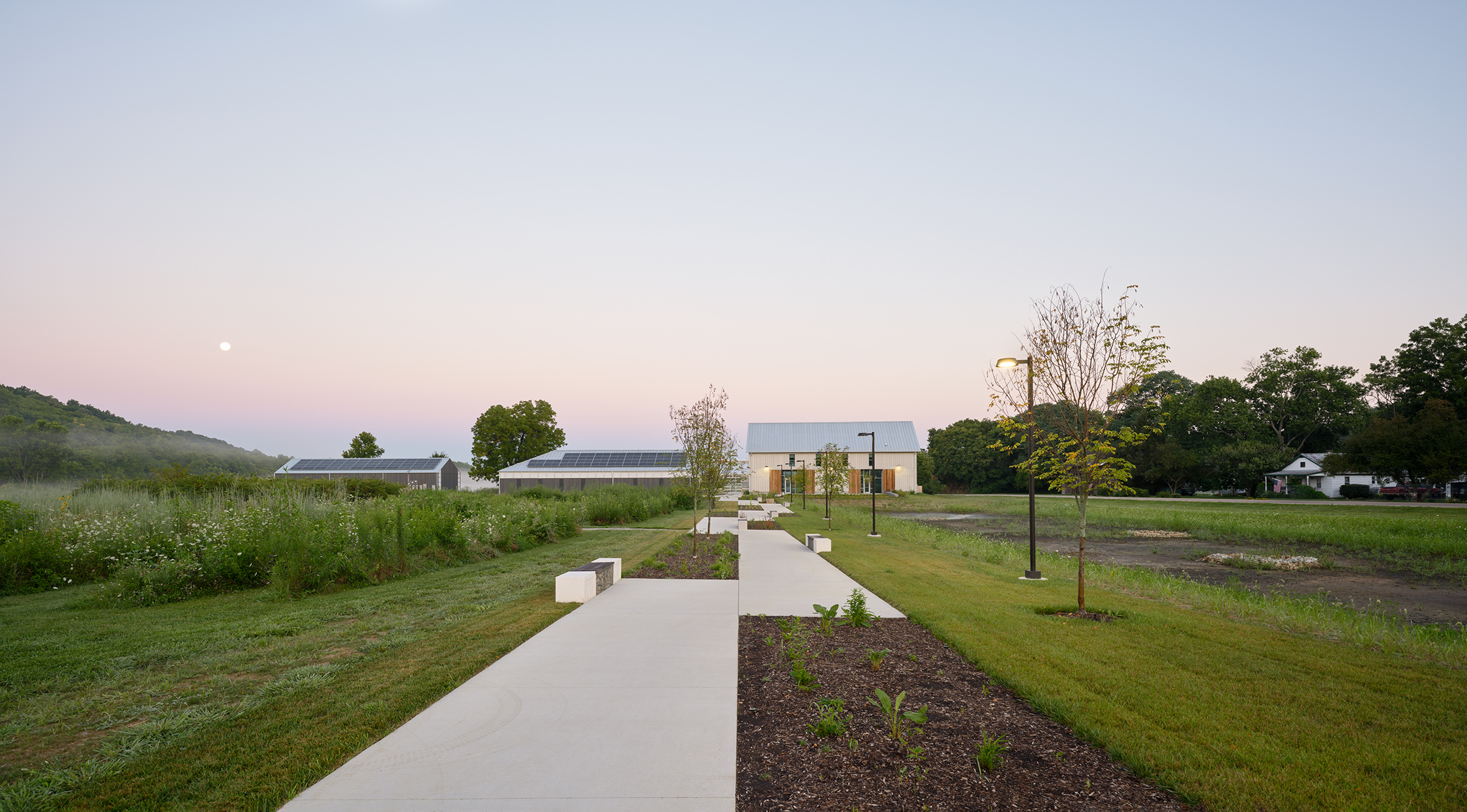
Shaker Trace Nursery is a uniquely beautiful Great Parks site dedicated to preserving the ecological and genetic integrity of the region through native plant propagation. Once inaccessible to the public, the campus is now an educational conservation hub that expands native plant production while allowing visitors to engage with the regenerative work occurring across the landscape and built environment.
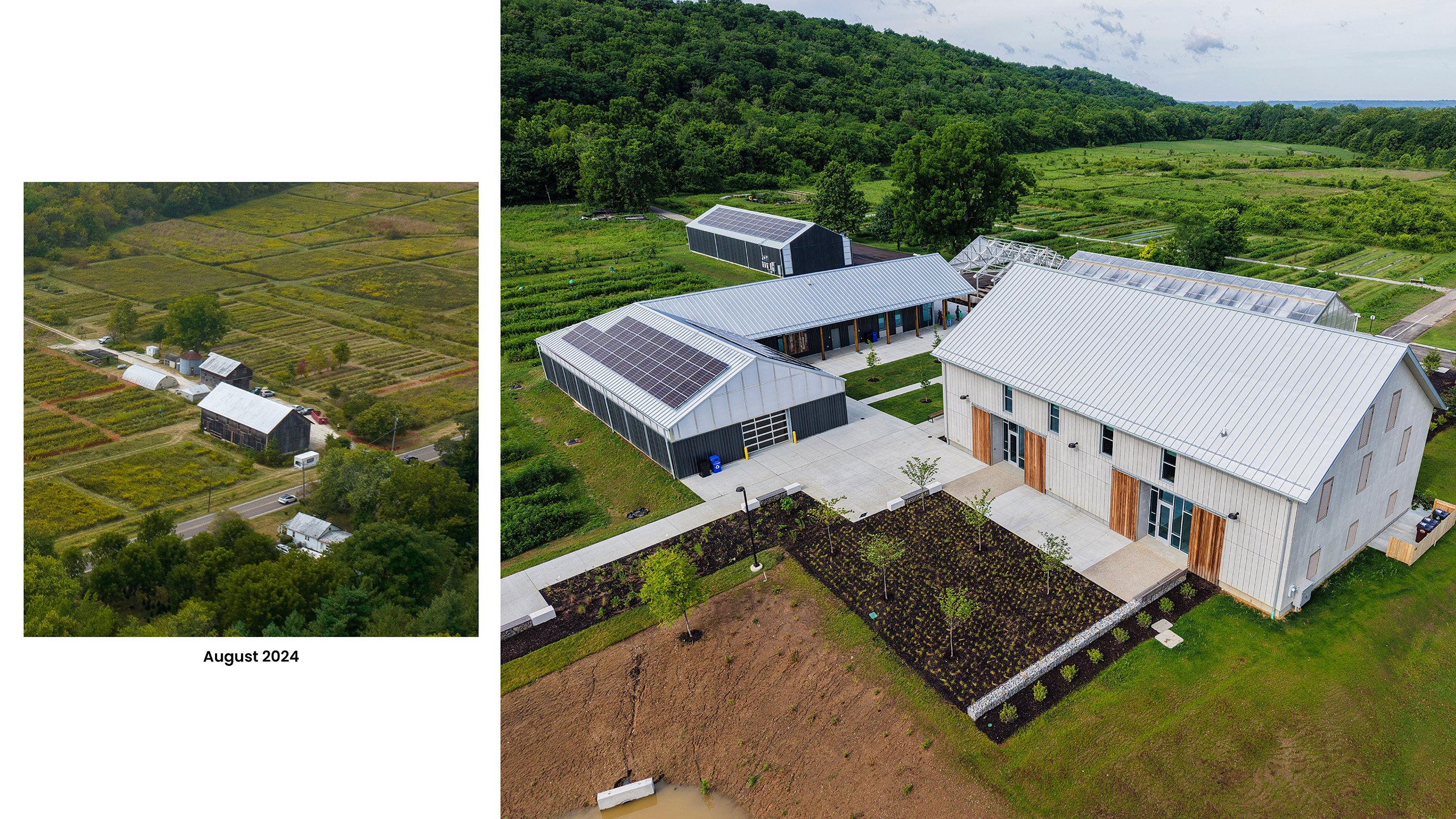
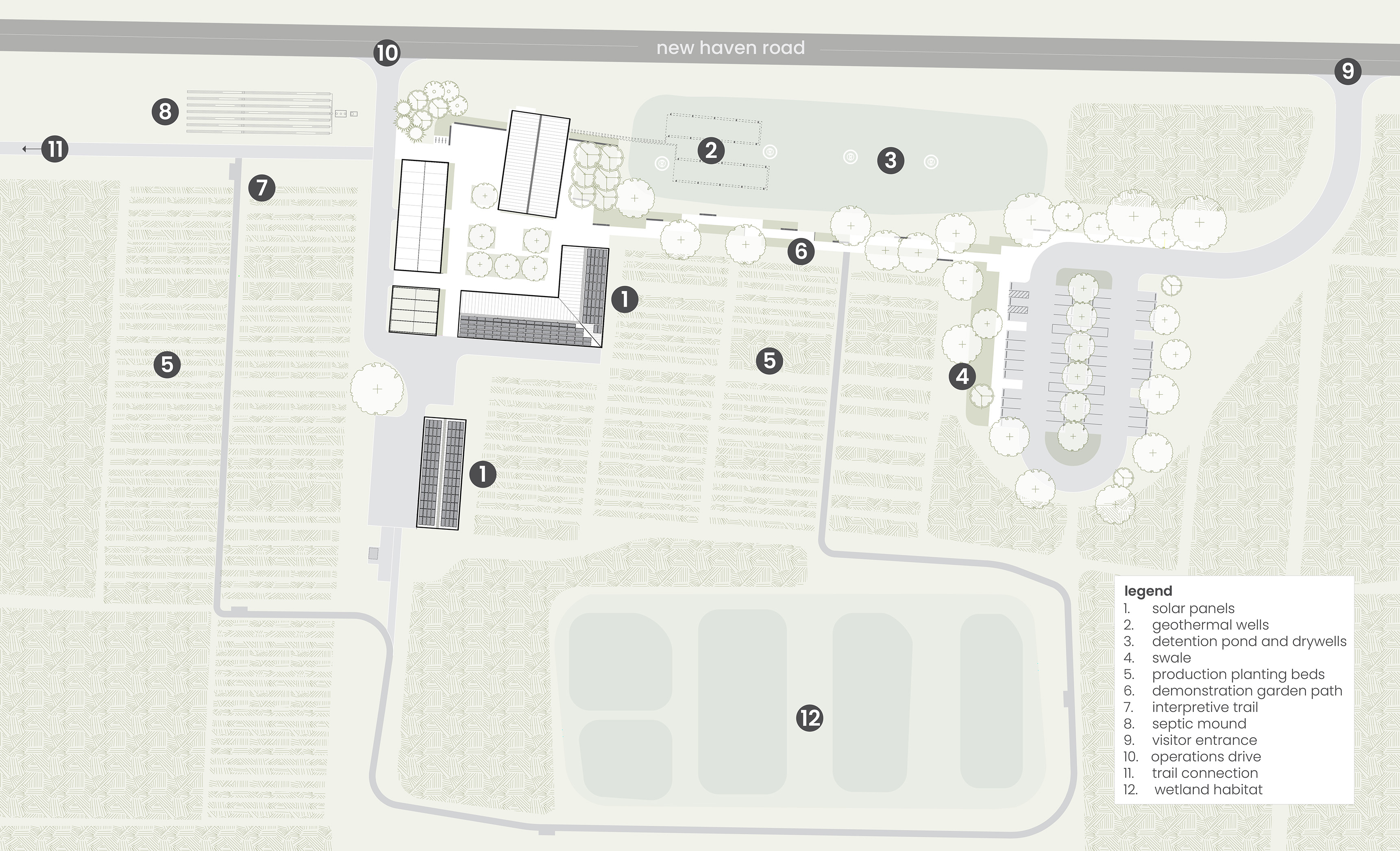
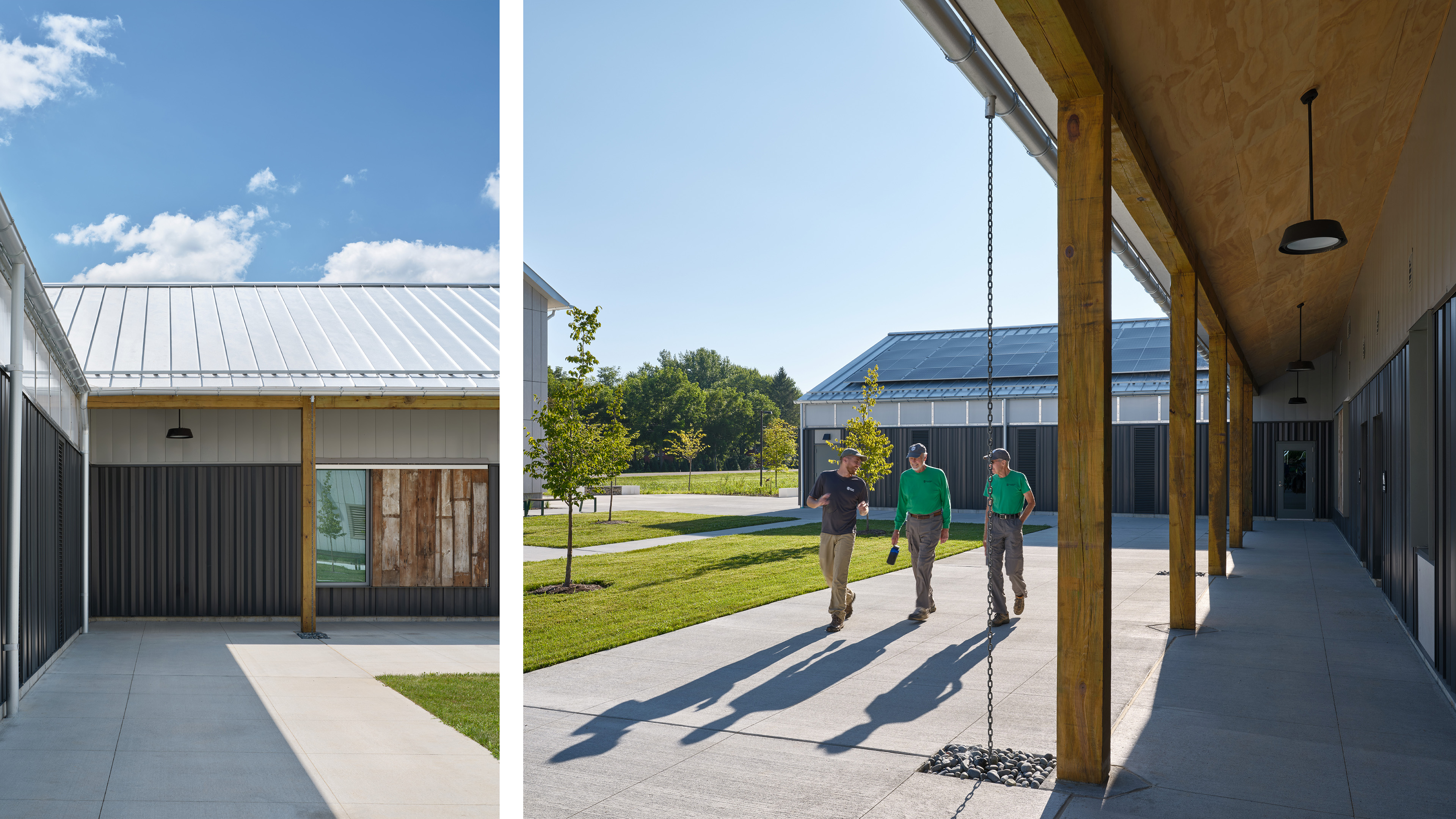
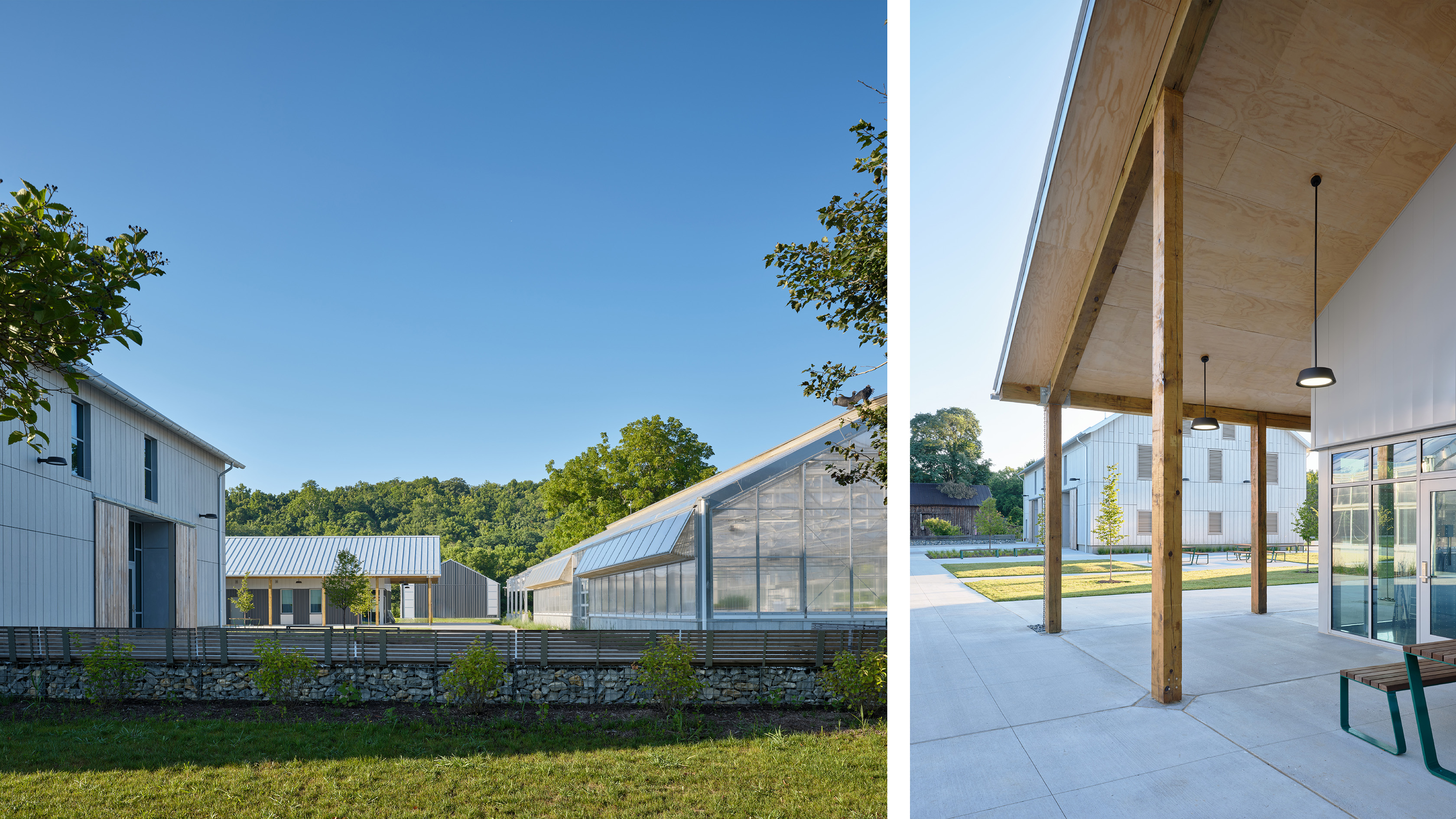
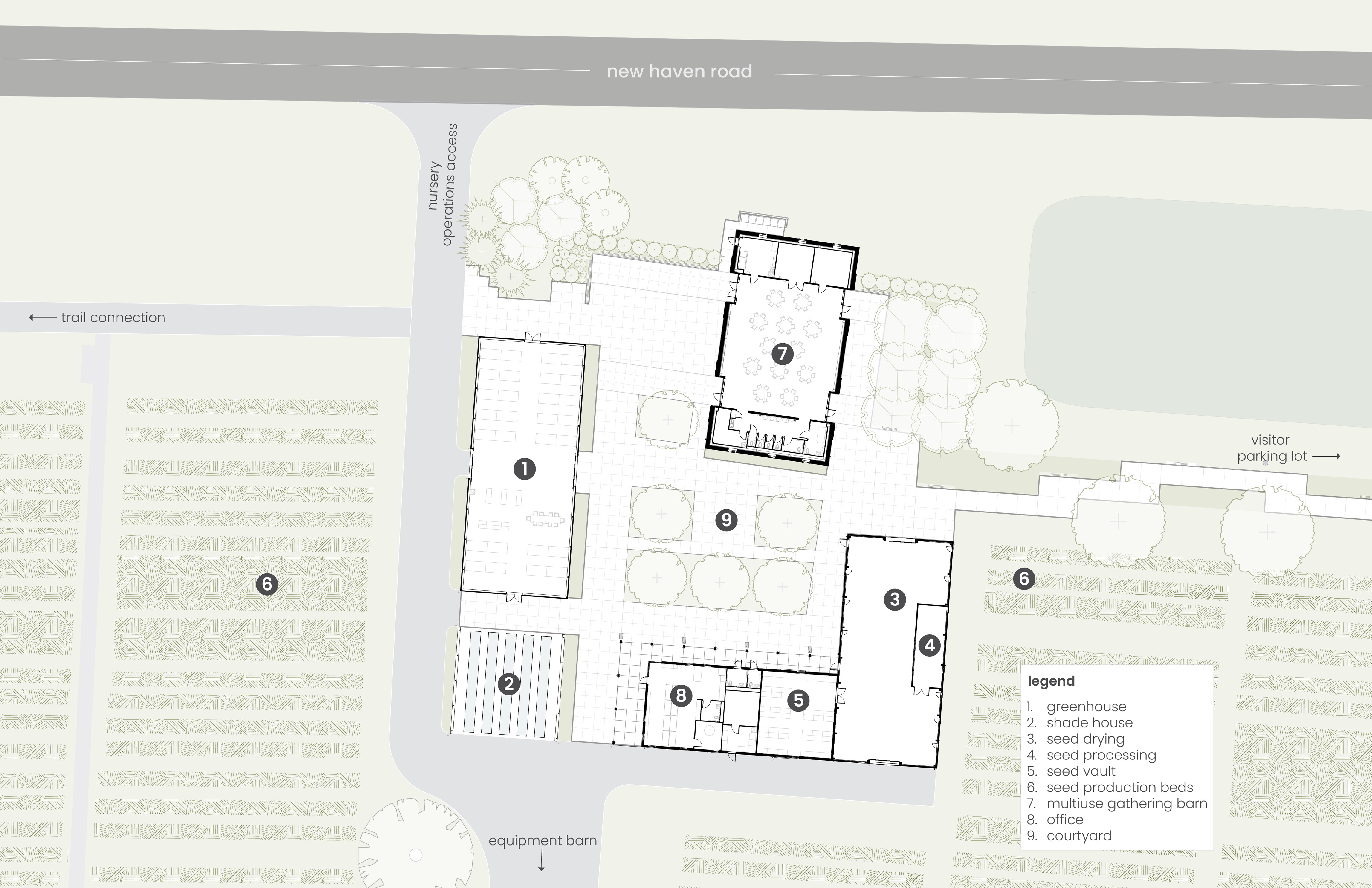
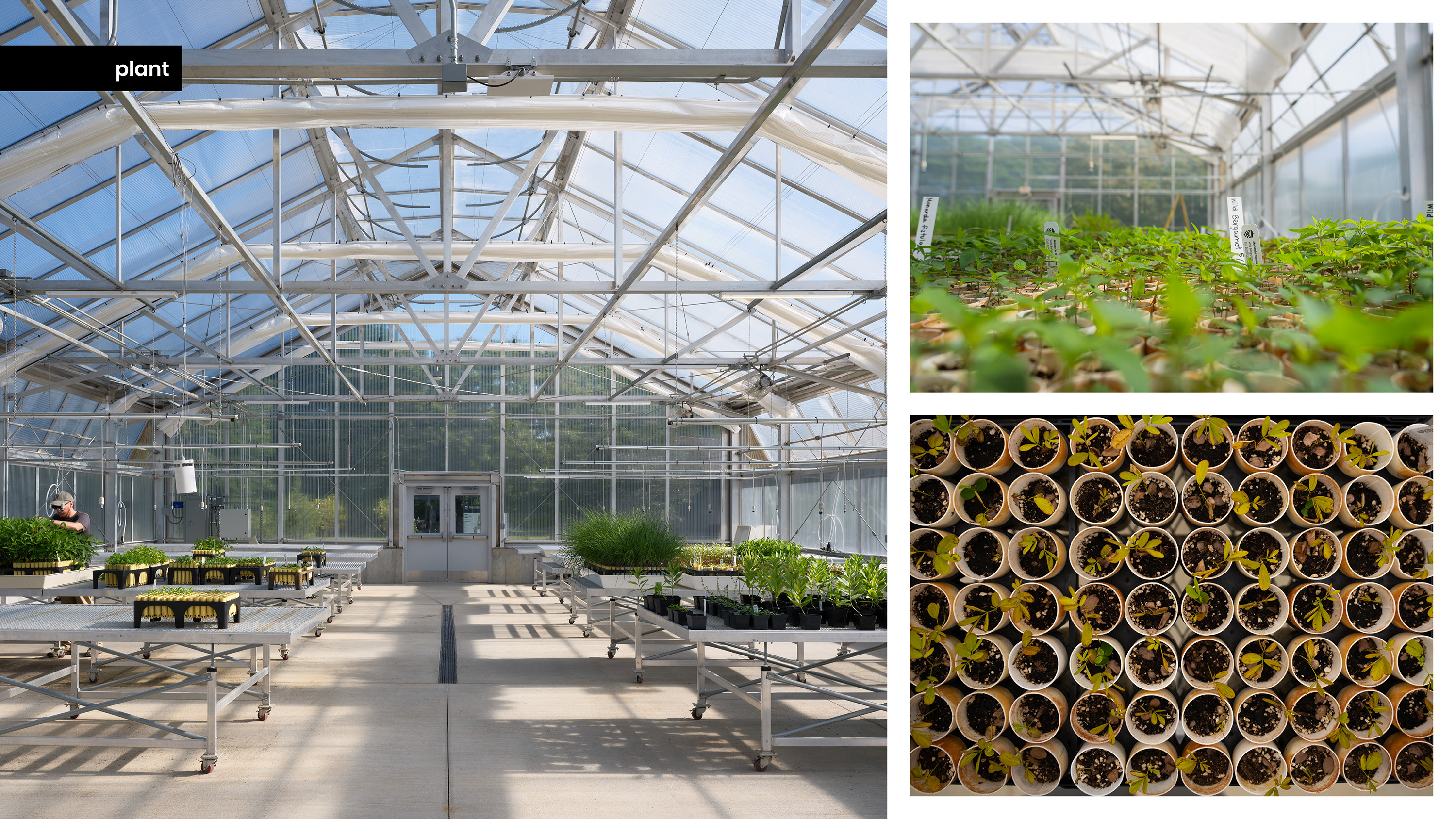
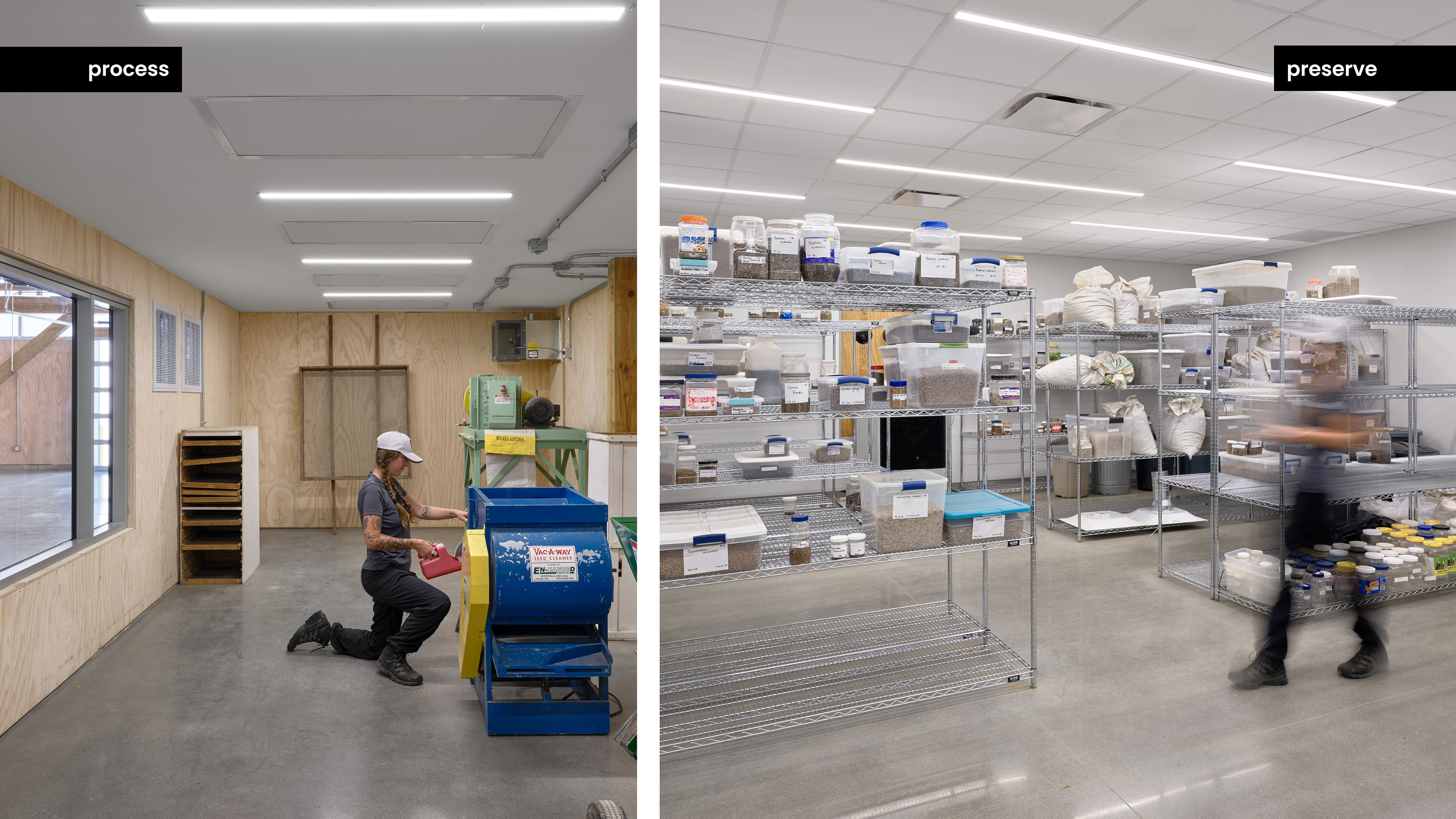
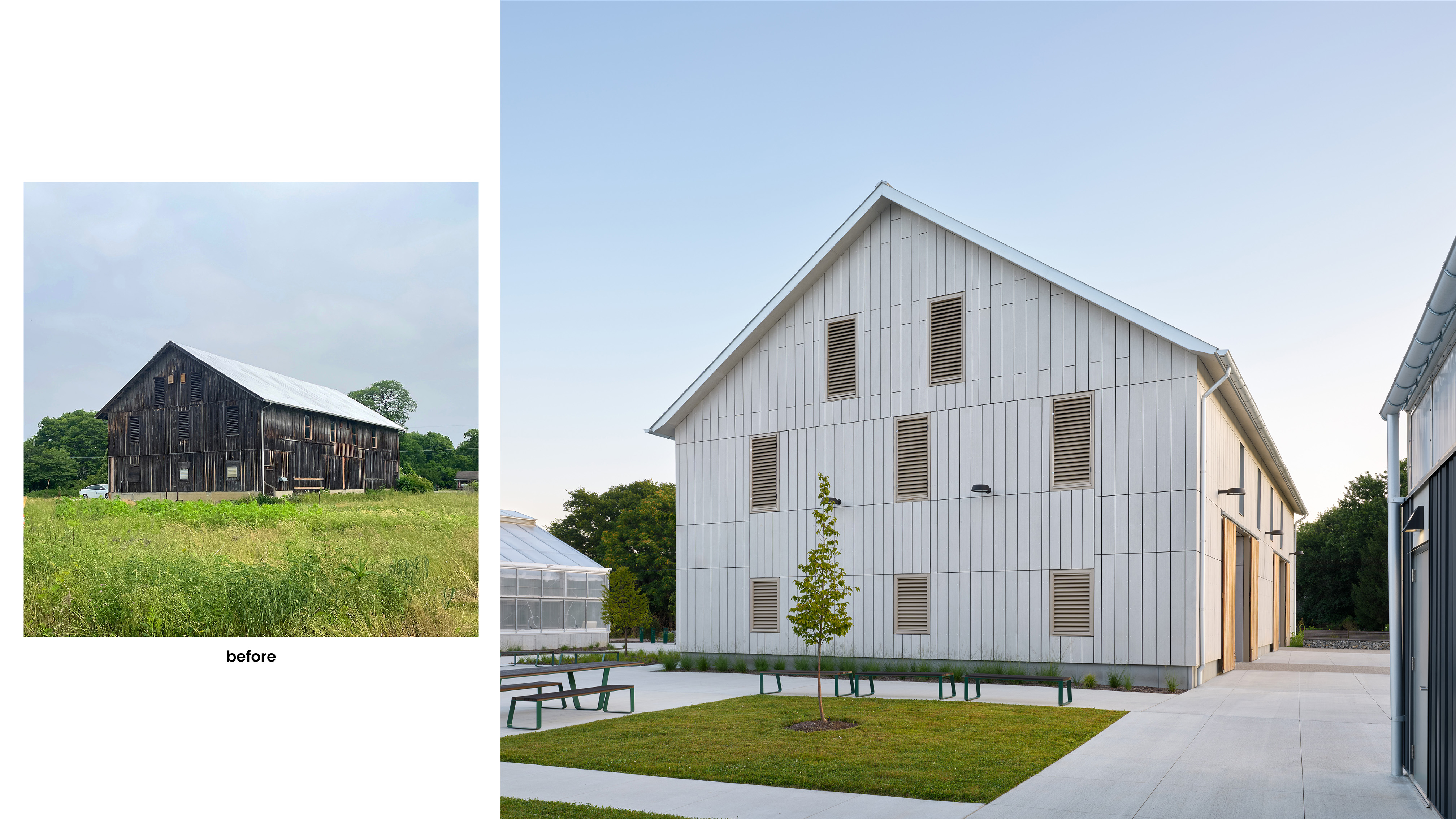
The campus includes an operations building with seed drying space and secure storage vault, an equipment building, a greenhouse and shade structure, and the adaptive reuse of a century-old barn as a public gathering and education center. The barn anchors the campus, organizing new facilities around a central courtyard where visitors can observe the native seed journey from collection through propagation without disrupting nursery operations.
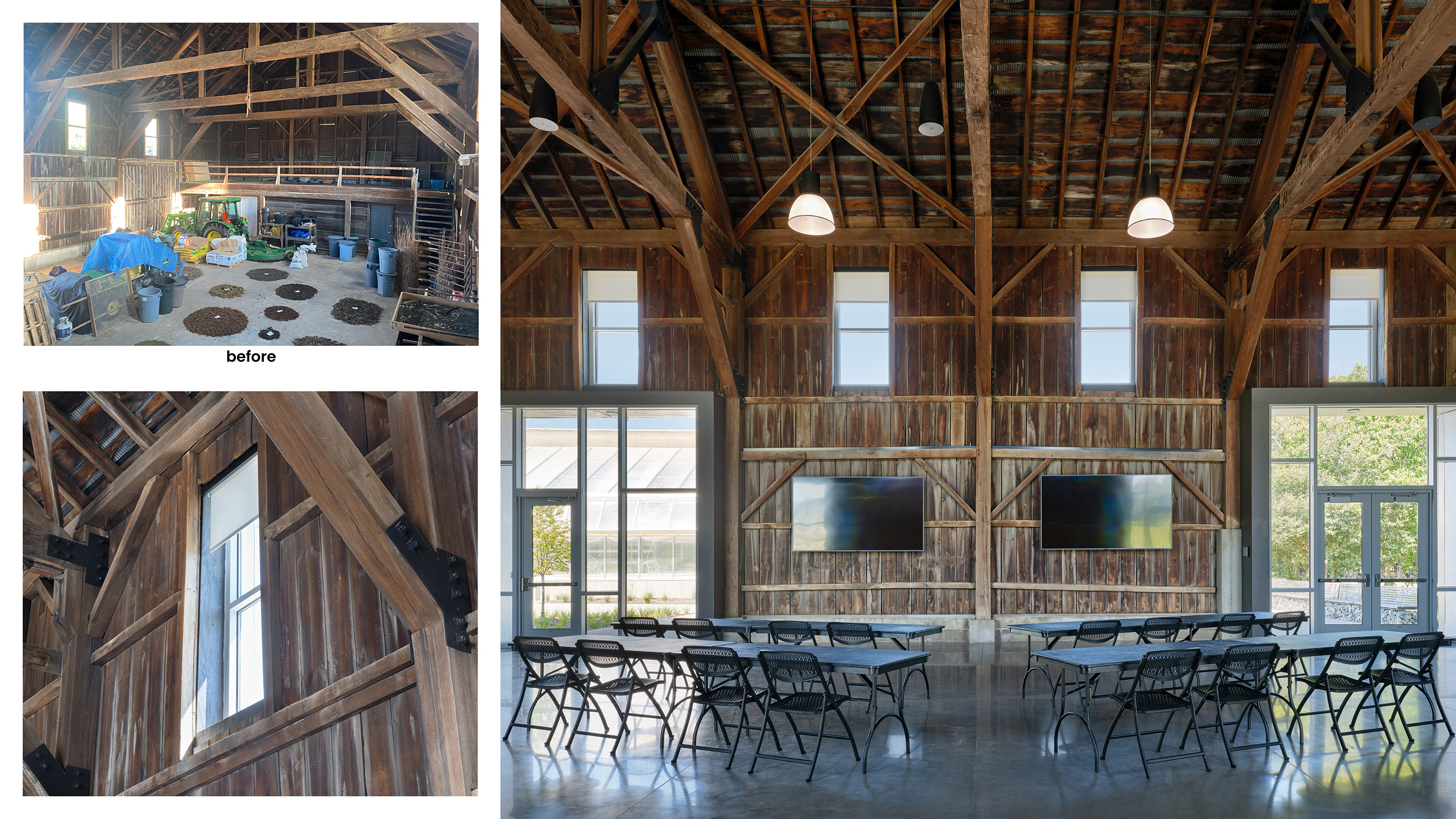
Design strategies focused on preserving the barn's historic integrity through innovative solutions that celebrate heritage and enhance functionality. Rather than replacing the barn, a new conditioned enclosure was carefully wrapped around it, preserving the original wood siding and timber frame within the interior. Visitors experience historic authenticity while enjoying the comfort and performance of a modern facility.
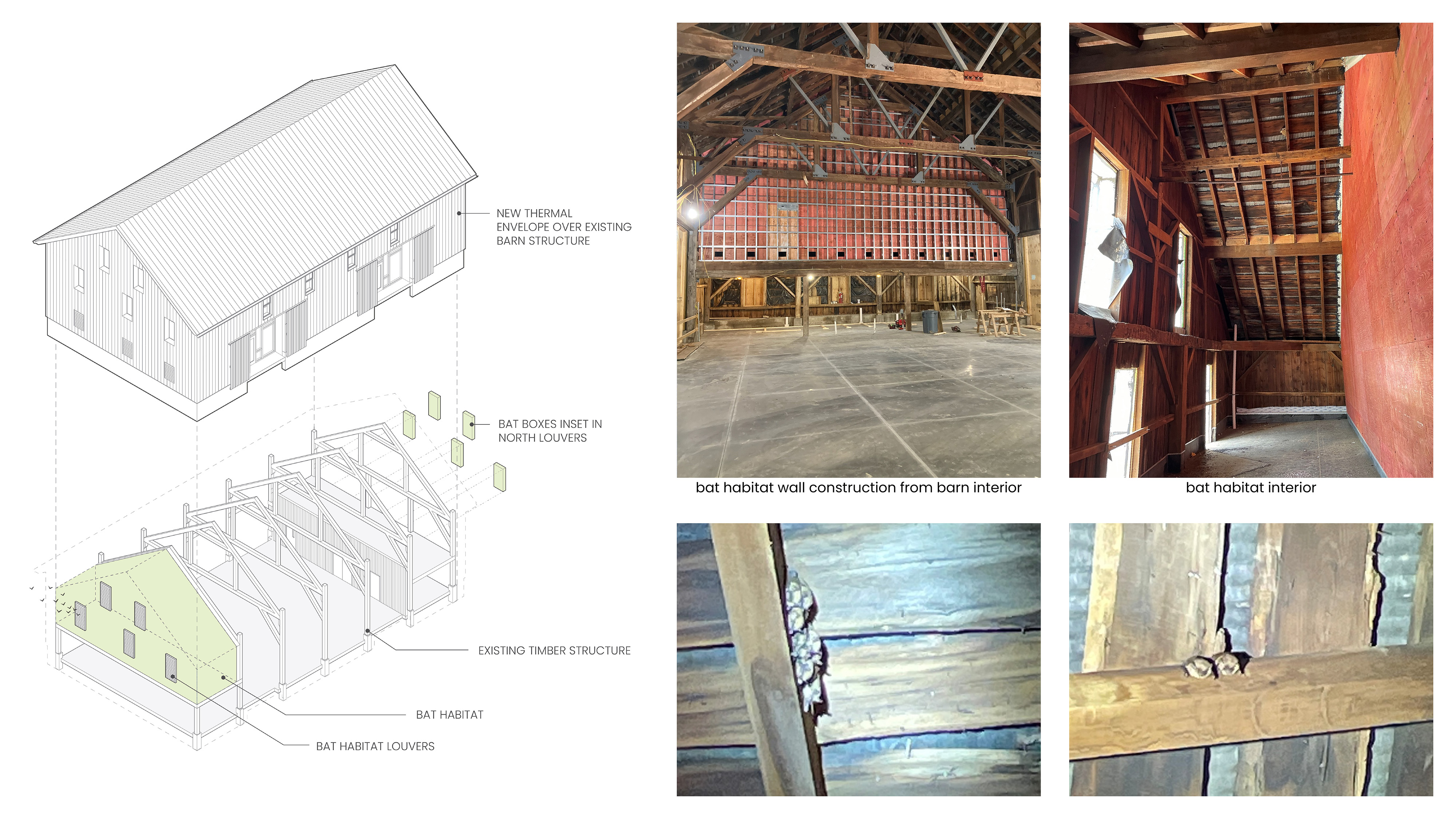
The project's greatest challenge was its most innovative achievement. During evaluation of the barn, a colony of big brown bats was discovered inhabiting the structure. Aligning with Great Parks' stewardship mission, the design team developed a solution that preserved and enhanced the habitat rather than displacing it. A dedicated portion of the barn is separated and concealed, providing access through existing louvers and seasonal habitat options through custom bat boxes. By integrating a wildlife habitat into a public facility, the project establishes a compelling model for conservation-driven design.
Rooted in the site's pastoral character, the new architecture reinterprets traditional agricultural style through a contemporary lens. Simple gabled forms establish a cohesive campus identity, while a restrained palette of angular metal panels and translucent acrylic surfaces, complements the landscape, allowing the mission and surroundings to remain the primary focus.
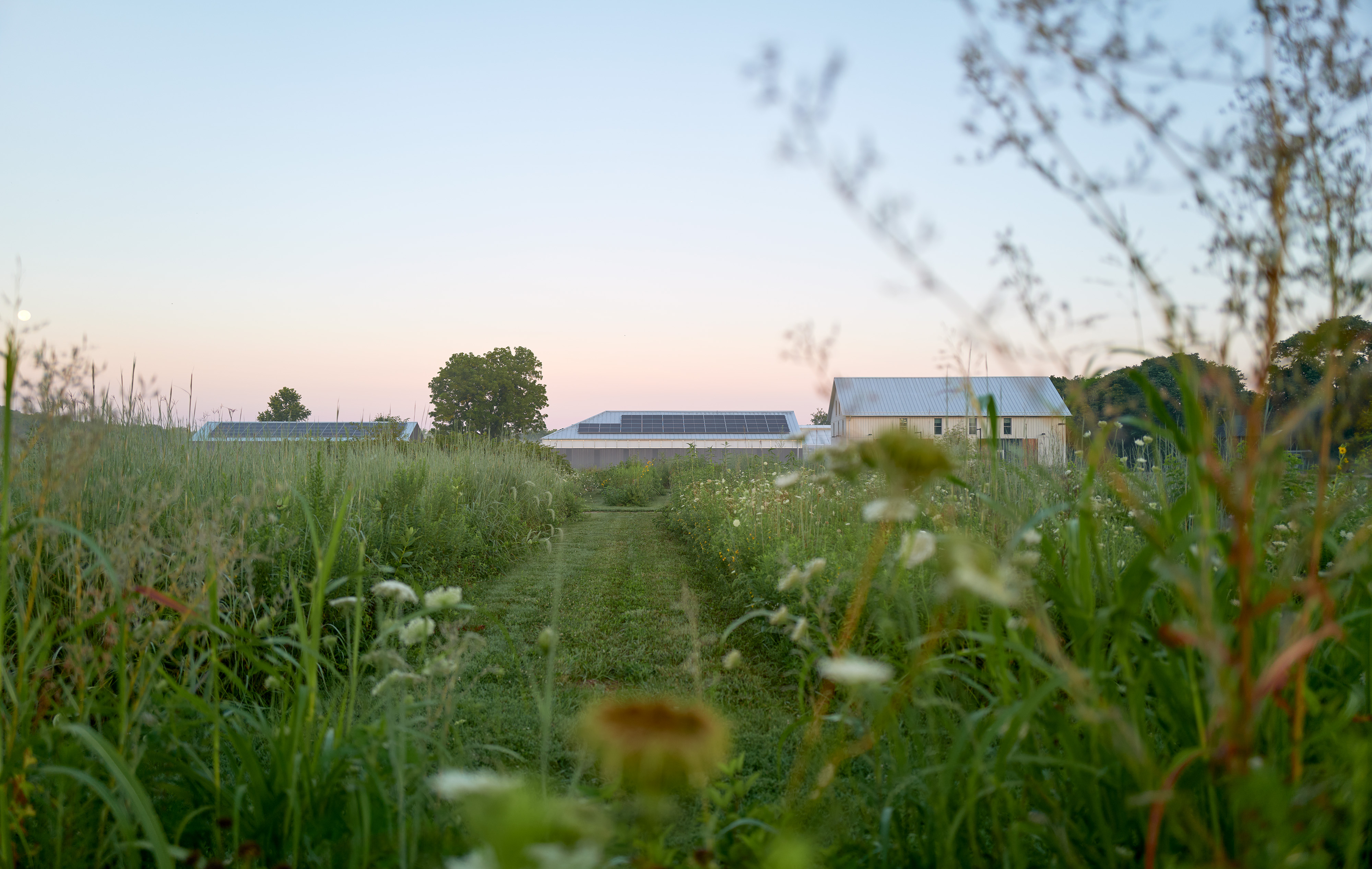
Sustainability is achieved with rooftop solar arrays and a geothermal system enabling net-positive energy performance, producing more energy than the campus consumes. Construction was carefully managed to protect established planting areas, including beds containing rare regional species cultivated on-site for more than three decades.
Shaker Trace Seed Nursery exemplifies how architecture can advance conservation, celebrate cultural heritage, and foster public engagement. By preserving history, saving a critical wildlife habitat, generating more energy than it consumes, and expanding native ecosystem restoration efforts, the project positions Great Parks as a national leader in environmental stewardship and regenerative design
© Ryan Kurtz Photography
© emersion DESIGN
© Ryan Kurtz Photography
© Ryan Kurtz Photography
© emersion DESIGN
© Ryan Kurtz Photography/Great Parks of Hamilton County

© Ryan Kurtz Photography/Great Parks of Hamilton County

© Ryan Kurtz Photography
© Ryan Kurtz Photography
© Ryan Kurtz Photography
© emersion DESIGN
© Ryan Kurtz Photography

© Ryan Kurtz Photography
© Ryan Kurtz Photography
Project Details -
Submission Category
Building Architecture- Large Scale (>10,000 sf)
Date of Completion
July, 2026
Submitting Firm Name
emersion DESIGN
Project Team
Urban Planner
N/A
Landscape Architect
David Whittaker, ASLA, PLA, LFA, LEED AP - Human Nature
Architect
Adam Luginbill, RA, NCARB, LEED AP
Interior Designer
Amy Green, NCIDQ, GGP
Environmental Designer
N/A
Other Project Team Members
Joe Johnson, Bat Biologist - University of Cincinnati
Structural Engineer
Schaefer
MEP Engineer
CMTA
Civil Engineer
Arcadis
Contractor
Pepper Construction
Thank You to our 2026 Sponsors!
Critical to the continued success and growth of the awards program is the generosity and support of Business and Industry Patrons like you. We would like to take the opportunity to invite you to consider supporting great design in the built environment. Corporate and Individual donations are welcome at any level, and will be acknowledged in our event based on level of sponsorship commitment. Please consider lending your sponsorship support and joining the celebration of creativity and quality design in our community.
Sponsor CDA TodayAfter-Party Sponsor

Firm Sponsors





Signature Cocktail Sponsors


Column






Foundation



Keystone








Award Materials

Event Photographer
