
USS Cincinnati Cold War Memorial Peace Pavilion
Landscape Architecture & Community Planning – Implementation
© William Manning
Project Narrative
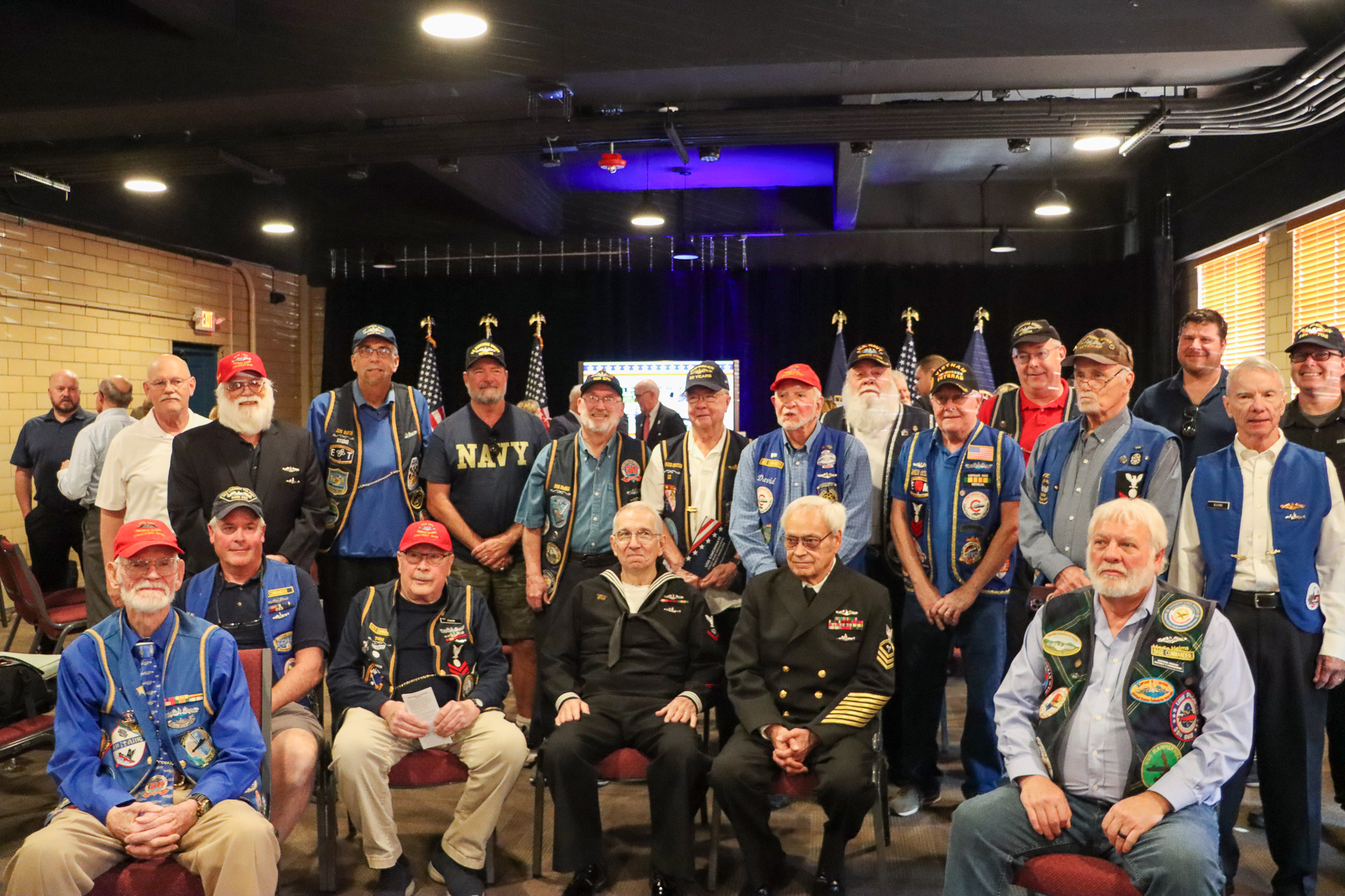
For more than two decades, retired submariners and Navy supporters searched for a way to bring the USS Cincinnati home. The nuclear-powered attack submarine served from 1978 to 1996, gathering intelligence on the Soviet Union during the Cold War. Its original components were saved, and Voice of America Park in West Chester became their home, next to the National Voice of America Museum of Broadcasting, whose broadcasts reached behind the Iron Curtain in the same era.
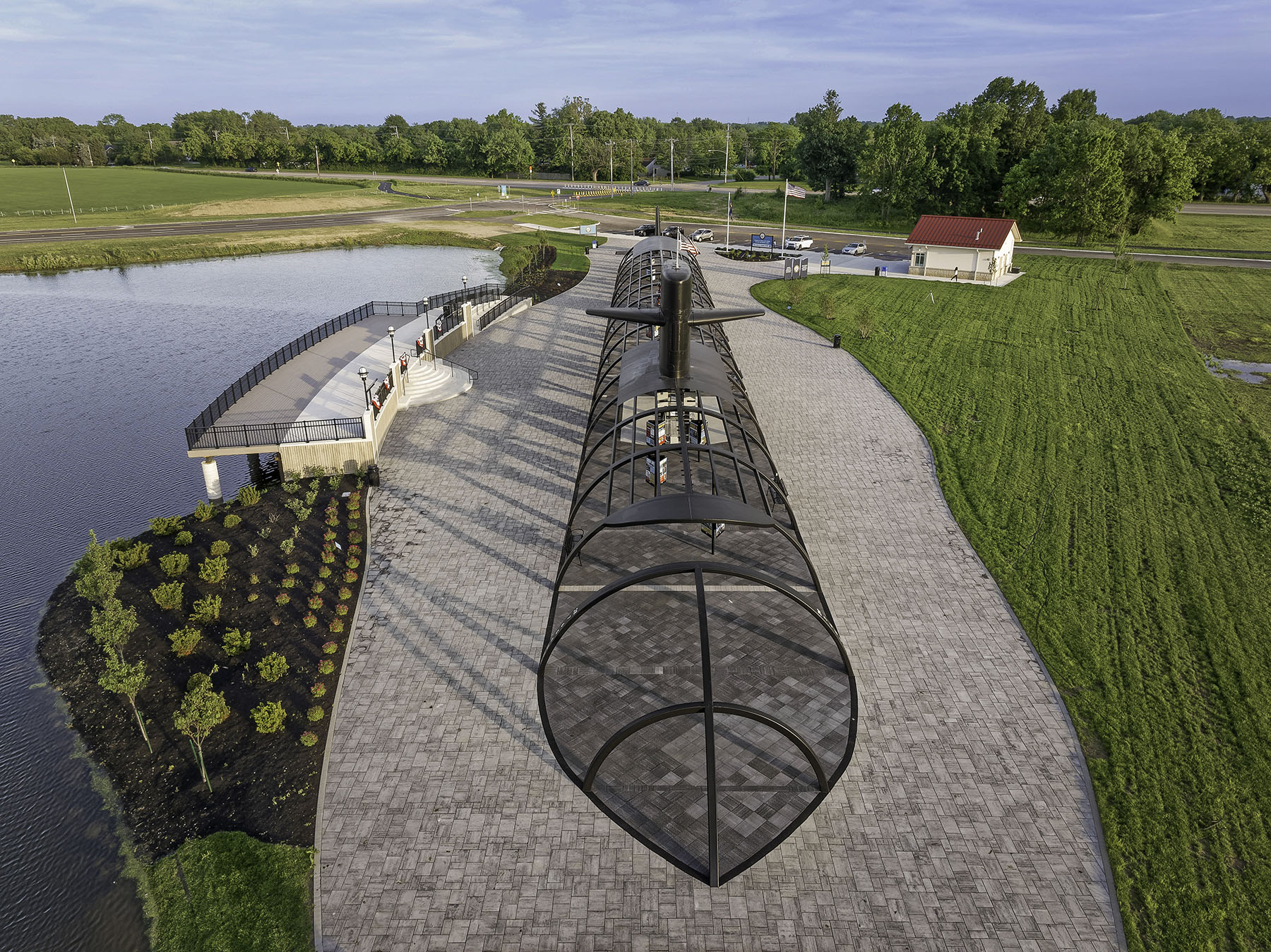
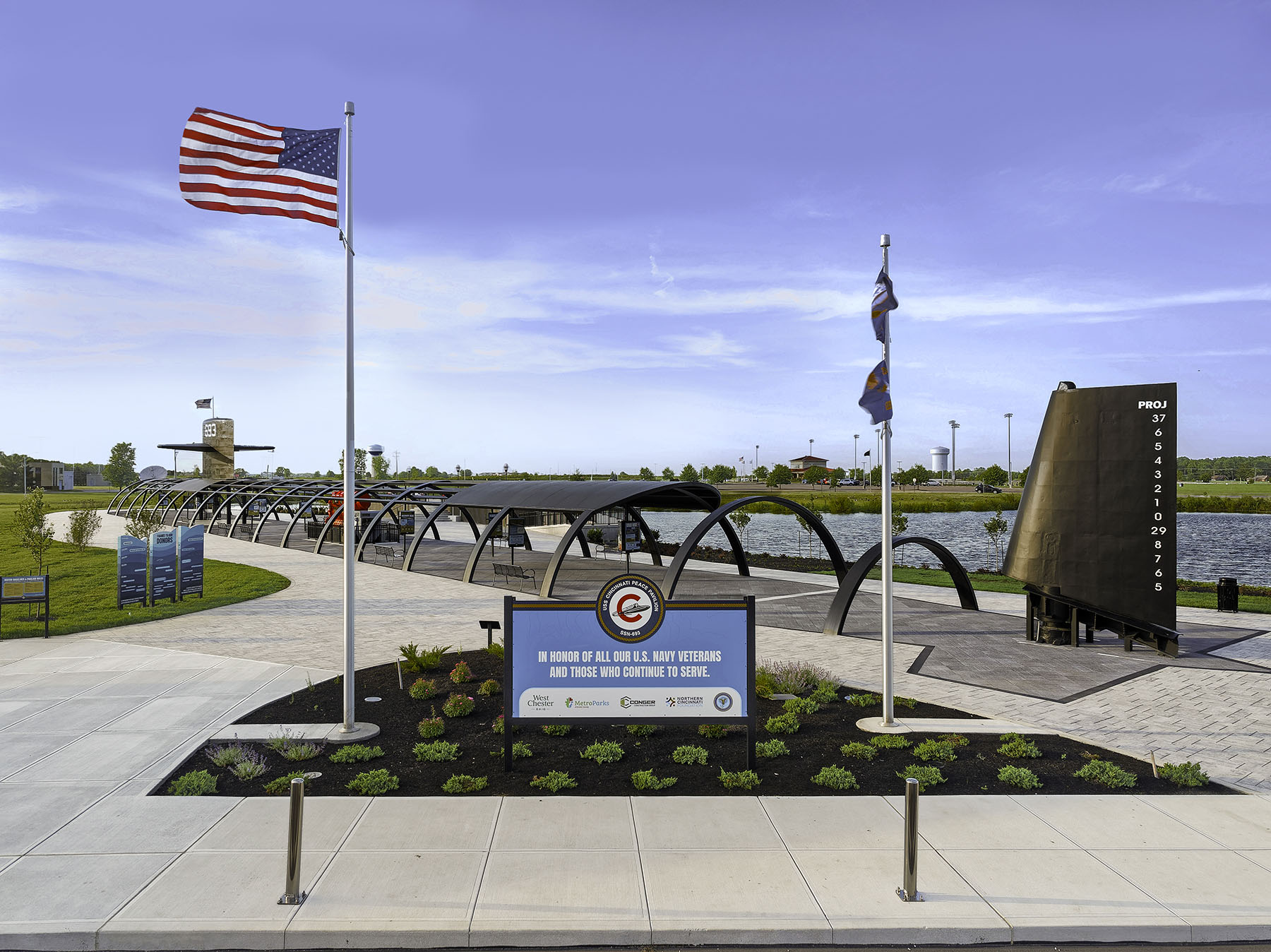
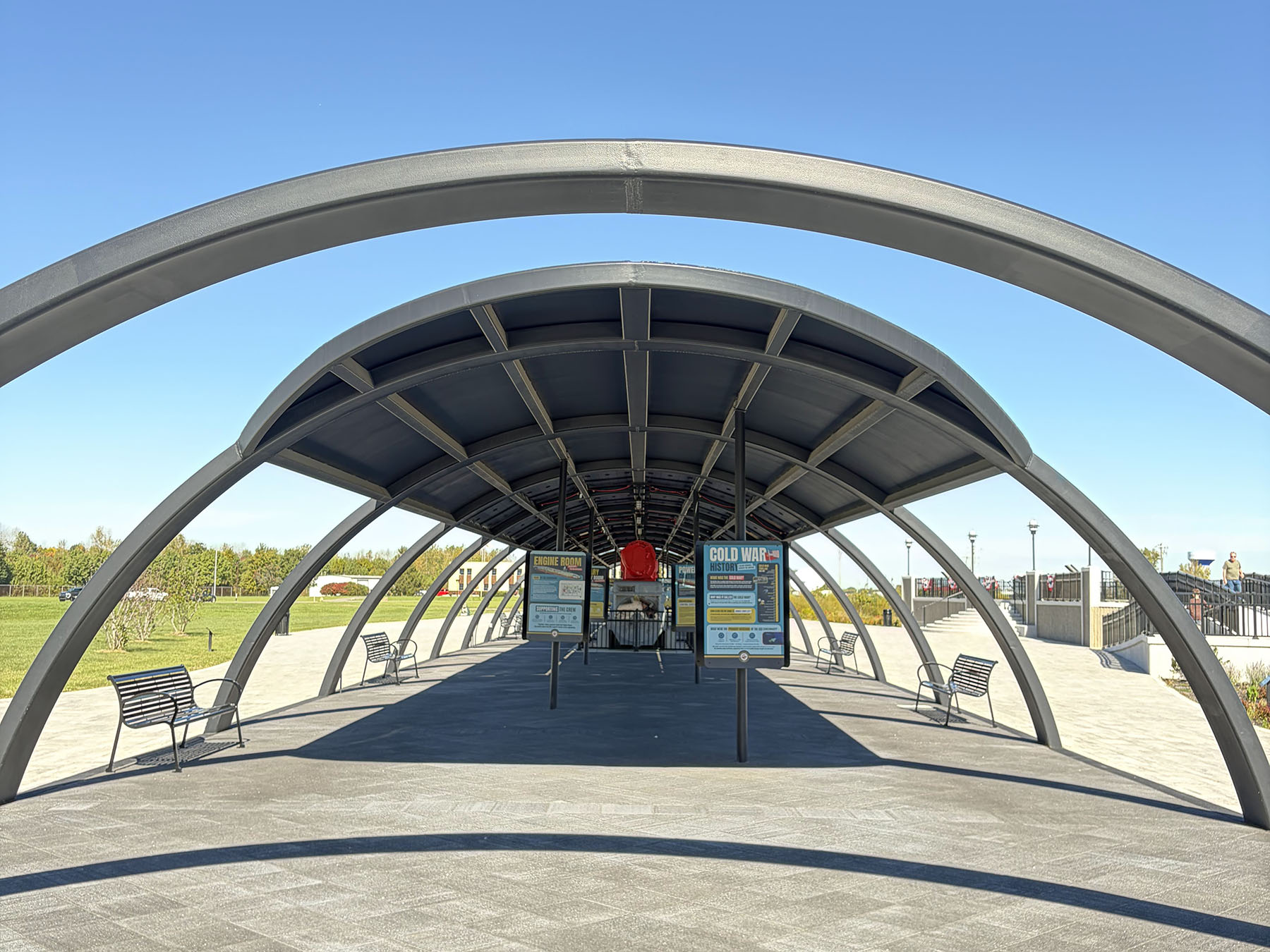
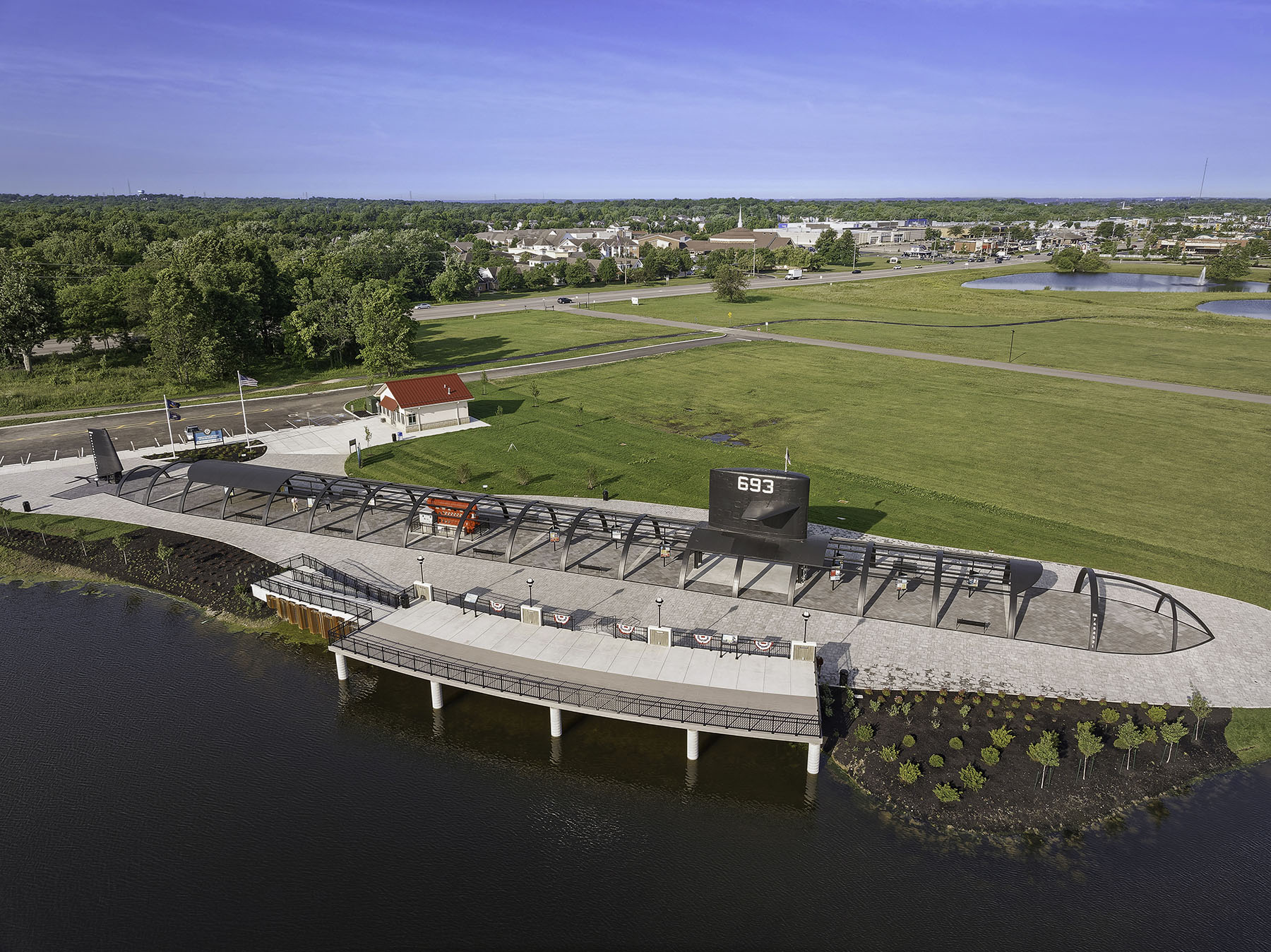
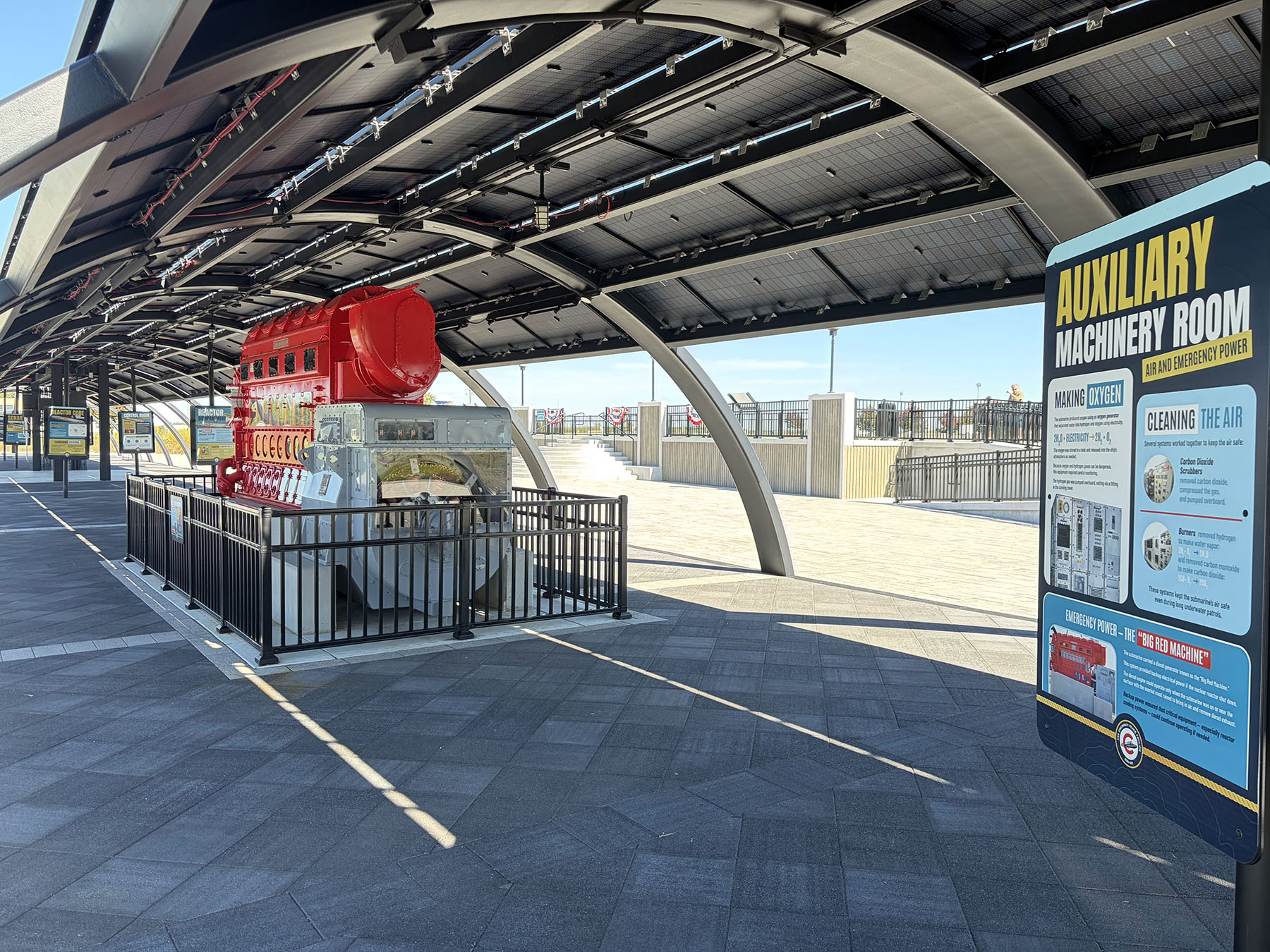
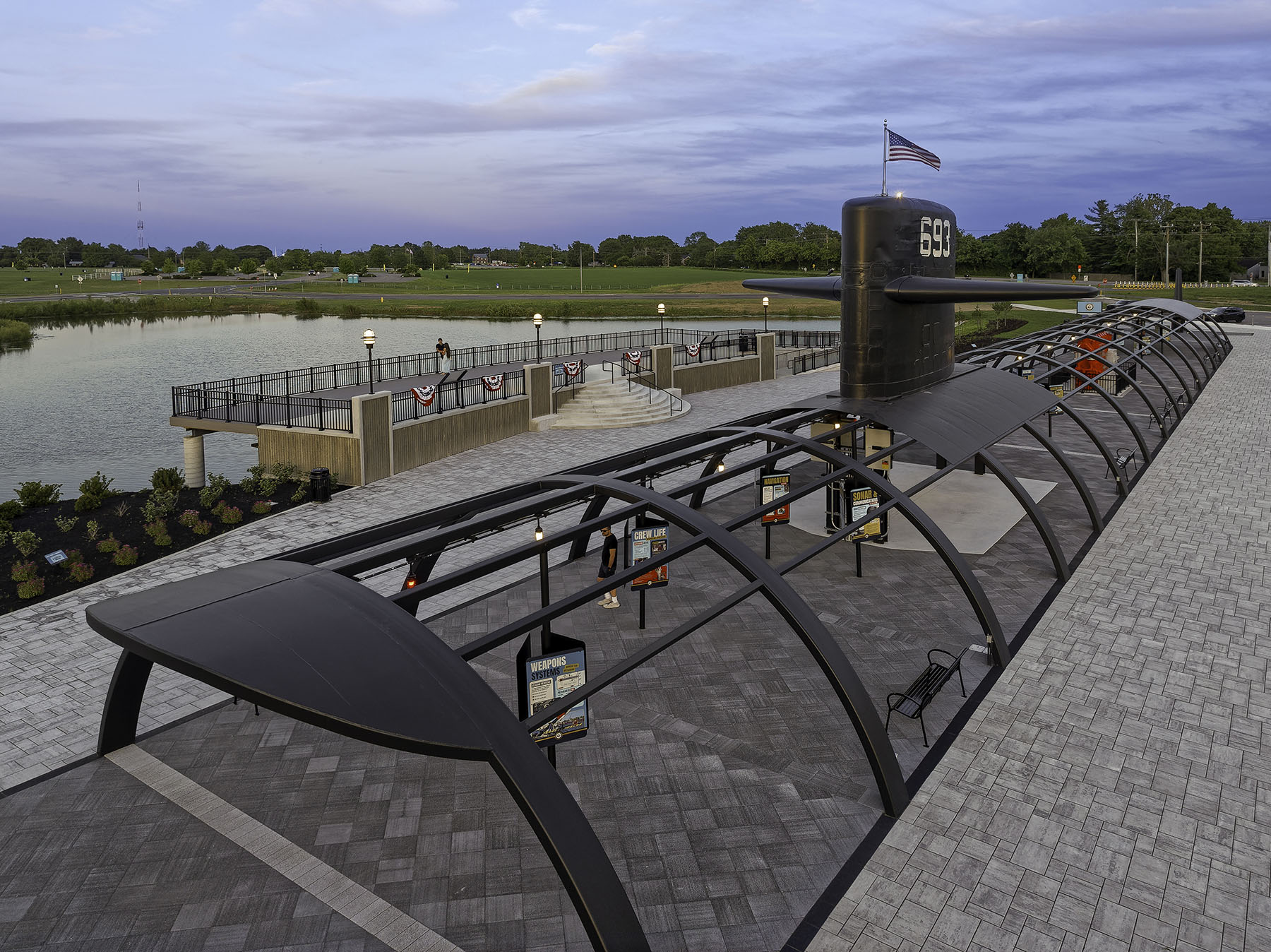
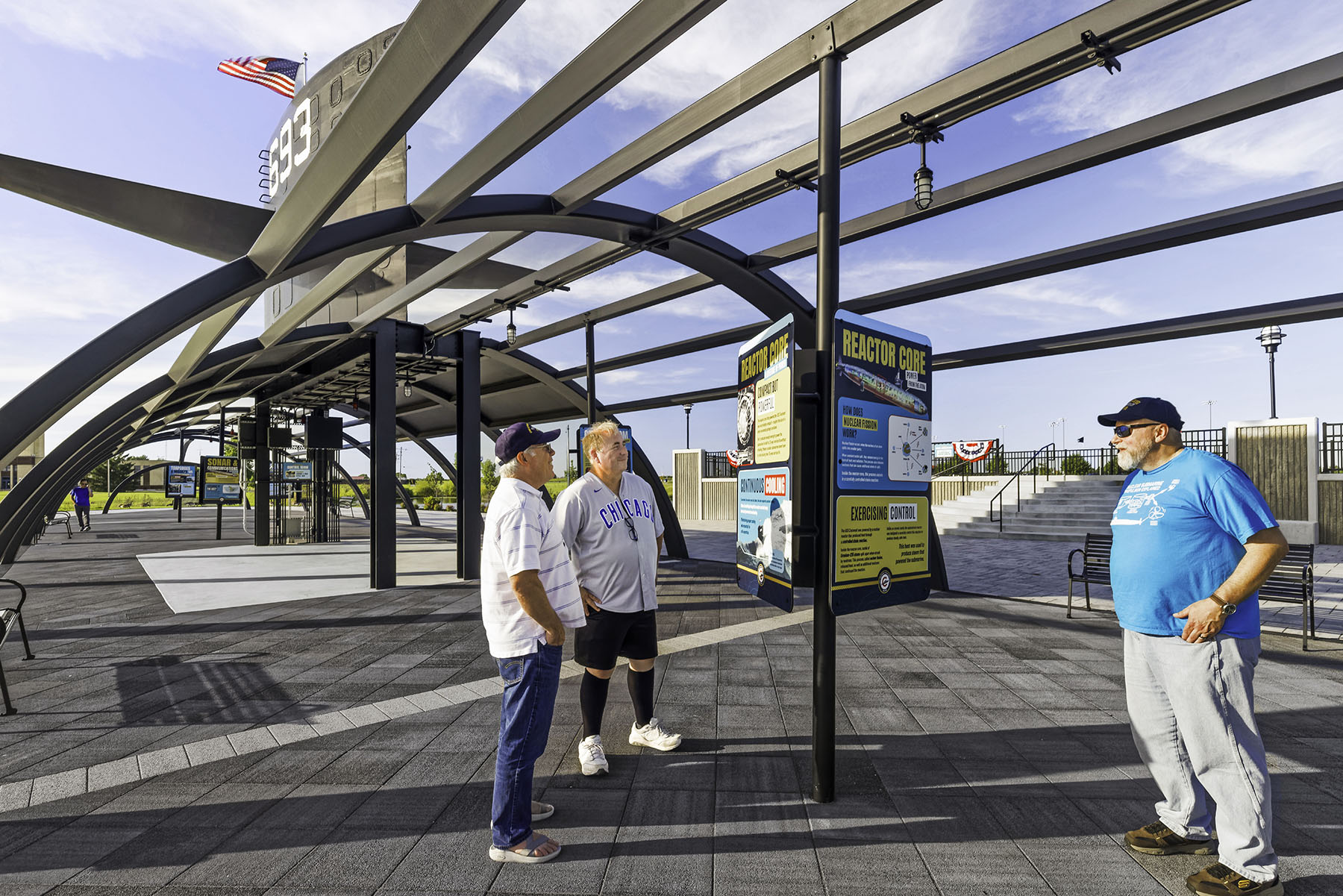
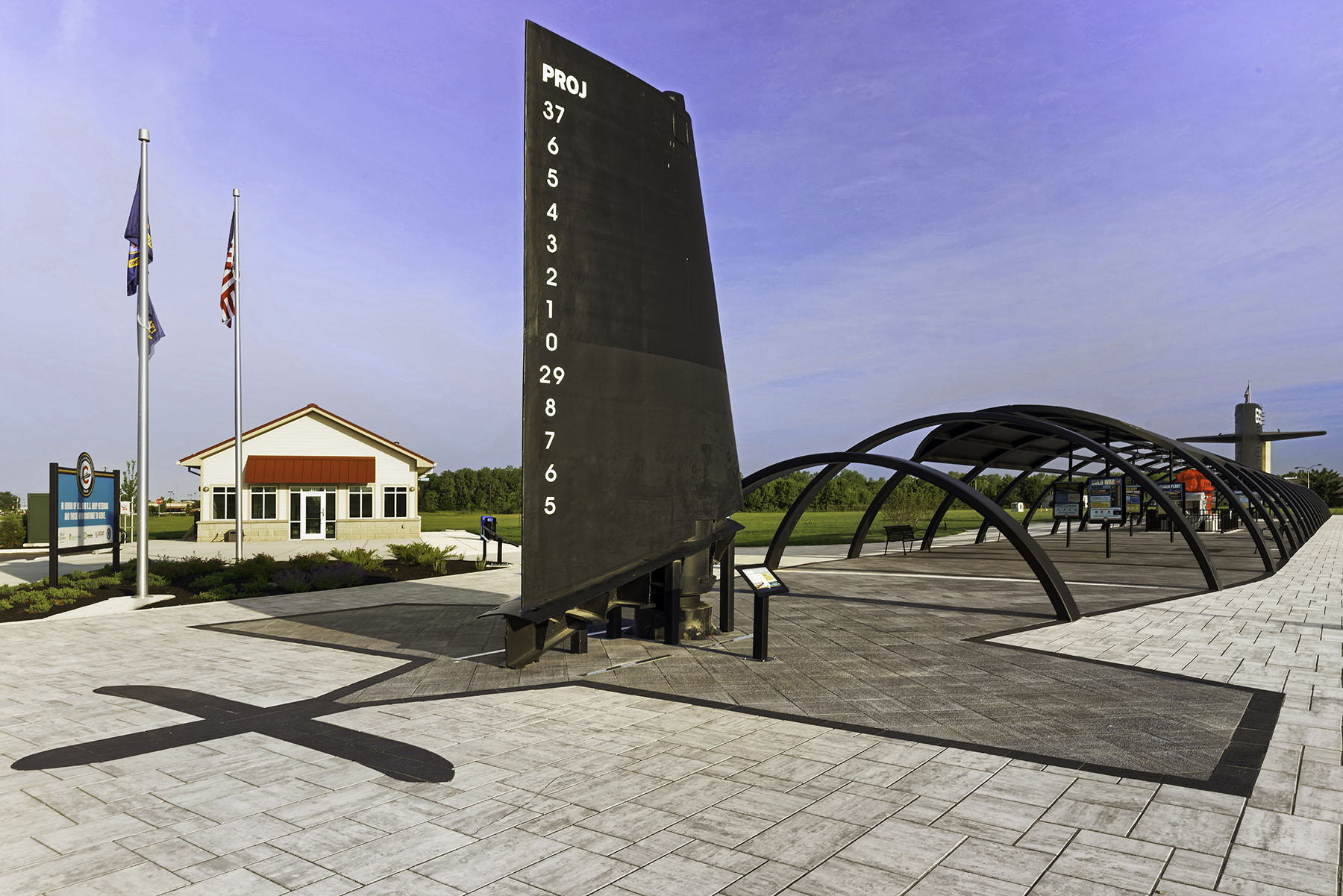
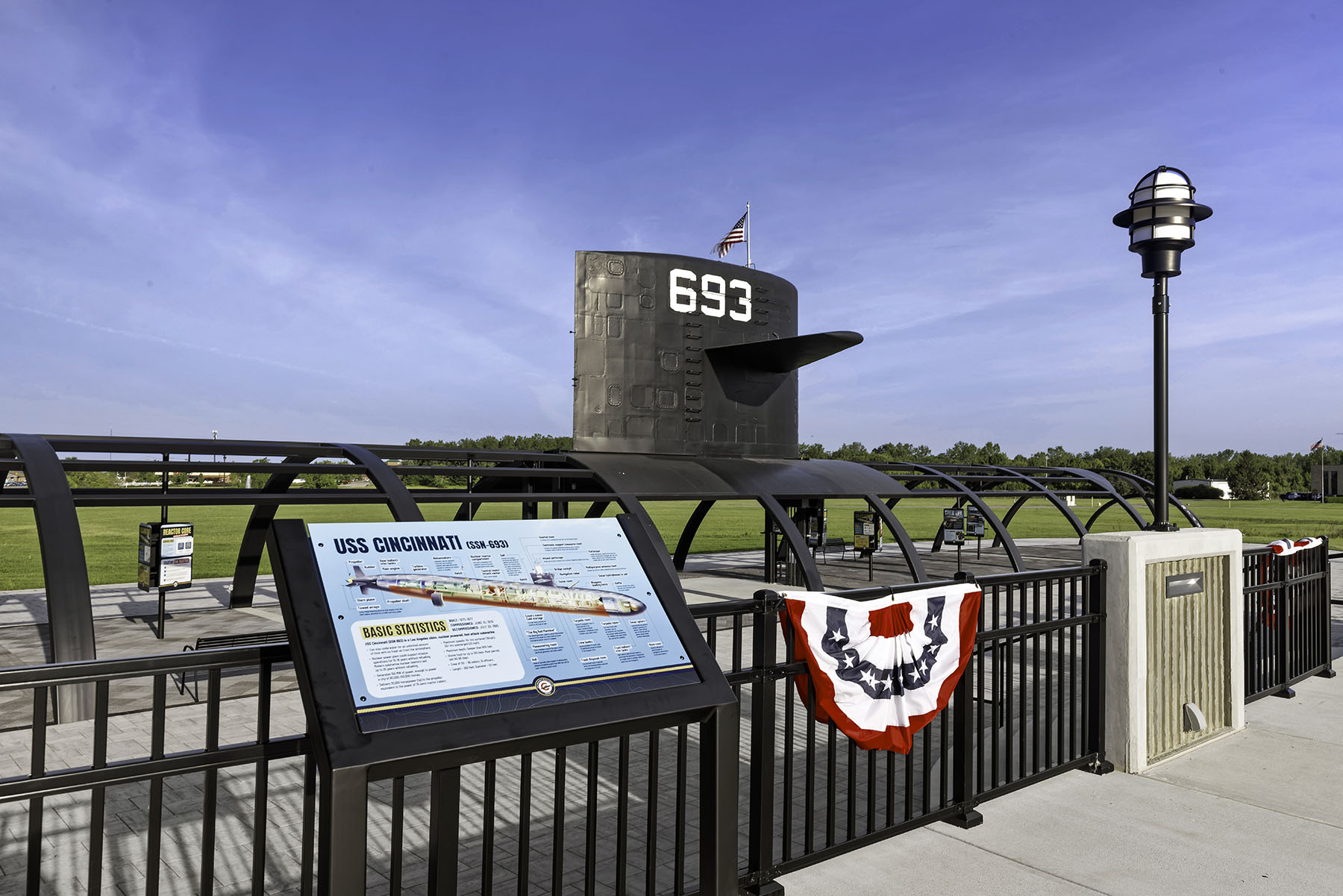
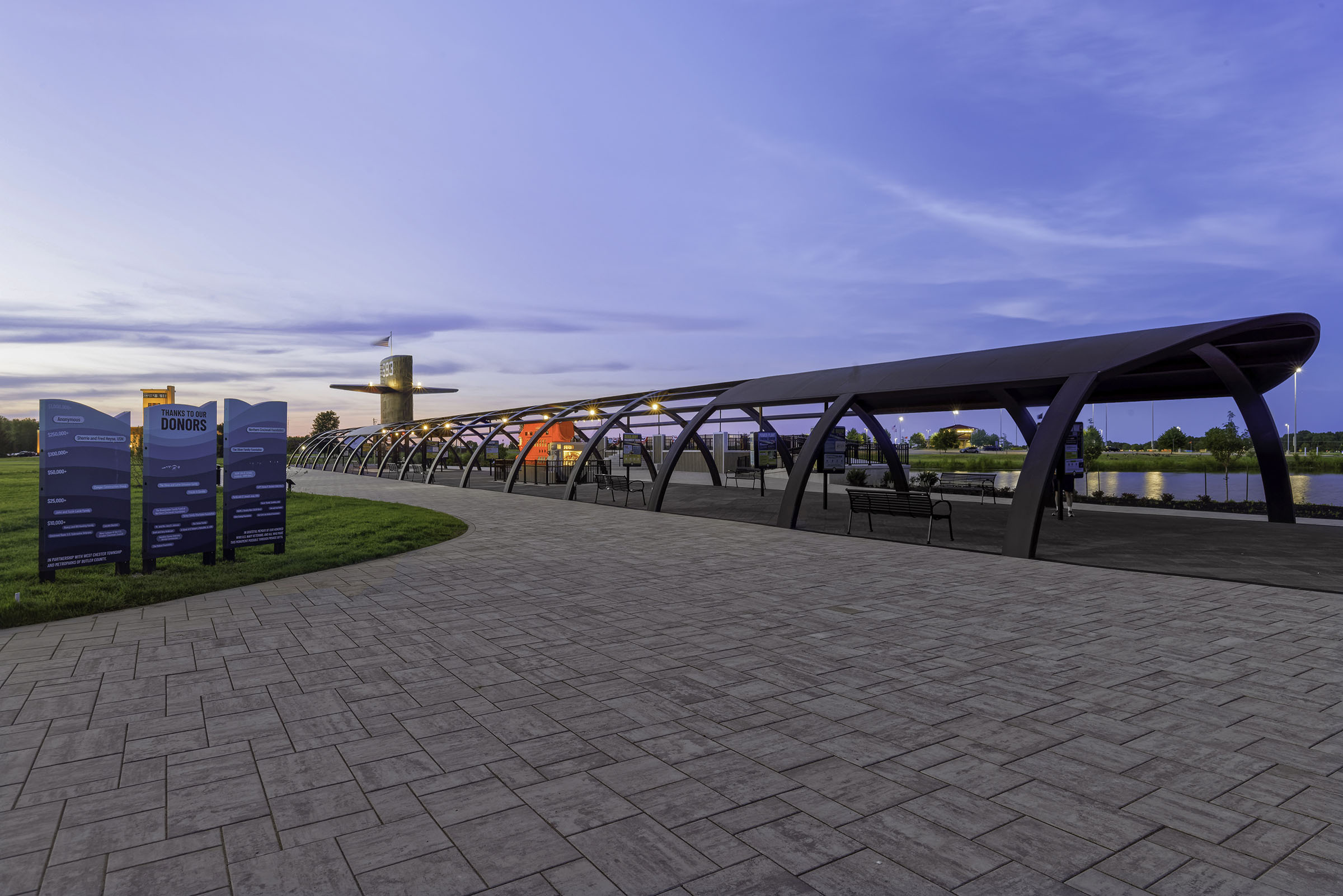
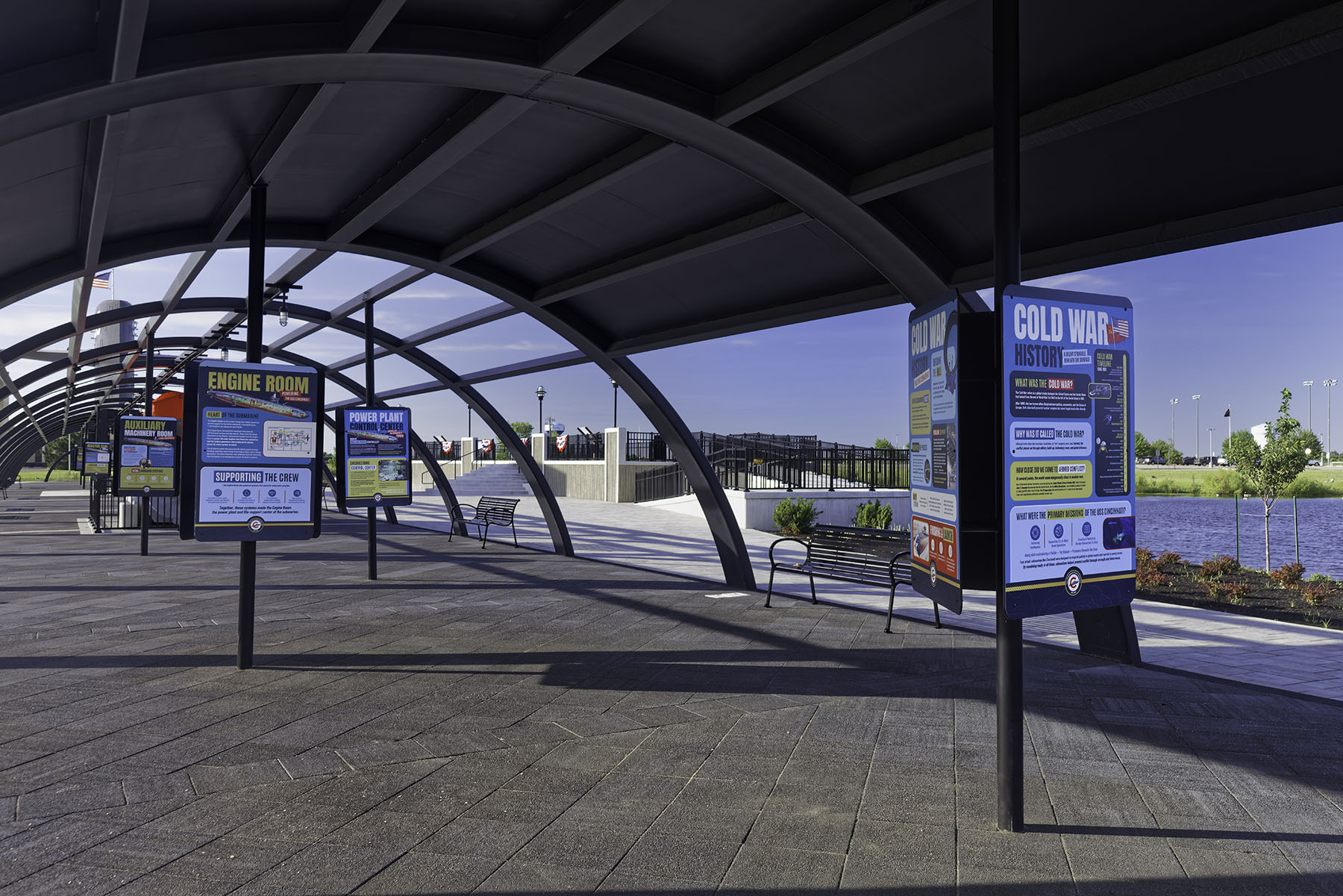
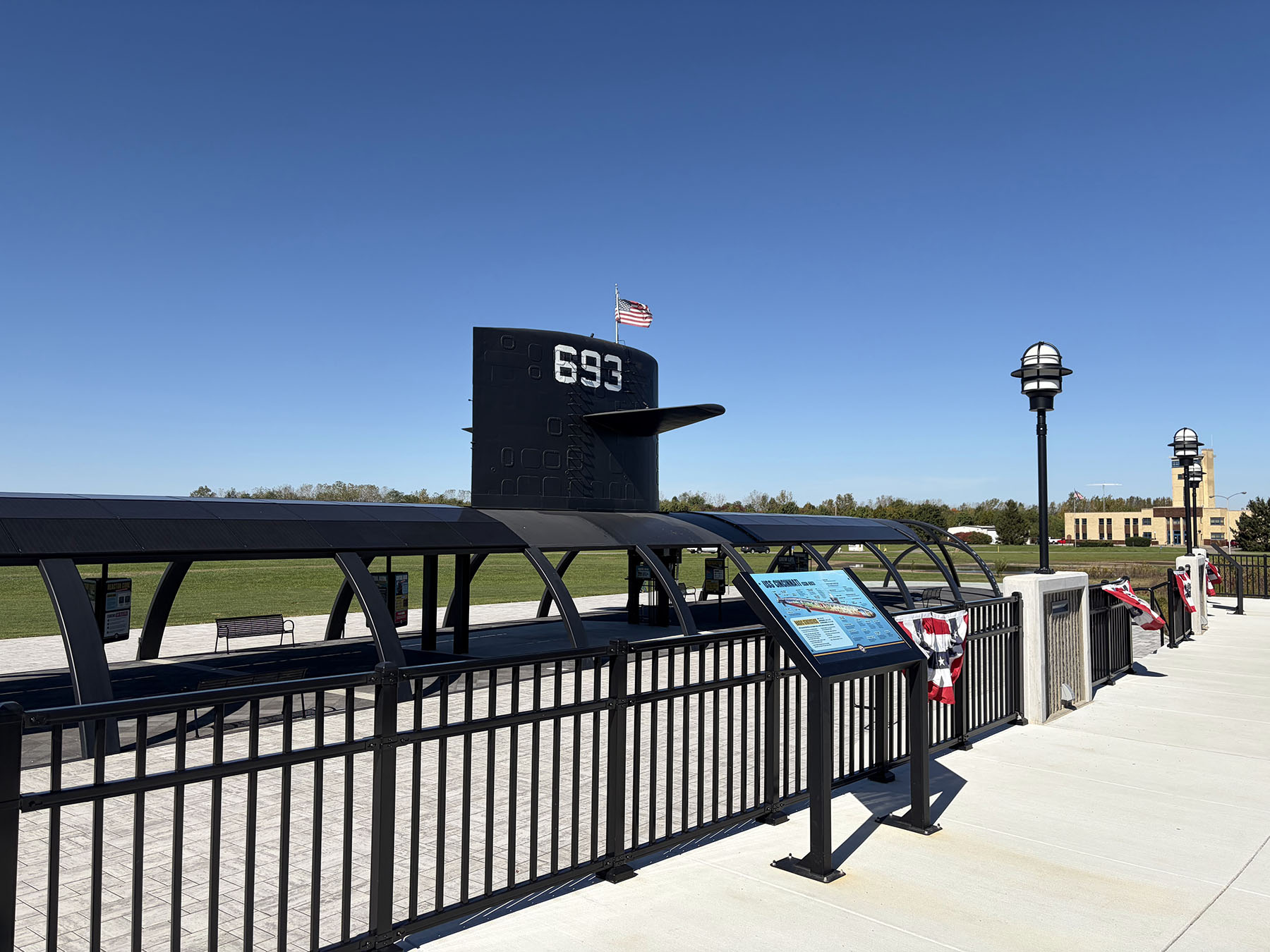
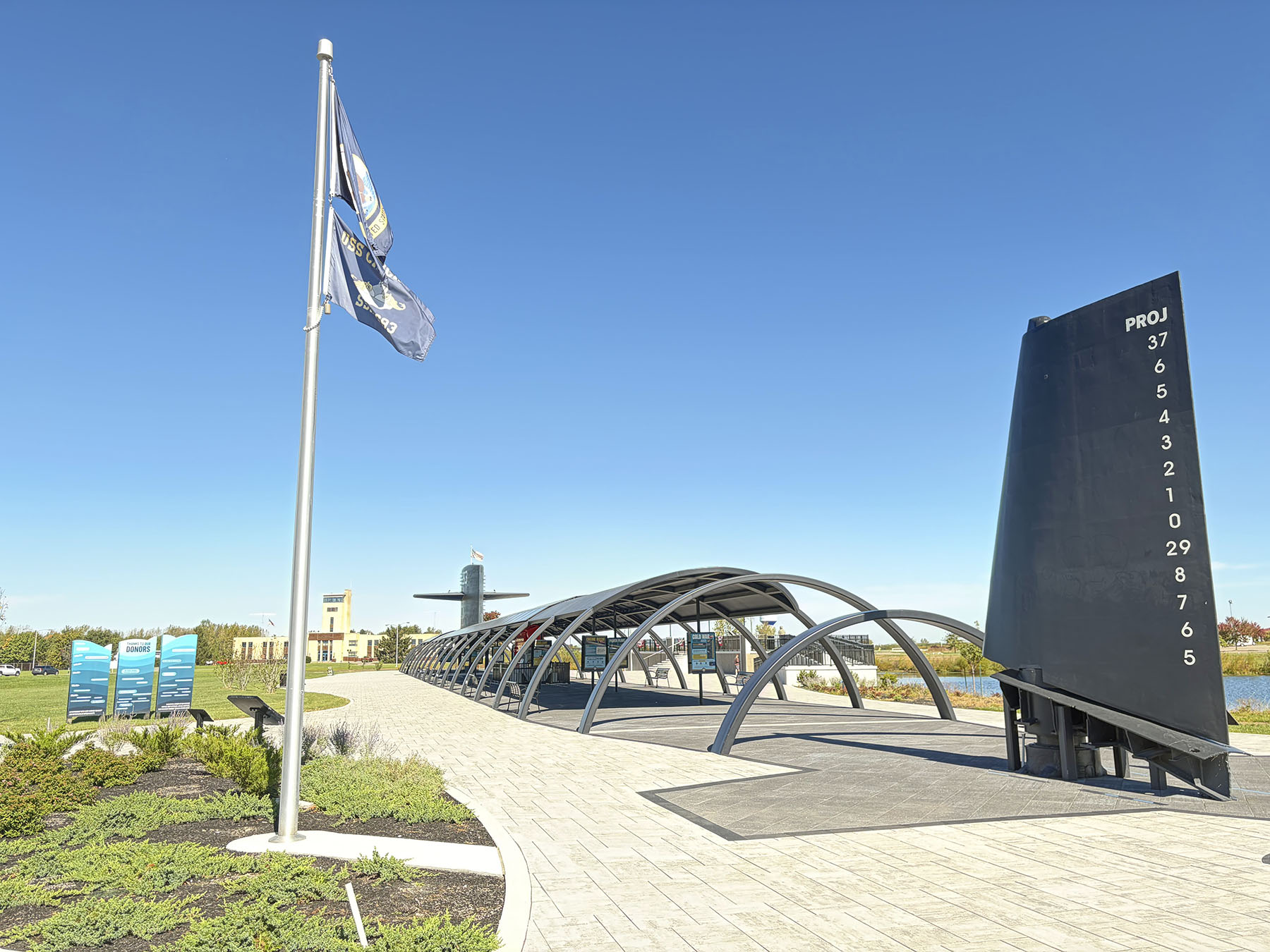
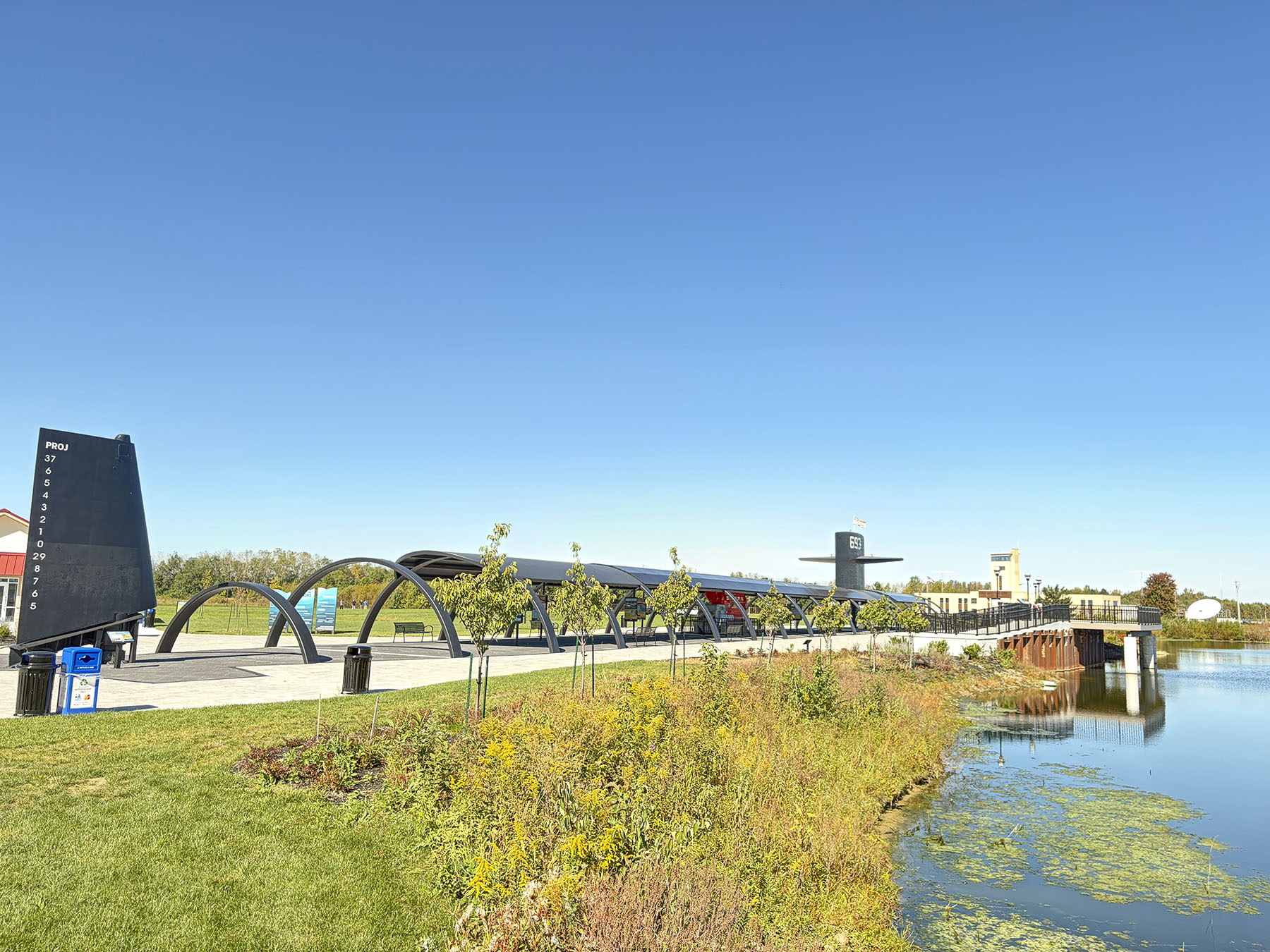
The client wanted a memorial that honors those who served, teaches visitors something real, and still feels like a place families want to spend an afternoon. The design brings the submarine back to the surface: a full-size representation of the vessel, roughly the length of a football field, beside the park's pond. The original conning tower, upper rudder, and sail planes return to where they belonged on the boat, and the emergency diesel generator the crew called the "Big Red Machine" is on display. Solar panels along the hull power educational kiosks and lighting while shading the gathering spaces below. A wharf with interpretive plaques gives ceremonies, speakers, and school groups a place to meet.
Preservation drove the hardest problems. When the salvaged steel turned out to be a classified material, the construction team led metallurgical testing and certified its ironworkers for specialty welding, while designers and engineers adjusted details to fit what the steel could do. Mounting irregular hull sections weighing more than 25 tons onto a curved framework took the same back-and-forth among the client, the structural engineer, and the builders, keeping the structure sound without compromising the submarine's authenticity.
Every discipline shaped the result. Structural, electrical, and solar specialists worked together to mount panels on the hull. Landscape architects designed a hardscape plan that complements the submarine and works in other Navy artifacts, while civil engineers kept grading and stormwater systems from crowding the plaza or the memorial's presence. The team also coordinated with separate designers and contractors on a new parking lot, access road, and bike trail, keeping the adjacent park and soccer fields open throughout. Museum staff helped make sure the new work respected the historic museum site rather than overshadowing it.
The result serves the community well past its footprint. It gives veterans and families a place to gather, gives the region a destination for national holidays, and uses submarine operations to teach STEM-T (science, technology, engineering, math, and trades). When the American flag rose over the conning tower for the first time since decommissioning, a quiet chapter of Cold War history finally had a permanent home.
© William Manning
© MSP Design
© William Manning
© MSP Design
© William Manning
© William Manning
© William Manning
© William Manning
© William Manning
© William Manning
© MSP Design
© MSP Design
© MSP Design
© MSP Design
Project Details -
Submission Category
Landscape Architecture & Community Planning – Implementation
Date of Completion
April, 2026
Submitting Firm Name
MSP Design
Project Team
Landscape Architect
Bryan Grome, PLA
Other Project Team Members
Jose Castrejon, ASLA LEED AP; Chris Balash, PLA; Randy Merrill AIA, LEED AP; David Clark, AIA, NCARB; Jake Rosenzweig,
Structural Engineer
Steve Hudepohl, PE
MEP Engineer
Bryan Bowden, PE
Civil Engineer
Jordan Weber
Contractor
Conger Construction Group
Thank You to our 2026 Sponsors!
Critical to the continued success and growth of the awards program is the generosity and support of Business and Industry Patrons like you. We would like to take the opportunity to invite you to consider supporting great design in the built environment. Corporate and Individual donations are welcome at any level, and will be acknowledged in our event based on level of sponsorship commitment. Please consider lending your sponsorship support and joining the celebration of creativity and quality design in our community.
Sponsor CDA TodayAfter-Party Sponsor

Firm Sponsors





Signature Cocktail Sponsors

Column






Foundation


Keystone








Award Materials

Event Photographer
